The primary goal is to bridge the gap between HR and Finance. It teaches financial professionals how to value human assets and HR professionals how their decisions impact the financial health of the organization.

Human Capital Simulation
Master the financial and strategic management of your most valuable asset: people. Step into the world of investment banking from the humane side.

Human Capital Simulation Overview
While traditional finance simulations focus on capital, assets, and markets, the Human Capital in Finance Simulation introduces a critical, often overlooked dimension: the financial impact of human resources. In the modern economy, a company's intellectual capital and talent are its primary drivers of value and competitive advantage.
This immersive simulation places participants in the role of senior leadership at a growing firm. They must navigate the complex interplay between financial performance and human capital strategy. Teams will make integrated decisions on hiring, compensation, training, productivity, and employee retention, all while managing a P&L and competing in a dynamic product market.
Participants will discover how strategic HR investments directly influence profitability, valuation, and long-term sustainability, moving beyond viewing personnel as a cost center to understanding them as a strategic asset.

Human Capital Simulation Concepts
Participants work through realistic scenarios, which can be customized to emphasize or exclude specific topics depending on the learning goals. This modular structure allows the simulation to be tailored to any type of session. Key concepts include:
- Human Capital Valuation and ROI
- Compensation Strategy
- Employee Training and Development Investment
- Productivity Metrics and Impact on Revenue
- Employee Turnover and its Financial Consequences
- Talent Acquisition Costs
- Linking HR Strategy to P&L and Balance Sheet
- Workforce Planning and Budgeting
- Employee Engagement and its Financial Correlation Intangible Asset Valuation on the Company's Worth

Gameflow

What Participants Do
In the simulation, participants will:
- Align talent acquisition and development with overall company financial goals.
- Make integrated decisions where HR spending directly impacts revenue and profit margins.
- Balance competitive salaries, performance bonuses, and equity grants to attract and retain top talent.
- Invest in upskilling the workforce to improve productivity and innovation.
- Monitor employee turnover rates, cost-per-hire, revenue per employee, and the ROI of training programs.
- Operate in a simulated market where other teams are competing for the same pool of skilled professionals.
- Manage real-world scenarios like talent poaching, market downturns, and shifts in labor supply.

Learning Objectives
By the end of the simulation, participants will be able to:
- Quantify the financial impact of human capital decisions on the company's bottom line.
- Design a compensation and benefits structure that balances cost control with talent attraction and retention.
- Evaluate the return on investment (ROI) for employee training and development programs.
- Analyze the direct link between employee morale, productivity, and revenue generation.
- Integrate human capital strategy with overall corporate financial planning and valuation models.
- Develop a strategic framework for managing human assets as a source of competitive advantage.
How the Human Capital Simulation Works
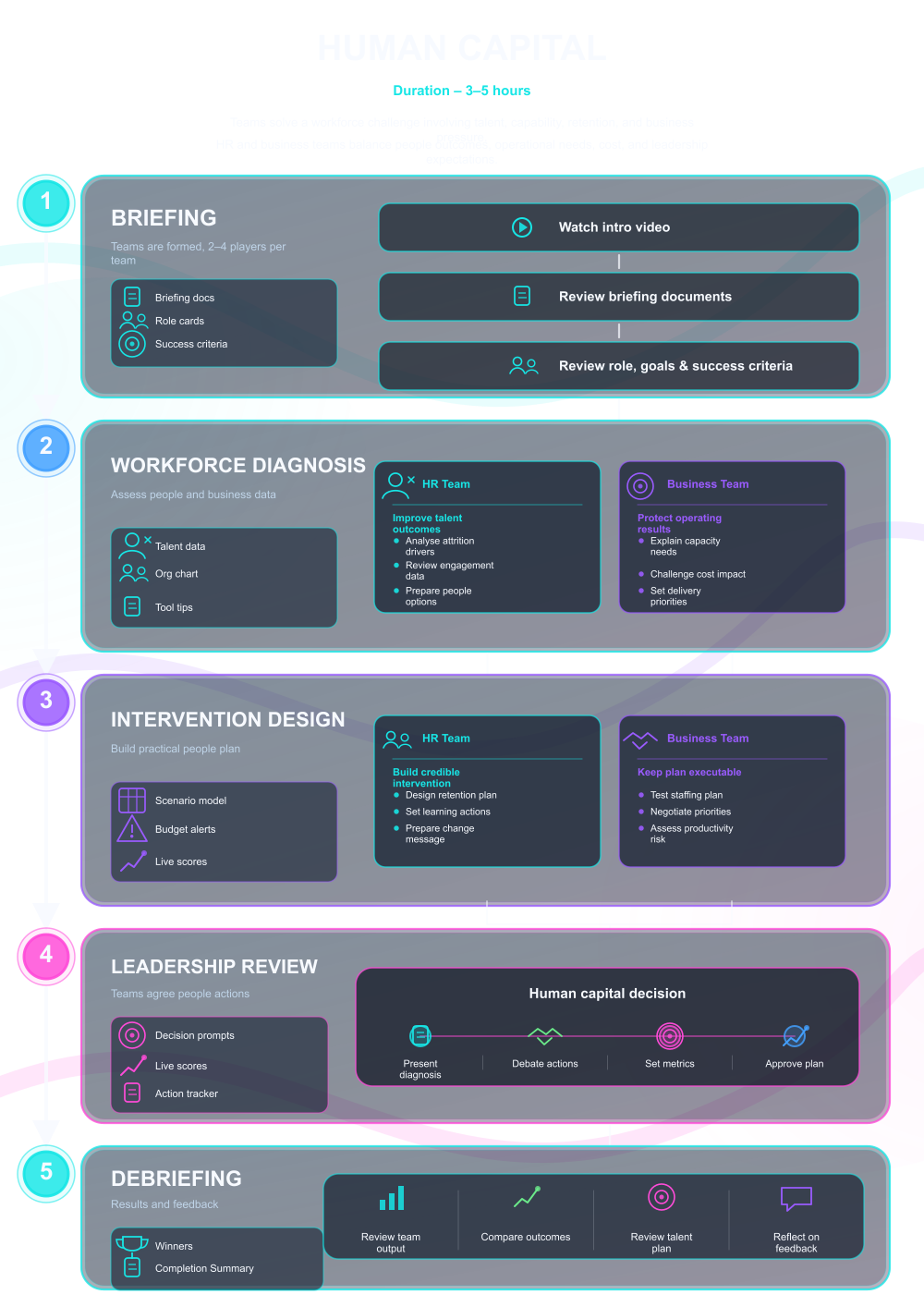
This simulation can be run individually or in teams in academic or corporate contexts. Each cycle represents a stage of getting through a pressing financial situation.
1. Team Formation Participants are divided into management teams running competing firms.
2. Initial Analysis Teams review their company's financials, current workforce data, and market position.
3. Decision Rounds Each round represents a fiscal period. Teams submit a consolidated set of decisions covering Financials (Pricing, R&D, Marketing) and Human Capital (number of hires, salary bands, bonus pools, training budgets, equity allocation).
4. Decision Processing The platform processes all team decisions against a dynamic market engine, factoring in competition for customers and talent.
5. Results and Analysis Teams receive detailed reports showing their financial statements (P&L, Balance Sheet) and human capital metrics (turnover, productivity, employee skill levels).
6. Debriefing Facilitators lead a discussion on the outcomes, highlighting the causal links between human capital choices and financial results, reinforcing key learning objectives.
Frequently Asked Questions
Assessment
Assessment of participant performance can be tailored according to the host institution’s objectives (business school, corporate training, assessment centre). Typical assessment criteria include:
- Company Financial Performance
- Team's ability to manage a productive and stable workforce.
- Revenue per Employee
- Employee Turnover Rate
- Average Employee Skill Level
- Cost of Human Capital vs. Revenue Generated