It's ideal for participants interested in asset management, hedge funds, trading, or institutional investing.

Hedge Funds Simulation
In this Hedge Funds Simulation, participants act as fund managers - designing strategies, managing portfolios, and responding to volatility while balancing risk, leverage, and investor expectations in highly competitive financial markets.

Hedge Funds Simulation Overview
Participants step into the role of hedge fund managers navigating dynamic markets. Each round introduces new challenges - market swings, investor demands, regulatory scrutiny, or competitive strategies from rival funds.
They must allocate capital, balance long and short positions, apply leverage responsibly, and decide when to pivot strategies. The simulation emphasizes decision-making under uncertainty, blending technical analysis with investor psychology.
This simulation is ideal for university programs, executive training, and corporate workshops. It brings hedge fund strategy to life, showing how performance, risk, and reputation interact in real-world fund management.

Hedge Funds Simulation Concepts
Participants work through realistic scenarios, which can be customized to emphasize or exclude specific topics depending on the learning goals. This modular structure allows the simulation to be tailored to any type of session. Key concepts include:
- Hedge fund structures and strategies (long/short, global macro, arbitrage)
- Portfolio construction and risk management
- Leverage and liquidity management
- Market timing and tactical asset allocation
- Regulatory and compliance issues in hedge funds
- Investor relations and fundraising dynamics
- Impact of market shocks on portfolios
- ESG considerations in hedge fund strategies
- Performance measurement and fee structures
- Competition and reputation in asset management

Gameflow
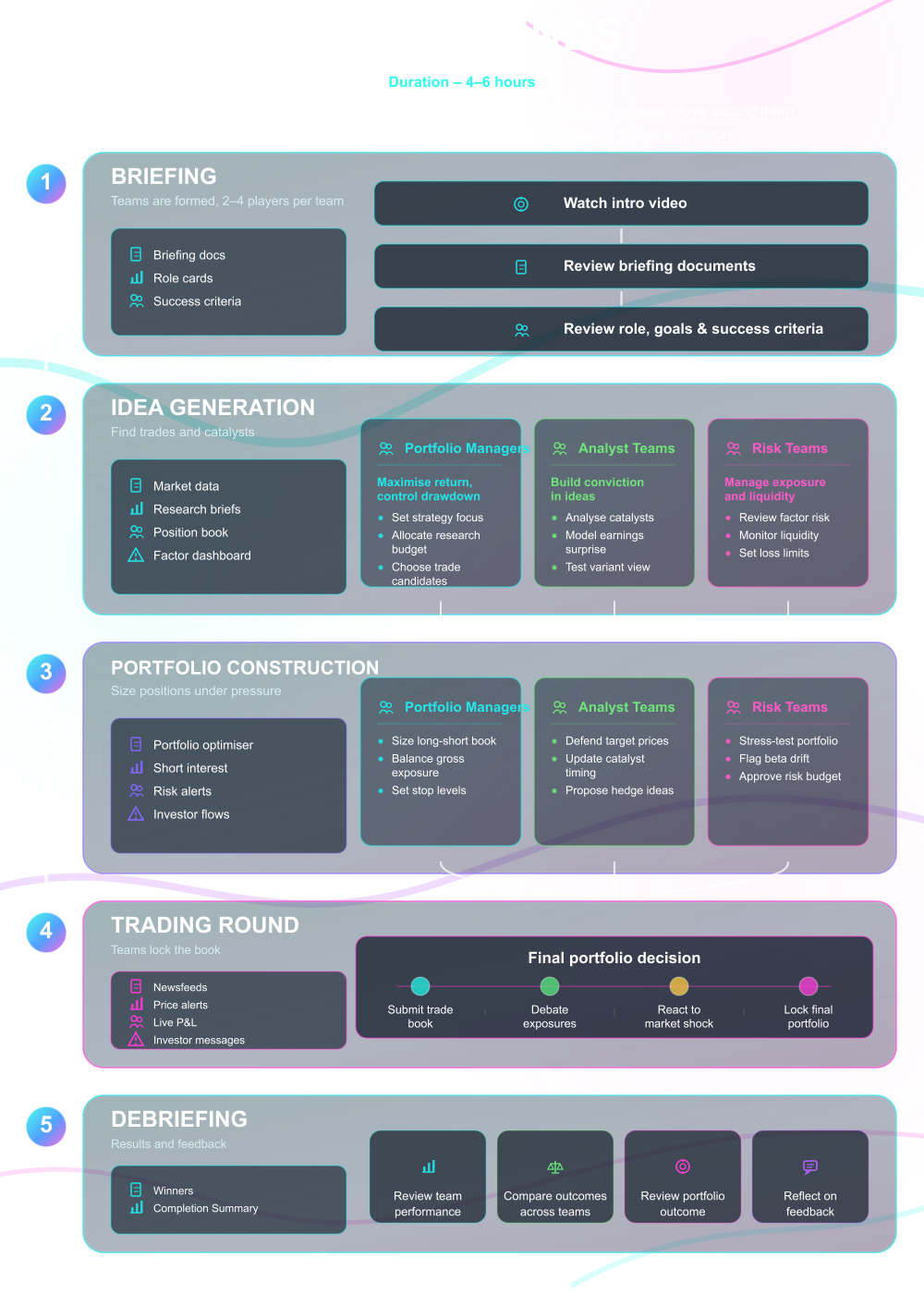

What Participants Do
In the simulation, participants act as hedge fund managers making tough calls. They:
- Choose investment strategies tailored to market conditions
- Construct and rebalance portfolios with long/short positions
- Manage leverage, liquidity, and investor expectations
- Respond to shocks like volatility spikes or regulatory shifts
- Pitch performance updates to investors and stakeholders
- Reflect on strategy effectiveness and adaptability

Learning Objectives
By the end of the simulation, participants will be able to:
- Understand hedge fund structures and operating models
- Apply long/short and other common hedge fund strategies
- Manage portfolio risk with leverage and liquidity tools
- Respond effectively to market shocks and investor demands
- Balance risk-adjusted returns with reputation and compliance
- Communicate performance clearly to investors
- Recognize the role of hedge funds in financial markets
- Explore ESG integration in hedge fund strategies
- Develop judgment under conditions of volatility and uncertainty
- Build confidence in fund management decision-making
The simulation’s flexible structure ensures that these objectives can be calibrated to match the depth, duration, and focus areas of each program, whether in higher education or corporate learning.

How the Hedge Funds Simulation Works
The simulation can be delivered individually or in teams across classrooms or corporate training. Each cycle mirrors a stage of hedge fund management.
1. Receive a Scenario or Brief: Participants are introduced to a market environment with opportunities and risks.
2. Analyse the Situation: They review market data, fund mandates, and investor expectations.
3. Make Strategic Decisions: Participants choose investment strategies, adjust positions, and set risk levels.
4. Collaborate Across Roles: Teams may act as fund managers, analysts, or investors negotiating priorities.
5. Communicate Outcomes: Participants deliver investor updates, memos, or strategy presentations.
6. Review and Reflect: Feedback highlights performance, risk exposure, and investor sentiment. Strategies evolve across rounds.
Frequently Asked Questions
Assessment
Assessment can be tailored to focus on financial performance, strategy, or communication. Participants may be evaluated on:
- Portfolio performance and risk-adjusted returns
- Effective use of hedge fund strategies
- Responsiveness to volatility and market shocks
- Investor communication clarity and persuasiveness
- Collaboration and adaptability in fund management
You can also include memo writing and debrief presentations as part of the assessment structure. Additionally, you can also add a built-in peer and self-assessment tool to see how participants rate themselves. This flexibility allows the simulation to be easily integrated by professors as graded courses at universities and by HR at assessment centres at companies.