It's ideal for MBA students, finance undergraduates, corporate trainees, and professionals in roles transitioning into strategic finance, FP&A, or business partnering.

FP&A Simulation
Make critical corporate decisions and steer a company's financial future with our FP&A Simulation. Participants transform data into strategy and forecasts into actionable plans that drive business value.

Bookkeeping Simulation Overview
The FP&A Simulation immerses participants in the pivotal role of a corporate FP&A team. In this dynamic financial planning simulation, teams navigate the entire budgeting and forecasting cycle, making integrated decisions that impact the P&L, balance sheet, and cash flow statement in real-time.
Participants are presented with a realistic company scenario—complete with historical data, market conditions, and strategic goals. Each decision round represents a planning cycle where teams must analyze performance, adjust operational and financial levers, and create forward-looking forecasts. They must balance ambitious growth targets with financial constraints, manage resource allocation across departments, and communicate their financial story effectively to senior management.
This simulation is ideal for business schools, corporate finance training programs, and anyone seeking to understand how operational decisions cascade through the financial statements and create long-term enterprise value.

FP&A Simulation Concepts
Participants work through realistic scenarios, which can be customized to emphasize or exclude specific topics depending on the learning goals. This modular structure allows the simulation to be tailored to any type of session. Key concepts include:
- Integrated Financial Statement Modeling
- Budgeting, Forecasting, and Reforecasting Cycles
- Driver-Based Planning and Variance Analysis
- Working Capital Management
- Capital Expenditure Planning and ROI Analysis
- Scenario and Sensitivity Analysis for Decision Support
- Key Performance Indicator in Development and Tracking
- Financial Communication and Management Reporting
- Strategic Planning Alignment with Financial Targets
- Cash Flow Forecasting and Liquidity Management

Gameflow
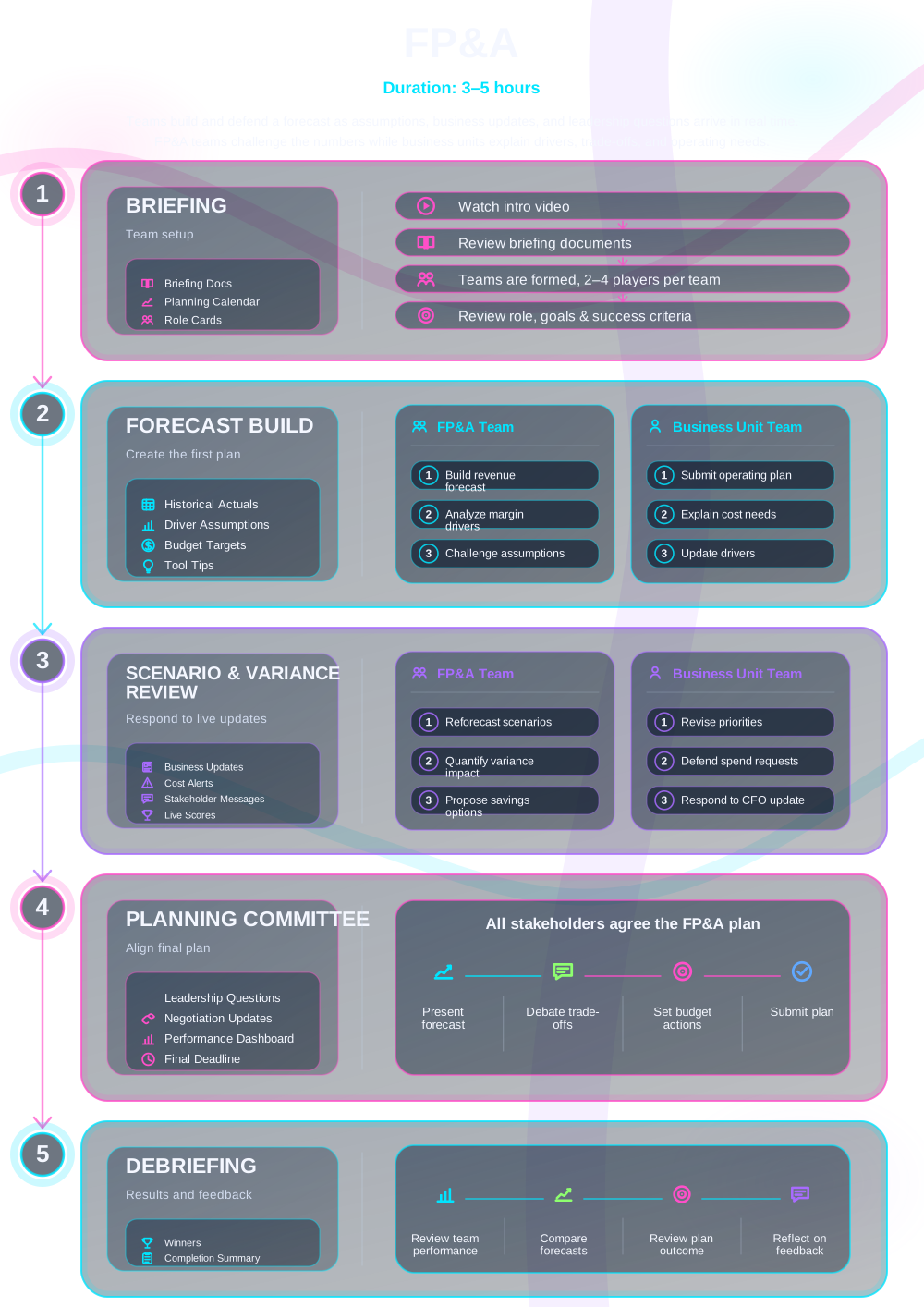

What Participants Do
In the simulation, participants will:
- Review past P&L, balance sheet, and cash flow statements to identify trends and issues.
- Define pricing, sales growth, hiring, and operational efficiency targets for the planning period.
- Create a driver-based, integrated financial model projecting income statement, balance sheet, and cash flow.
- Allocate capital between departments, approve CapEx projects, and set working capital policies.
- Adapt plans in response to simulated changes like supply chain cost increases or shifts in demand.
- Synthesize analysis into a clear management presentation, justifying the plan and proposed investments.

Learning Objectives
By the end of the simulation, participants will be able to:
- Construct and manage a fully integrated three-statement financial model.
- Translate operational business drivers (e.g., units sold, headcount) into financial forecasts.
- Perform variance analysis to explain gaps between plan and actual results.
- Evaluate the financial and strategic impact of capital investment decisions.
- Develop and present a compelling financial narrative to support business strategy.
- Conduct scenario analysis to stress-test plans and support decision-making under uncertainty.
- Understand the interconnectivity of all financial statements and the importance of cash flow.
- Build confidence in core FP&A competencies critical for corporate finance and consulting roles.
How the FP&A Simulation Works
This simulation can be run individually or in teams in academic or corporate contexts. Each cycle represents a stage of getting through a pressing financial situation.
1. Receive the Company Brief Teams are introduced to their company, its strategic objectives, and its recent financial history.
** 2. Analyze and Plan** They analyze data, set strategic and operational assumptions for the upcoming period, and build their initial budget/forecast.
3. Input Decisions and Run the Model Teams input their decisions (pricing, hiring, spending) into the simulation platform, which instantly calculates the outcomes across all financial statements.
4. Review Results and Re-forecast Teams analyze their reported actuals vs. plan, identify causes of variances, and adjust their strategy for the next cycle.
5. Negotiate and Collaborate Teams may need to negotiate for shared resources or align on company-wide targets, simulating cross-departmental dynamics.
6. Present and Debrief The final cycle culminates in a management presentation. A comprehensive debrief links simulation experiences to core FP&A principles.
Frequently Asked Questions
Assessment
Assessment of participant performance can be tailored according to the host institution’s objectives (business school, corporate training, assessment centre). Typical assessment criteria include:
- Accuracy and integrity of the integrated financial model and forecasts.
- Quality of assumptions and the strategic rationale behind resource allocation.
- Effectiveness in re-forecasting and responding to variances and market shocks.
- Clarity, persuasiveness, and visual appeal of the final management presentation.
- Peer-assessed contributions to the team's planning process and outcomes.