Not at all. A basic understanding of financial statements is enough. The simulation guides you through the rest.

Forensic Accounting Simulation
In this hands-on Forensic Accounting Simulation, participants step into the role of forensic auditors investigating financial irregularities. They analyse records, uncover fraud, and present findings with clarity and professionalism.

Forensic Accounting Simulation Overview
Participants take on the role of forensic accountants brought in to investigate suspicious financial activity within a corporate setting. The simulation challenges them to spot inconsistencies in financial statements, trace hidden transactions, and evaluate internal controls - all while navigating pressure from stakeholders and time constraints.
Each round presents a new stage in the investigation, from early red flags to final reporting. Participants must assess documents, interview managers (through scenario-based prompts), and justify their findings. Along the way, they’ll explore ethical dilemmas, legal frameworks, and real-world investigative techniques.
This simulation can be tailored for different learning contexts - from undergraduate accounting courses to corporate compliance and audit workshops. Its structure encourages attention to detail, critical thinking, and clear communication of findings.

Forensic Accounting Simulation Concepts
Participants work through realistic scenarios, which can be customized to emphasize or exclude specific topics depending on the learning goals. This modular structure allows the simulation to be tailored to any type of session. Key concepts include:
- Fraud Detection Techniques
- Red Flag Indicators and Pattern Recognition
- Revenue Recognition and Expense Manipulation
- Interviewing and Investigative Approaches
- Document Review and Evidence Compilation
- Legal and Regulatory Context
- Ethical Boundaries and Whistleblower Protocols
- Internal Controls and Risk Assessment
- Report Writing and Board-Level Communication

Gameflow
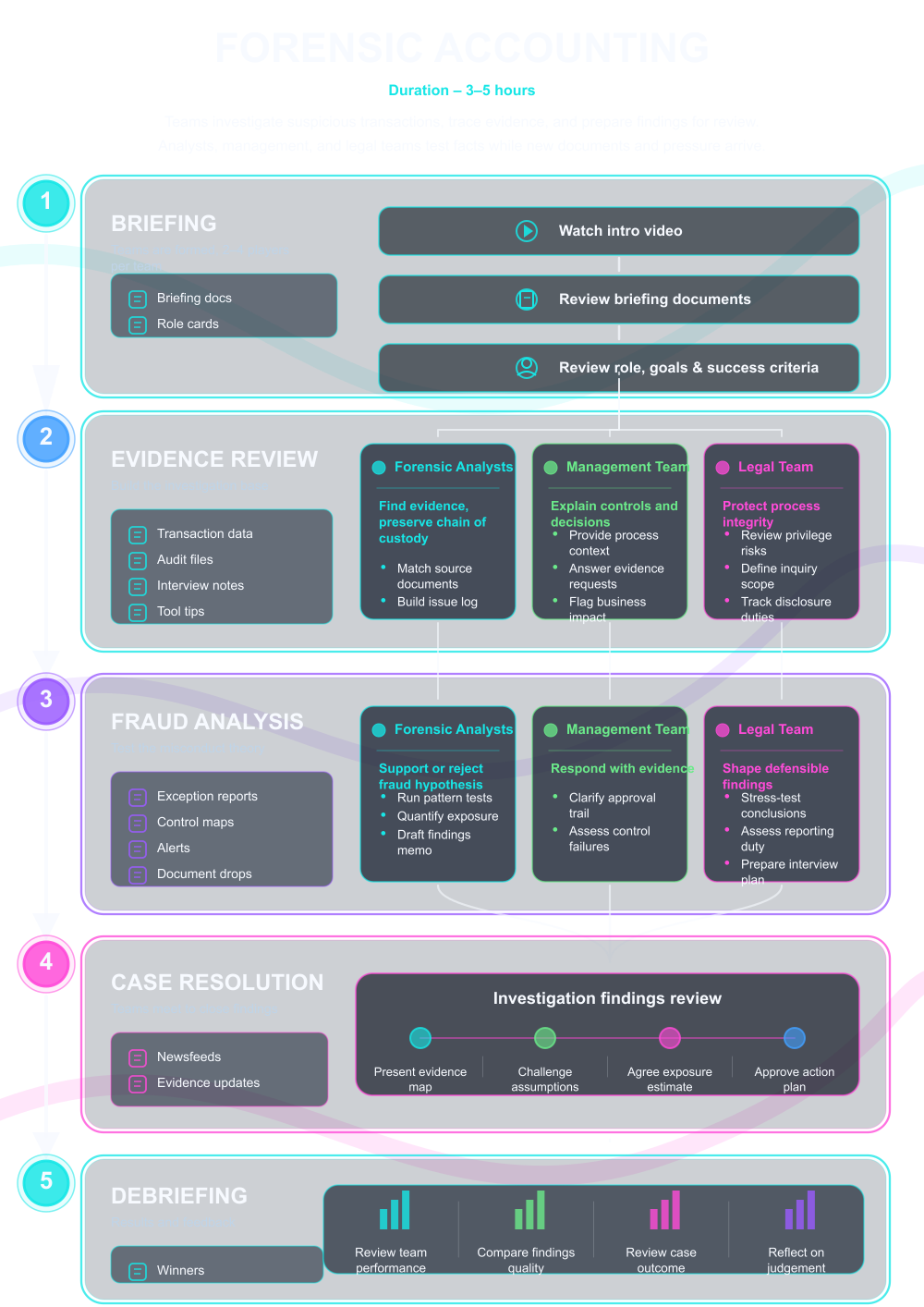

What Participants Do
In this simulation, participants:
- Review company financials and operational documents for irregularities
- Identify red flags across various departments and subsidiaries
- Decide which transactions, records, or staff members require deeper scrutiny
- Draft preliminary investigation memos
- Respond to evolving case facts as new evidence or whistleblower tips emerge
- Prepare a final report with clear findings and recommendations
- Communicate insights to a mock audit committee or legal advisor

Learning Objectives
By the end of the simulation, participants will be able to:
- Apply forensic techniques to identify and assess fraud risks
- Analyse financial data to uncover inconsistencies and unusual patterns
- Understand the ethical and legal responsibilities of forensic accountants
- Distinguish between poor controls and intentional misstatements
- Structure a forensic investigation process from start to finish
- Practise interviewing approaches in simulated case scenarios
- Improve professional report-writing for audit and legal contexts
- Evaluate whistleblower statements and integrate into investigations
- Communicate findings effectively to senior stakeholders
- Collaborate with cross-functional teams during investigations
The simulation’s flexible structure ensures that these objectives can be calibrated to match the depth, duration, and focus areas of each program, whether in higher education or corporate learning.
How the Forensic Accounting Simulation Works
This simulation can be run in teams or individually and is ideal for classrooms, corporate training, or assessment centres. Participants move through several investigative rounds, each with new information and growing complexity. Here’s how it works:
1. Receive a Case File or Brief: Each round starts with a scenario - often a tip-off, audit concern, or compliance issue. Participants receive a brief and supporting documents to review.
2. Examine the Evidence: They review financials, transaction logs, emails, and expense reports. The goal is to identify patterns or anomalies that require deeper digging.
3. Make Investigative Decisions: Participants choose areas to investigate, whom to question, and what to cross-check. They decide how to allocate limited time and resources.
4. Adapt to New Developments: As the case unfolds, new evidence is introduced - memos, whistleblower tips, or interview summaries. Participants update their strategy accordingly.
5. Compile and Present Findings: Each team (or individual) drafts a report or memo summarising findings, key risks, and next steps. This may be followed by a simulated boardroom presentation or audit committee Q&A.
6. Reflect and Repeat: The simulation continues over multiple rounds, each building on the last. Participants improve with each cycle - refining judgment, communication, and investigative logic.
Frequently Asked Questions
Assessment
Assessment can be tailored to focus on investigative rigour, analytical thinking, communication, or ethical reasoning. Participants may be evaluated on:
- Accuracy and relevance of red flags identified
- Structure and clarity of investigative reports
- Communication effectiveness under questioning
- Ethical judgement and sensitivity to stakeholder impact
- Responsiveness to evolving case details
- Peer and self-assessments to reflect collaboration and adaptability
You can also include memo writing and debrief presentations as part of the assessment structure. Additionally, you can also add a built-in peer and self-assessment tool to see how participants rate themselves. This flexibility allows the simulation to be easily integrated by professors as graded courses at universities and by HR at assessment centres at companies.