This simulation is ideal for students in finance, MBA programs, and executives in corporate finance, treasury, and accounting roles who need to understand and manage international financial risk.

Foreign Exchange Risk Management Simulation
Master the Complexities of the Global Currency Market. Navigate volatile exchange rates, make critical hedging decisions, and protect your multinational corporation's bottom line in this dynamic, hands-on simulation.

Foreign Exchange Risk Management Simulation Overview
In today's interconnected global economy, companies are exposed to significant financial risk due to fluctuations in foreign currency exchange rates. The Foreign Exchange Risk Management Simulation plunges participants into the high-stakes role of a corporate treasury team at a multinational corporation.
Participants are responsible for managing transaction exposure from international sales and purchases, translation exposure from overseas subsidiaries, and economic exposure that impacts long-term competitiveness. This simulation replicates a realistic economic environment where exchange rates are driven by market forces, economic data releases, and geopolitical events.
Teams must analyze their exposure, develop a robust risk management strategy, and execute a variety of financial instruments—including forwards, options, and swaps—to hedge against potential losses. The goal is not to avoid risk, but to optimize the company's financial performance in a volatile world.

Foreign Exchange Risk Management Simulation Concepts
Participants work through realistic scenarios, which can be customized to emphasize or exclude specific topics depending on the learning goals. This modular structure allows the simulation to be tailored to any type of session. Key concepts include:
- Foreign Exchange Risk
- Spot and Forward Markets
- Hedging Instruments
- Cost of Hedging
- Market Fundamentals
- Strategic Treasury Management
- Cash Flow Forecasting
- Accounting Implications

Gameflow
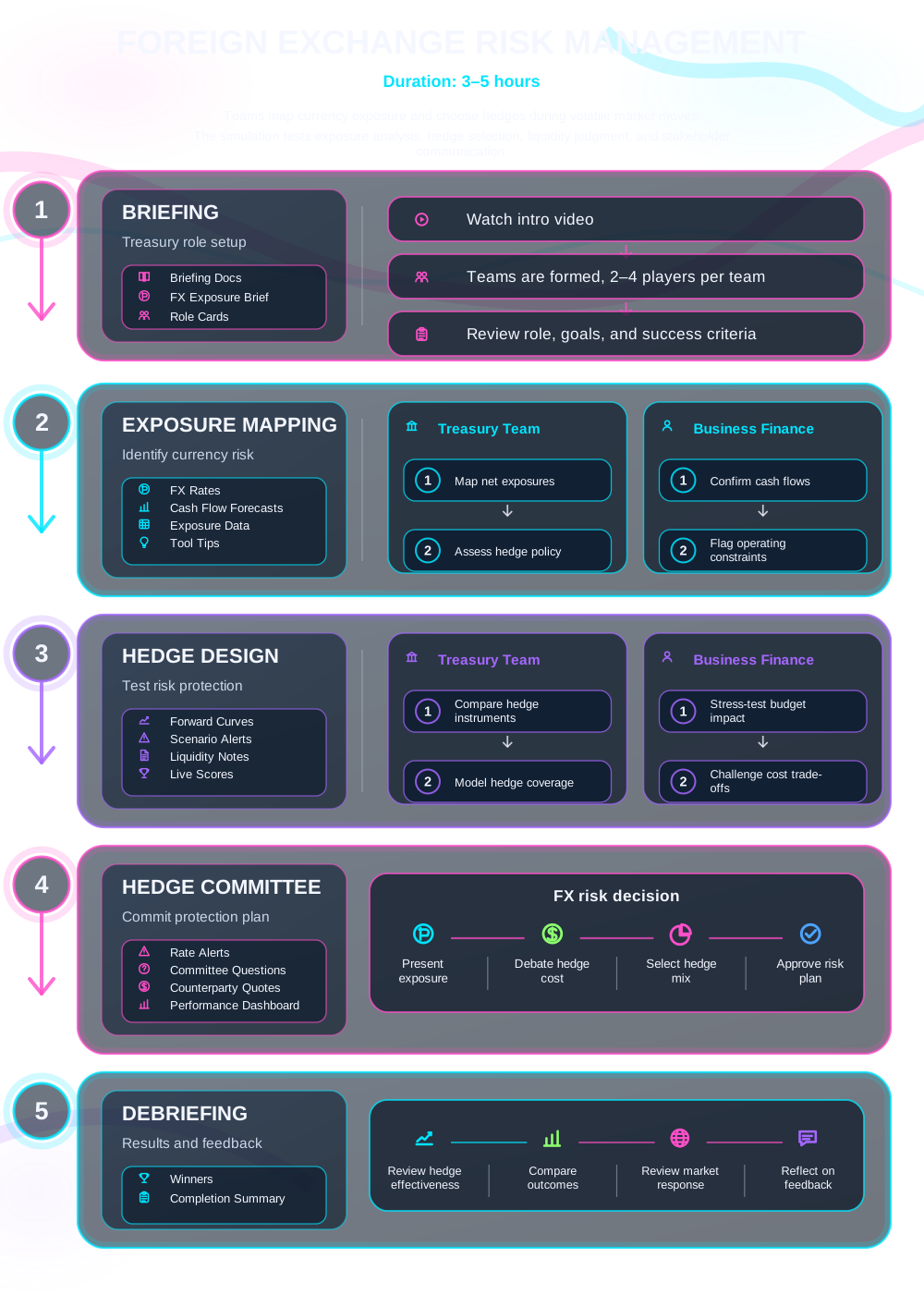

What Participants Do
In the simulation, participants will:
- Assess the company's specific FX risk profile from sales, procurement, and balance sheet items.
- Create a comprehensive FX risk management policy defining hedge ratios and acceptable instruments.
- Actively trade in a live simulated market, placing orders for forwards, options, and spot transactions.
- React to in-simulation economic announcements and news flashes that impact currency volatility.
- Oversee a portfolio of hedging positions and underlying exposures, tracking mark-to-market performance.
- Compete against other teams, with performance ranked based on risk-adjusted returns, profitability, and effectiveness of the hedging strategy.

Learning Objectives
By the end of the simulation, participants will be able to:
- Identify and quantify the different types of foreign exchange exposure faced by a multinational corporation.
- Evaluate the advantages, disadvantages, and costs of various FX hedging instruments.
- Formulate a coherent FX risk management strategy tailored to a company's specific risk tolerance.
- Execute hedging transactions using forwards, options, and other derivatives in a live market environment.
- Analyze the impact of macroeconomic events and market sentiment on currency movements.
- Measure the effectiveness of a hedging program by comparing hedged vs. unhedged financial outcomes.
How the Foreign Exchange Risk Management Simulation Works
This simulation can be run individually or in teams in academic or corporate contexts. Each cycle represents a stage of getting through a pressing financial situation.
1. Role Assignment and Introduction Participants are divided into teams, each acting as the treasury department for a global company with defined exposures in EUR, GBP, JPY, etc.
2. Initial Analysis Teams receive a company profile, financials, and a forecast of future currency cash flows. They must analyze their risk and draft an initial strategy.
3. Live Simulation Rounds The simulation progresses through several quarters. In each round teams access a real-time market data screen with evolving spot and forward rates and option premiums, economic and political "news events" are released, causing market volatility, teams must decide on and execute their hedging trades for the period.
4. Results and Feedback After each round, teams receive a detailed performance report showing their P&L, the impact of their hedging decisions, and their remaining exposure.
5. Debrief A comprehensive debriefing session led by the instructor connects the simulation experience to theoretical concepts, highlighting best practices and key lessons learned.
Frequently Asked Questions
Assessment
Assessment of participant performance can be tailored according to the host institution’s objectives (business school, corporate training, assessment centre). Typical assessment criteria include:
- The risk-adjusted profitability of the company at the end of the simulation.
- A written report submitted by the team outlining their initial risk assessment, hedging strategy, and justifying their trading decisions in response to market events.
- Assessment of individual contribution within the team.
- A brief test to ensure understanding of the fundamental FX and hedging concepts covered.