It is ideal for MBA students, finance professionals, corporate treasurers, and anyone in business roles who needs to understand how currency fluctuations impact global operations and financial performance.

Foreign Exchange Hedging Simulation
Navigate the volatile world of foreign exchange. In this dynamic simulation, participants step into the role of a treasury manager at a multinational corporation, making critical decisions to protect profitability from adverse currency movements.

Foreign Exchange Hedging Simulation Overview
The Foreign Exchange Hedging Simulation plunges participants into the high-stakes environment of international corporate finance. Companies operating across borders are constantly exposed to foreign exchange risk, where fluctuating currency rates can turn a profitable deal into a loss overnight.
This hands-on simulation replicates a multi-period, real-world scenario where teams manage the treasury function for a global company. Participants will analyze exposure from international sales and purchases, forecast currency movements, and execute a variety of hedging strategies using forwards, options, and money market instruments.
Learn to compete to minimize losses, maximize gains, and stabilize cash flows, all while dealing with unpredictable market events and economic news that drive currency volatility.

Foreign Exchange Hedging Simulation Concepts
Participants work through realistic scenarios, which can be customized to emphasize or exclude specific topics depending on the learning goals. This modular structure allows the simulation to be tailored to any type of session. Key concepts include:
- Foreign Exchange Risk
- Spot vs. Forward Exchange Rates
- Currency Forwards and Futures
- Foreign Currency Options
- Money Market Hedging
- Hedging Ratio and Strategy
- Cost of Hedging vs. Cost of No Hedging
- Currency Forecasting and Market Analysis
- Impact of Central Bank Policies and Geopolitical Events
- Accounting for Hedges

Gameflow

What Participants Do
In the simulation, participants will:
- Identify and quantify the company's transaction exposure in various currencies.
- Create a formal strategy dictating which exposures to hedge and to what extent.
- Actively use the simulated trading platform to execute forward contracts, options, and money market operations.
- Track live FX rates, interest rates, and react to breaking economic news.
- Oversee a portfolio of hedging instruments and existing exposures.
- Present their hedging strategy and financial results to the board, explaining the impact of their decisions on the P&L and balance sheet.

Learning Objectives
By the end of the simulation, participants will be able to:
- Identify the different types of foreign exchange risk faced by a multinational corporation.
- Evaluate the advantages, disadvantages, and costs of various hedging instruments (forwards, options, money markets).
- Construct a proactive hedging strategy tailored to a company's risk tolerance and financial objectives.
- Execute hedging transactions in a simulated live market environment.
- Quantify the financial impact of hedging decisions on corporate earnings and cash flow stability.
- Analyze how macroeconomic news and interest rate changes influence currency values.
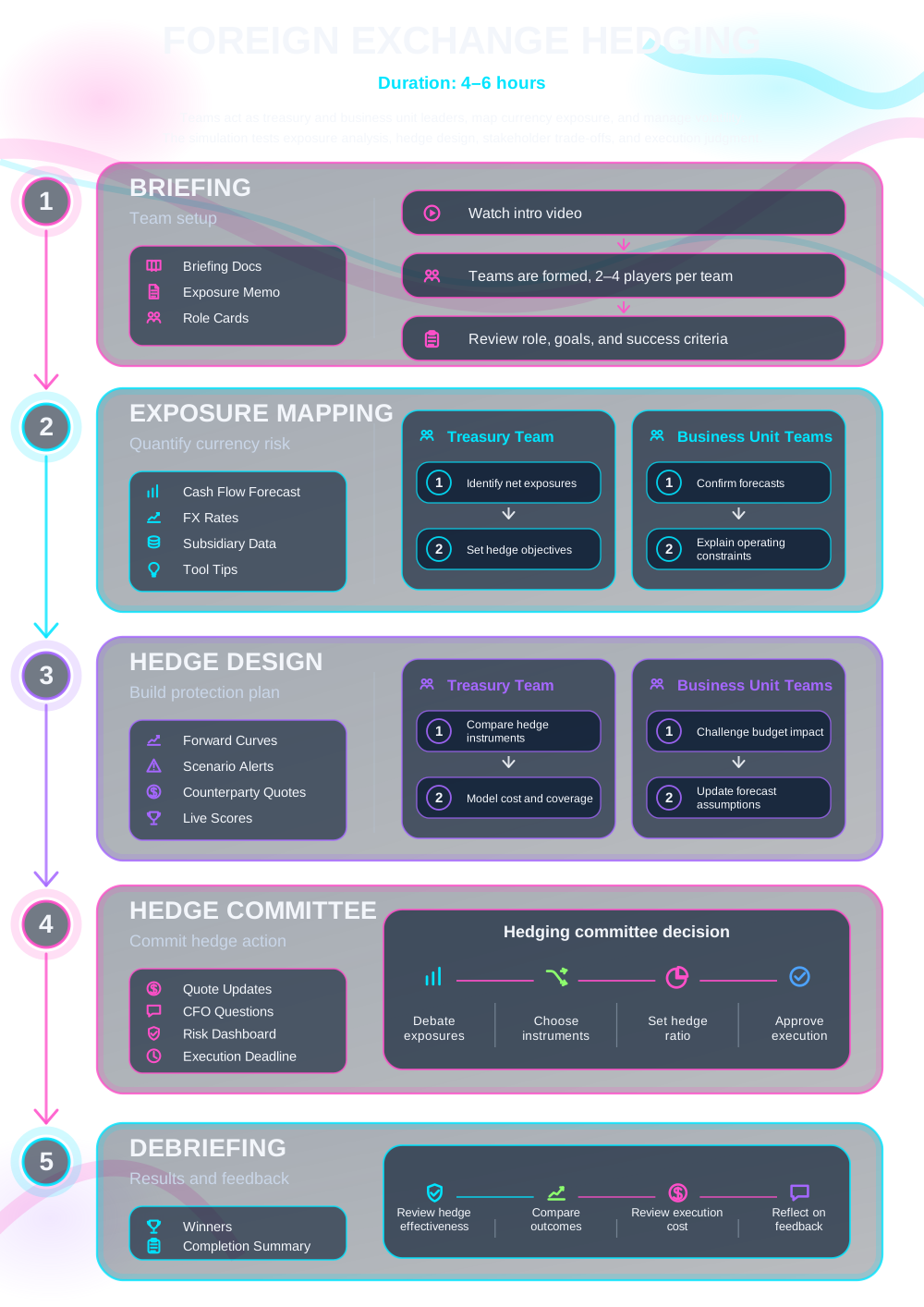
How the Foreign Exchange Hedging Simulation Works
This simulation can be run individually or in teams in academic or corporate contexts. Each cycle represents a stage of getting through a pressing financial situation.
1. Team Formation and Briefing Participants are divided into treasury teams for a global company and receive a detailed case study outlining their exposures.
2. Initial Strategy Development Teams analyze their net exposure across different currencies and time horizons and draft their initial hedging policy.
3. Live Simulation Rounds The simulation progresses through several quarters (rounds). In each round, teams will receive new order books and cash flow forecasts, analyze updated market data and news feeds, and execute their hedging decisions via the platform.
4. Market Resolution At the end of each round, new spot rates are revealed based on the simulated market's evolution. The P&L impact of all hedging and exposure positions is automatically calculated.
5. Performance Review and Debrief Teams review their performance dashboard, comparing their results against competitors who took different strategic approaches. A comprehensive instructor-led debrief links the simulation outcomes to core financial theories.
Frequently Asked Questions
Assessment
Assessment of participant performance can be tailored according to the host institution’s objectives (business school, corporate training, assessment centre). Typical assessment criteria include:
- Net P&L Impact
- Cash Flow Volatility
- Sharpe Ratio of returns.
- Initial hedging policy
- The rationale behind their choices
- Adaptation of their strategy in response to market events.
- Grasp of the strategic concepts
- Ability to analyze own performance.