A Foreign Exchange Simulation is an interactive learning platform that replicates the real-world FX market. It allows participants to trade virtual currencies using real-time data and news feeds in a risk-free environment, making it ideal for education and corporate training.

Foreign Exchange Simulation
The Foreign Exchange Simulation replicates the real-time pressures and strategic decision-making required to succeed in the global FX market, the world's largest and most liquid financial marketplace.

Foreign Exchange Simulation Overview
In today's interconnected global economy, understanding foreign exchange is crucial for anyone in finance, international business, or corporate treasury. This simulation provides a risk-free environment to apply theoretical knowledge to practical, market-driven scenarios.
Participants form trading teams and take on the role of currency traders at a multinational corporation or a financial institution. They are given a virtual capital and must manage a multi-currency portfolio, making trades based on real-time market data, economic news, and geopolitical events.
The simulation covers major, minor, and exotic currency pairs, requiring traders to analyze trends, manage risk, and develop a coherent trading strategy to maximize their portfolio's value. The competitive, game-like atmosphere ensures high engagement and deep, lasting learning.

Foreign Exchange Simulation Concepts
Participants work through realistic scenarios, which can be customized to emphasize or exclude specific topics depending on the learning goals. This modular structure allows the simulation to be tailored to any type of session. Key concepts include:
- Currency Pairs and Quotations
- Fundamental Analysis
- Technical Analysis
- Leverage and Margin
- Risk Management
- Market Sentiment
- Carry Trade
- Hedging vs. Speculation

Gameflow
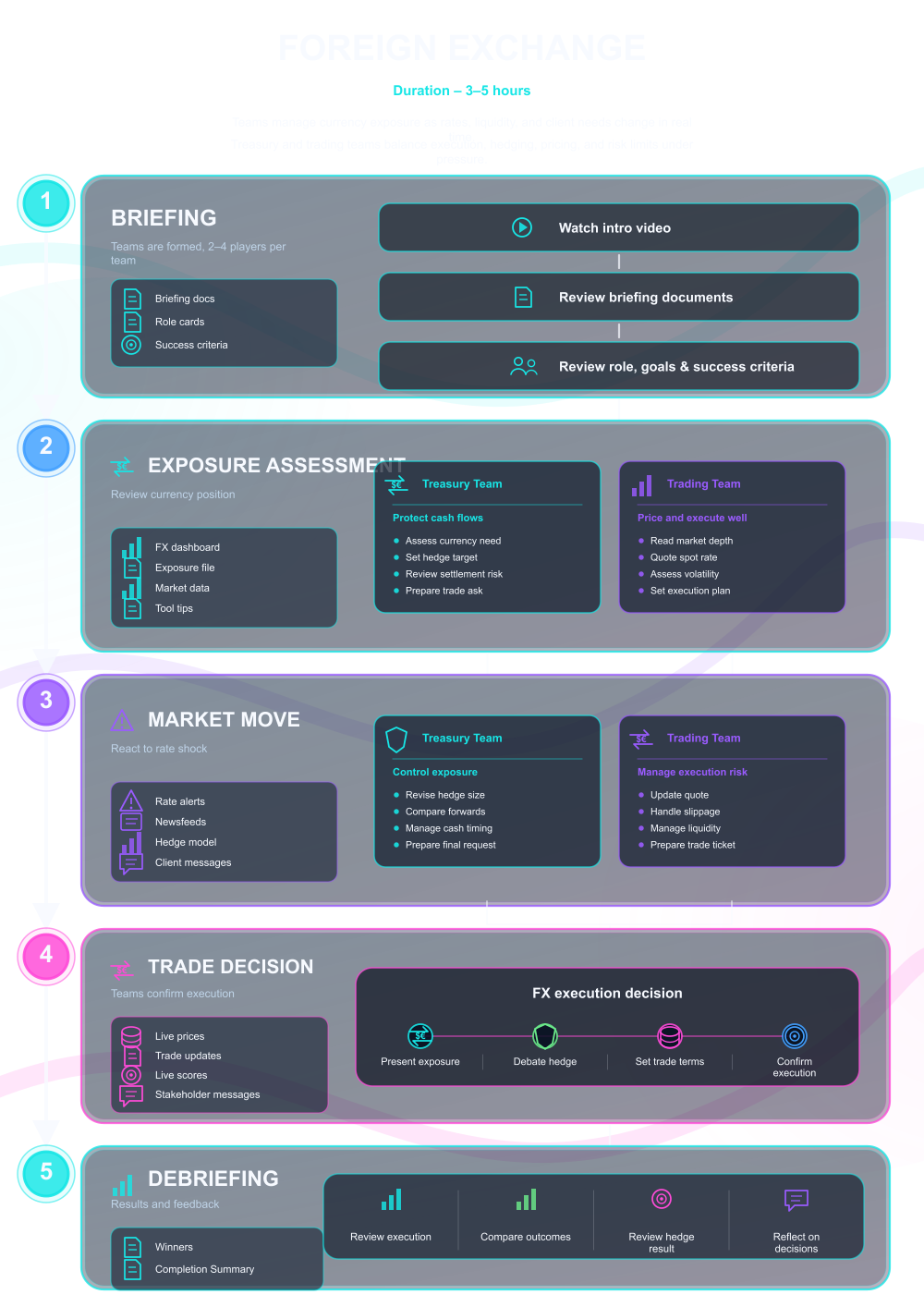

What Participants Do
In the simulation, participants will:
- Execute live trades in a realistic, web-based trading platform.
- Analyze a continuous stream of simulated economic news and data releases.
- Monitor real-time price charts and use technical analysis tools.
- Develop and present a formal FX trading strategy to their peers or instructors.
- Manage a portfolio, adjusting positions in response to market volatility.
- Compete against other teams on a dynamic leaderboard.
- Prepare a final performance report justifying their trading decisions and outcomes.

Learning Objectives
By the end of the simulation, participants will be able to:
- Interpret the fundamental drivers of foreign exchange rates.
- Execute basic and intermediate foreign exchange trades.
- Apply technical and fundamental analysis to inform trading decisions.
- Develop a disciplined risk management framework for currency trading.
- Evaluate the impact of geopolitical and economic events on currency volatility.
- Articulate the rationale behind a trading strategy and its resulting performance.
How the Foreign Exchange Simulation Works
This simulation can be run individually or in teams in academic or corporate contexts. Each cycle represents a stage of getting through a pressing financial situation.
1. Setup and Briefing Participants are divided into teams, assigned a role, and granted virtual capital.
2. Introduction A briefing session covers the simulation platform, key concepts, and learning objectives.
3. Trading Rounds The simulation runs over multiple rounds (e.g., representing weeks or months). In each round teams analyze new market data and news, execute trades and manage existing positions and monitor their portfolio performance and ranking.
4. Debriefing The facilitator leads a discussion on market outcomes, successful strategies, and common pitfalls.
5. Assessment Teams submit a final report and/or presentation, linking their actions to core financial concepts for a comprehensive learning evaluation.
Frequently Asked Questions
Assessment
Assessment of participant performance can be tailored according to the host institution’s objectives (business school, corporate training, assessment centre). Typical assessment criteria include:
- Trading Performance is measured by risk-adjusted returns, consistency, and portfolio growth on the simulation leaderboard.
- A written report where teams analyze their trades, explain their strategy in the context of market events, and evaluate their successes and failures.
- Evaluation of the team's adherence to their stated risk parameters and their use of tools like stop-loss orders.
- Assessment of individual contribution and teamwork within the trading group (optional).
Assessment may incorporate peer and self-review components, facilitator scoring, and debrief discussion. Results may feed into grades, executive feedback, certification or development plans.