This simulation is ideal for university students in finance, economics, and business, as well as professionals seeking to enter or enhance their skills in the wealth management and financial planning industries.

Financial Planner Simulation
The Financial Planner Simulation plunges participants into the dynamic and challenging world of personal financial advisory. Bridge the gap between theoretical finance knowledge and the client-facing skills for a successful career in financial planning.

Financial Planner Simulation Overview
Participants step into the role of a certified financial planner and are tasked with managing the financial lives of a diverse set of virtual clients. Each client presents a unique profile with different income levels, assets, liabilities, risk tolerances, and life goals.
Participants will analyze their clients’ financial health, develop comprehensive financial plans, make key investment and insurance decisions, and adapt your strategies to real-time market events and unexpected life occurrences. The simulation measures participants’ ability to balance client relationships with sound financial strategy, ultimately scoring on the health and growth of the clients' financial portfolios.
Although ideal for undergraduate and graduate finance courses, executive training, and corporate finance skill workshops, the simulation is modular and scalable, allowing instructors to vary complexity.

Financial Planner Simulation Concepts
Participants work through realistic scenarios, which can be customized to emphasize or exclude specific topics depending on the learning goals. This modular structure allows the simulation to be tailored to any type of session. Key concepts include:
- Client Profiling and Risk Assessment
- Cash Flow Management and Budgeting
- Debt Management Strategies
- Investment Asset Allocation
- Retirement Planning
- Insurance Planning
- Tax-Efficient Investing
- Estate Planning Fundamentals
- Behavioral Finance and Client Communication

Gameflow
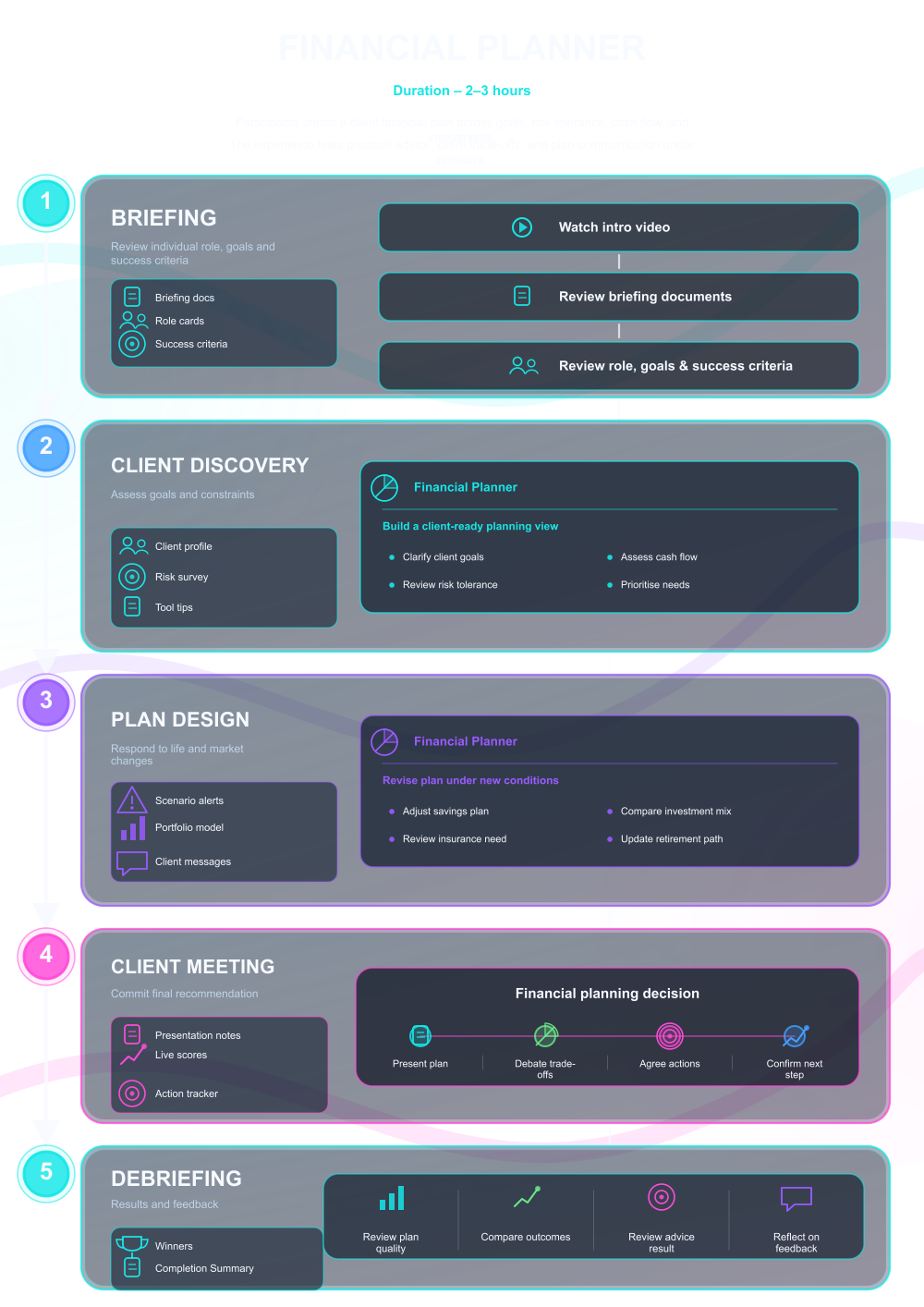

What Participants Do
In the simulation, participants will:
- Conduct initial client consultations to gather data and understand financial goals and risk tolerance.
- Create and analyze personal financial statements.
- Develop tailored, multi-faceted financial plans for each client.
- Construct and manage investment portfolios aligned with client objectives.
- Make recommendations on insurance coverage, retirement savings, and debt repayment.
- Respond to dynamic market shocks.
- Navigate unexpected client life events.
- Present and justify financial plans to simulated clients and instructors.

Learning Objectives
By the end of the simulation, participants will be able to:
- Analyze a client's complete financial situation to identify strengths, weaknesses, and opportunities.
- Synthesize client data into a coherent and actionable long-term financial plan.
- Evaluate different investment, insurance, and debt products to create suitable recommendations.
- Construct a well-diversified investment portfolio that aligns with a client's risk profile and time horizon.
- Adapt a financial plan in response to changing market conditions and client circumstances.
- Communicate complex financial concepts effectively and empathetically to clients.
How the Financial Planner Simulation Works
This simulation can be run individually or in teams in academic or corporate contexts. Each cycle represents a stage of getting through a pressing financial situation.
1. Introduction and Client Assignment You are introduced to your role as a financial planner and assigned your first set of mock clients.
2. Data Gathering and Analysis You access each client's detailed financial dashboard, reviewing their income, expenses, assets, liabilities, and goals.
3. Plan Development Build a plan — this includes setting allocation percentages for investments, selecting specific funds/stocks/bonds, recommending insurance policies, and proposing savings targets.
4. Execution and Monitoring You submit your plan and the simulation engine projects its outcomes over time. You monitor portfolio performance and client satisfaction.
5. Dynamic Rounds The simulation progresses through several rounds. Each round introduces new market data, economic events, and potential client emergencies, forcing you to re-evaluate and adjust your strategies.
6. Scoring and Debrief Your performance is scored based on key metrics: Portfolio Growth, Goal Achievement, Risk-Adjusted Returns, and Client Satisfaction Score. A comprehensive debrief provides insights into your strategic choices.
Frequently Asked Questions
Assessment
Assessment of participant performance can be tailored according to the host institution’s objectives (business school, corporate training, assessment centre). Typical assessment criteria include:
- Client Net Worth Growth
- Efficiency of achieving or exceeding clients' specific life goals.
- Portfolio performance relative to the risk taken, penalizing excessive or inappropriate risk.
- Communication and plan alignment with the client's expectations and comfort level.
- Depth and logic of scenario analysis.