No. Guidance and examples are provided for all levels.

Financial Modeling and Valuation Simulation
In this simulation, participants build financial models, apply valuation techniques, and present investment recommendations - balancing technical rigour with strategic judgment under real-world time pressure and uncertainty.

Financial Modeling and Valuation Simulation Overview
Participants take on the role of financial analysts tasked with valuing companies, building models, and pitching recommendations. Each round introduces new data points - financial statements, market conditions, peer comparisons, and external shocks.
They must integrate multiple valuation approaches, refine assumptions, and communicate results clearly to stakeholders. The simulation emphasizes analytical precision, adaptability, and persuasion, helping participants bridge technical modeling skills with strategic communication.
This simulation is ideal for business schools, investment training, and corporate finance programs. It makes valuation tangible, helping participants experience the rigour and judgment calls behind real-world investment analysis.

Financial Modeling and Valuation Simulation Concepts
Participants work through realistic scenarios, which can be customized to emphasize or exclude specific topics depending on learning goals. This modular structure allows the simulation to be tailored to any type of session. Key concepts include:
- Three-statement financial modeling
- Discounted Cash Flow (DCF) valuation
- Trading comparables and precedent transactions
- Sensitivity and scenario analysis
- Cost of capital and capital structure impacts
- Forecasting revenue, expenses, and growth drivers
- Market and industry analysis
- Communicating valuation insights effectively
- Handling external shocks in valuations
- Ethical considerations in financial modeling

Gameflow
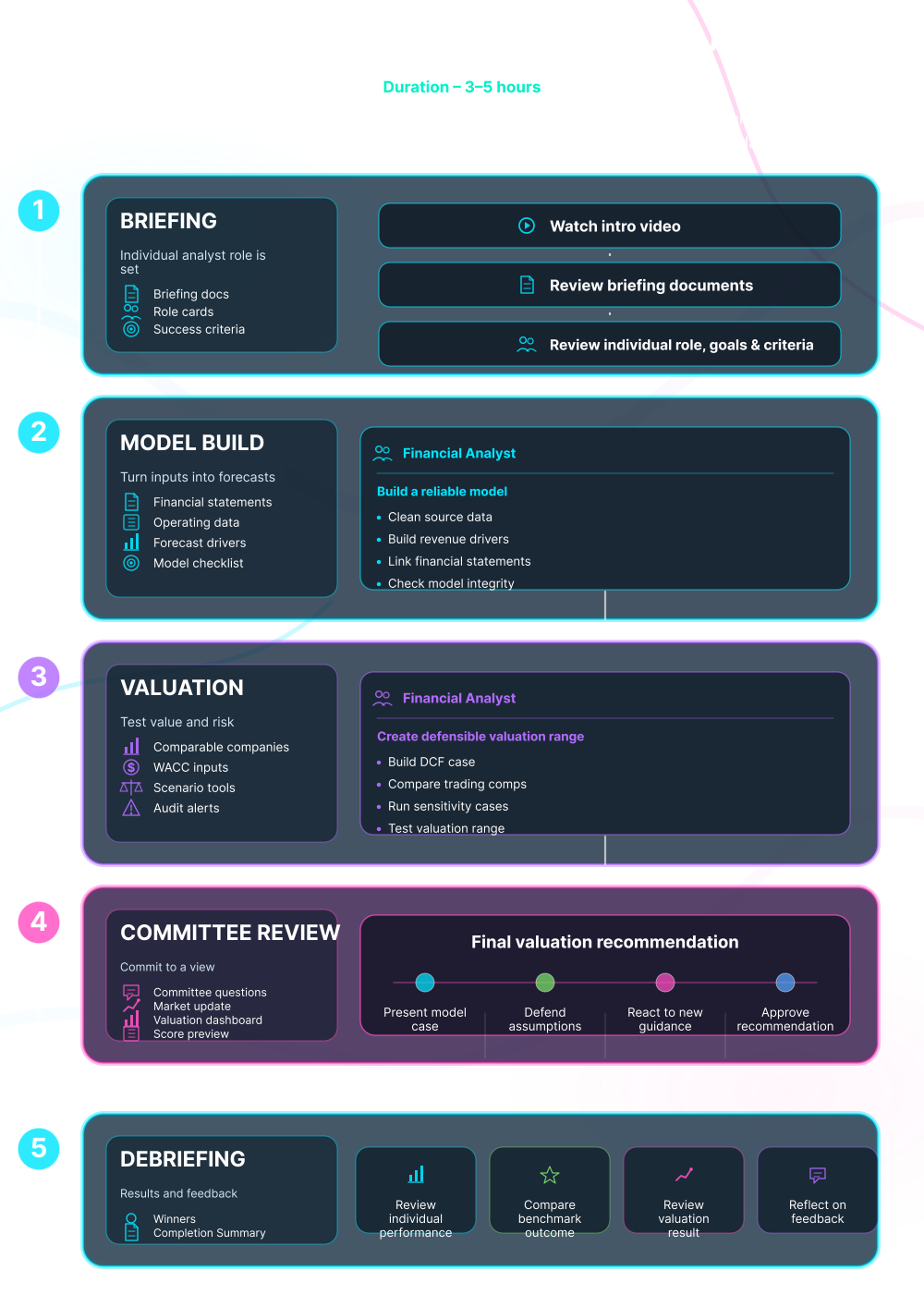

What Participants Do
In the simulation, participants act as analysts building valuation cases. They:
- Develop and adjust three-statement financial models
- Apply multiple valuation methods to companies
- Test assumptions through sensitivity and scenario analysis
- Compare performance against peers and transaction data
- Respond to external shocks such as market downturns
- Present recommendations in memos or pitch-style presentations

Learning Objectives
By the end of the simulation, participants will be able to:
- Build robust three-statement financial models
- Apply DCF, comparables, and precedent analysis effectively
- Use sensitivity and scenario analysis to test assumptions
- Forecast financial performance with discipline and accuracy
- Communicate valuation results persuasively to stakeholders
- Recognize the impact of capital structure on valuation
- Integrate qualitative insights with quantitative modeling
- Adapt models to external shocks and new information
- Apply ethical judgment in financial modeling choices
- Gain confidence in investment decision-making processes
The simulation’s flexible structure ensures that these objectives can be calibrated to match the depth, duration, and focus areas of each program, whether in higher education or corporate learning.

How the Financial Modeling and Valuation Simulation Works
The simulation can be run individually or in teams, in classrooms or training workshops. Each cycle mirrors a valuation assignment.
1. Receive a Scenario or Brief: Participants are introduced to a company and given financial and market data.
2. Analyse the Situation: They review financials, forecasts, and industry trends to identify assumptions.
3. Build and Refine Models: Participants develop financial models and apply valuation methods.
4. Collaborate Across Roles: Teams may role-play as analysts, managers, or investors debating assumptions.
5. Communicate Outcomes: Participants deliver pitch decks, memos, or presentations with recommendations.
6. Review and Reflect: Feedback highlights valuation accuracy, presentation clarity, and strategic insights. Participants refine models across rounds.
Frequently Asked Questions
Assessment
Assessment can be tailored to focus on technical modeling, strategic insight, or communication. Participants may be evaluated on:
- Accuracy and robustness of financial models
- Application of multiple valuation methods
- Responsiveness to shocks and assumption changes
- Clarity in communicating recommendations
- Collaboration in building and presenting analyses
You can also include memo writing and debrief presentations as part of the assessment structure. Additionally, you can also add a built-in peer and self-assessment tool to see how participants rate themselves. This flexibility allows the simulation to be easily integrated by professors as graded courses at universities and by HR at assessment centres at companies.