It transforms passive learning into active experience, building intuition, decision-making under pressure, and practical skills that textbooks alone cannot provide. It’s the bridge between theory and practice.

Financial Markets Simulation
The Financial Markets Simulation is a dynamic, hands-on platform where participants experience the pressure, strategy, and excitement of real-world financial markets.

Financial Markets Simulation Overview
This immersive simulation drops participants into a realistic, multi-asset financial ecosystem. Unlike static case studies, our simulation features a live, reactive market engine where prices move based on macroeconomic events, corporate news, and—critically—the aggregate trading decisions of all participants. They manage a portfolio, react to live news and economic data, and compete to achieve superior risk-adjusted returns.
Teams or individuals take on the role of asset managers at a hedge fund or proprietary trading desk. They are given a mandate, initial capital, and access to trading terminals for equities, indices, bonds, currencies, and derivatives.
Over multiple simulated periods (representing weeks or months), they must conduct research, build strategies, execute trades, and manage risk, all while navigating market volatility and unexpected shocks. The experience bridges textbook theory with the chaotic, psychological reality of market behavior.

Financial Markets Simulation Concepts
Participants work through realistic scenarios, which can be customized to emphasize or exclude specific topics depending on the learning goals. This modular structure allows the simulation to be tailored to any type of session. Key concepts include:
- Market Mechanics and Price Discovery
- Portfolio Construction and Asset Allocation
- Risk Management
- Macroeconomic Analysis and Sector Rotation
- Technical vs. Fundamental Analysis
- Behavioral Finance and Herd Mentality
- Derivatives Hedging and Speculation
- Performance Attribution and Benchmarking

Gameflow

What Participants Do
In the simulation, participants will:
- Research companies, interpret economic indicators, and assess market sentiment.
- Decide on a core investment philosophy.
- Place market, limit, and stop orders across various asset classes.
- Actively monitor portfolio exposure, set stop-losses, and use options/futures to hedge positions.
- Pivot strategies in response to earnings reports, central bank decisions, and geopolitical "market shocks."
- Defend their investment decisions and performance to a simulated "investment committee" or peers.

Learning Objectives
By the end of the simulation, participants will be able to:
- Articulate how different economic variables impact various asset classes.
- Construct a diversified portfolio aligned with a specific risk-return mandate.
- Execute basic hedging strategies using derivative instruments.
- Analyze a trading book, identifying sources of profit, loss, and key risk exposures.
- Demonstrate the psychological challenges of trading and the impact of behavioral biases.
- Calculate and interpret key performance and risk metrics (Sharpe Ratio, Max Drawdown, Beta).
How the Financial Markets Simulation Works
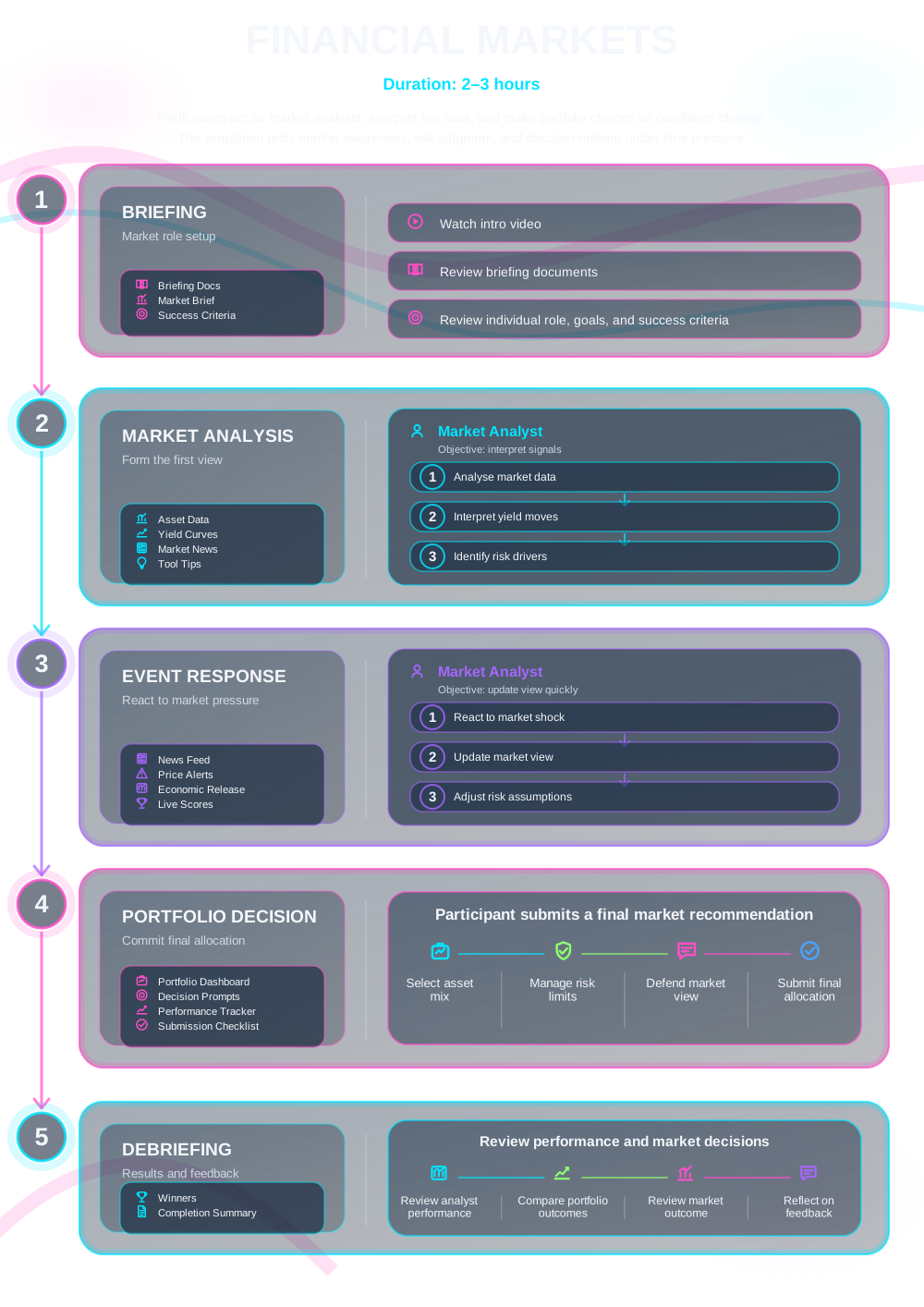
This simulation can be run individually or in teams in academic or corporate contexts. Each cycle represents a stage of getting through a pressing financial situation.
1. Setup and Briefing Participants are divided into teams, assigned a fund mandate, and granted virtual capital. They receive access to the trading platform, market data feeds, and an initial economic briefing.
** 2. News Cycle** Release of economic data, corporate news, and M&A rumors.
3. Trading Session Teams analyze information and execute trades.
4. Market Clear The engine processes all orders, determining new market prices.
** 5. Portfolio Review Teams see their updated P&L, risk metrics, and ranking.
** 6. Shocks** Instructors can inject unforeseen events to test resilience.
** 7. Debrief** A comprehensive review links in-simulation experiences to financial theory and best practices.
Frequently Asked Questions
Assessment
Assessment of participant performance can be tailored according to the host institution’s objectives (business school, corporate training, assessment centre). Typical assessment criteria include:
- Risk-adjusted returns (Sharpe Ratio), consistency of performance, and adherence to stated portfolio mandates.
- Quality of pre-trade analysis, clarity of investment thesis, and justification for entries/exits.
- Ability to stay within predefined risk limits (leverage, sector exposure, drawdown controls).
- Teams present their portfolio journey, key lessons learned, and a post-mortem analysis of their successes and failures to a panel.