A standard simulation runs for 6-10 decision rounds, which can be completed over a few hours in a single workshop or across multiple class sessions.

Financial Literacy Simulation
Master Your Money From Basics to Financial Freedom. Build a virtual life, making real-world financial decisions and experiencing the long-term consequences of the choices made in a risk-free environment.

Financial Literacy Simulation Overview
The simulation bridges the gap between theoretical knowledge and real-world application. Participants are placed in a realistic financial scenario where they must manage income, expenses, debt, investments, and unexpected life events over a compressed timeframe.
Unlike a lecture or a textbook, this learning-by-doing approach creates powerful "aha!" moments. Participants see firsthand how compound interest can work for them (or against them), why budgeting is crucial for financial health, and how strategic investing is key to building wealth.
The simulation provides a safe space to make financial mistakes, learn from them, and develop the confidence to manage their actual finances effectively.

Financial Literacy Simulation Concepts
Participants work through realistic scenarios, which can be customized to emphasize or exclude specific topics depending on the learning goals. This modular structure allows the simulation to be tailored to any type of session. Key concepts include:
- Budgeting and Cash Flow Management
- Debt Management
- Saving and Emergency Funds
- Investing Fundamentals
- Compound Interest
- Credit Scores and Reports
- Insurance and Risk Management
- Financial Goal Setting
- Taxes

Gameflow
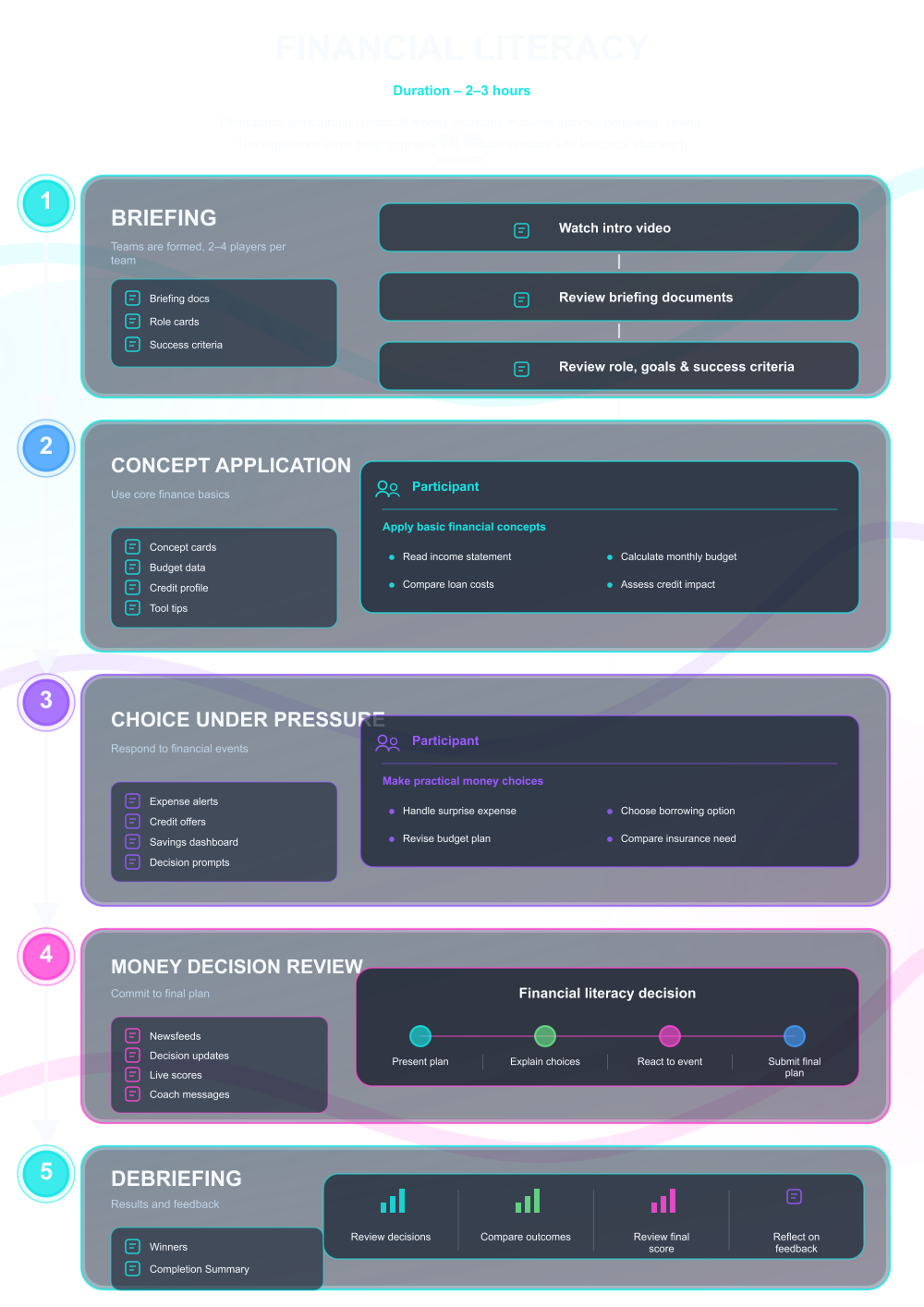

What Participants Do
In the simulation, participants will:
- Create a detailed monthly budget based on a simulated salary and living expenses.
- Make strategic decisions about housing, transportation, and lifestyle spending.
- Manage various forms of debt, choosing between different repayment strategies.
- Allocate savings into a diverse portfolio of investment assets.
- Navigate random "Life Events" that simulate real-world financial shocks and opportunities.
- Analyze their financial performance through dynamic dashboards showing net worth, credit score, and progress toward goals.
- Compete individually or in teams to achieve the highest net worth and financial health score.

Learning Objectives
By the end of the simulation, participants will be able to:
- Construct and manage a personal budget that aligns with financial goals.
- Evaluate different debt instruments and formulate an effective repayment plan.
- Explain the fundamental principles of investing and asset allocation.
- Calculate the impact of compound interest on savings and debt.
- Articulate the factors that influence a credit score and how to maintain a good one.
- Develop a holistic financial plan that incorporates insurance, emergency savings, and investment for the future.
- Make informed, confident financial decisions in a simulated, yet realistic, environment.
How the Financial Literacy Simulation Works
This simulation can be run individually or in teams in academic or corporate contexts. Each cycle represents a stage of getting through a pressing financial situation.
1. Setup and Role Creation Participants are assigned a profile with a career, salary, student loan debt, and initial savings. They set their financial goals.
2. Analyse the Situation: They review the data to prepare best possible strategy.
3. Allocate personal funds: Participants input their decisions for the month: budget allocations, debt payments, and investment trades. The simulation is divided into rounds, each representing several months or a year.
4. Check for results After submitting decisions, the simulation engine processes market movements, applies interest to debt and investments, and triggers random life events. Participants then see the results of their choices on their updated dashboard.
5. Review and Reflect: Feedback highlights portfolio quality, risk assessment, and clarity of narrative.
Frequently Asked Questions
Assessment
Assessment of participant performance can be tailored according to the host institution’s objectives (business school, corporate training, assessment centre). Typical assessment criteria include:
- Financial Performance Score
- Net Worth Growth
- Debt-to-Income Ratio
- Credit Score Trend
- Goal Achievement
- Strategic Decision-Making
Assessment may incorporate peer and self-review components, facilitator scoring, and debrief discussion. Results may feed into grades, executive feedback, certification or development plans.