This simulation is ideal for students in finance, economics, or business administration (BSc, MSc, MBA) and professionals in banking, consulting, or regulation seeking to understand the "big picture" of financial firms.

Financial Institutions Simulation
Step into the world of banking, asset management, and insurance. This simulation places you at the heart of a modern financial institution, where you must balance profitability with prudence, growth with regulation, and strategy with sudden market shocks.

Financial Institutions Simulation Overview
The Financial Institutions Simulation is a dynamic, multiplayer experience designed by seasoned finance professionals. It immerses participants in the complex, interconnected ecosystem of a universal financial institution, where decisions in one area ripple across the entire organization.
Participants navigate a realistic, evolving market as the leadership team of a financial entity. They are tasked with steering their institution through multiple business cycles, making integrated decisions that span commercial banking, investment management, risk oversight, and regulatory compliance. Each round introduces new challenges, shifting interest rates, credit events, competitive threats, or new regulatory demands.
The simulation emphasizes holistic decision-making, requiring participants to align tactical moves in trading or lending with long-term strategic goals and capital health. This simulation is ideal for advanced undergraduate courses, MBA programs, and executive training, providing a safe yet intense environment to experience the trade-offs and tensions inherent in managing a modern financial firm.

Financial Institutions Simulation Concepts
Participants work through realistic scenarios, which can be customized to emphasize or exclude specific topics depending on the learning goals. This modular structure allows the simulation to be tailored to any type of session. Key concepts include:
- Capital Adequacy and Basel Regulations
- Asset-Liability Management
- Commercial Banking
- Trading and Investment Banking
- Risk Management Frameworks
- Profitability Metrics
- Funding and Liquidity Management
- Regulatory Reporting and Stress Testing
- Integrated Financial Statement Analysis
- Strategic Planning and Investor Relations

Gameflow
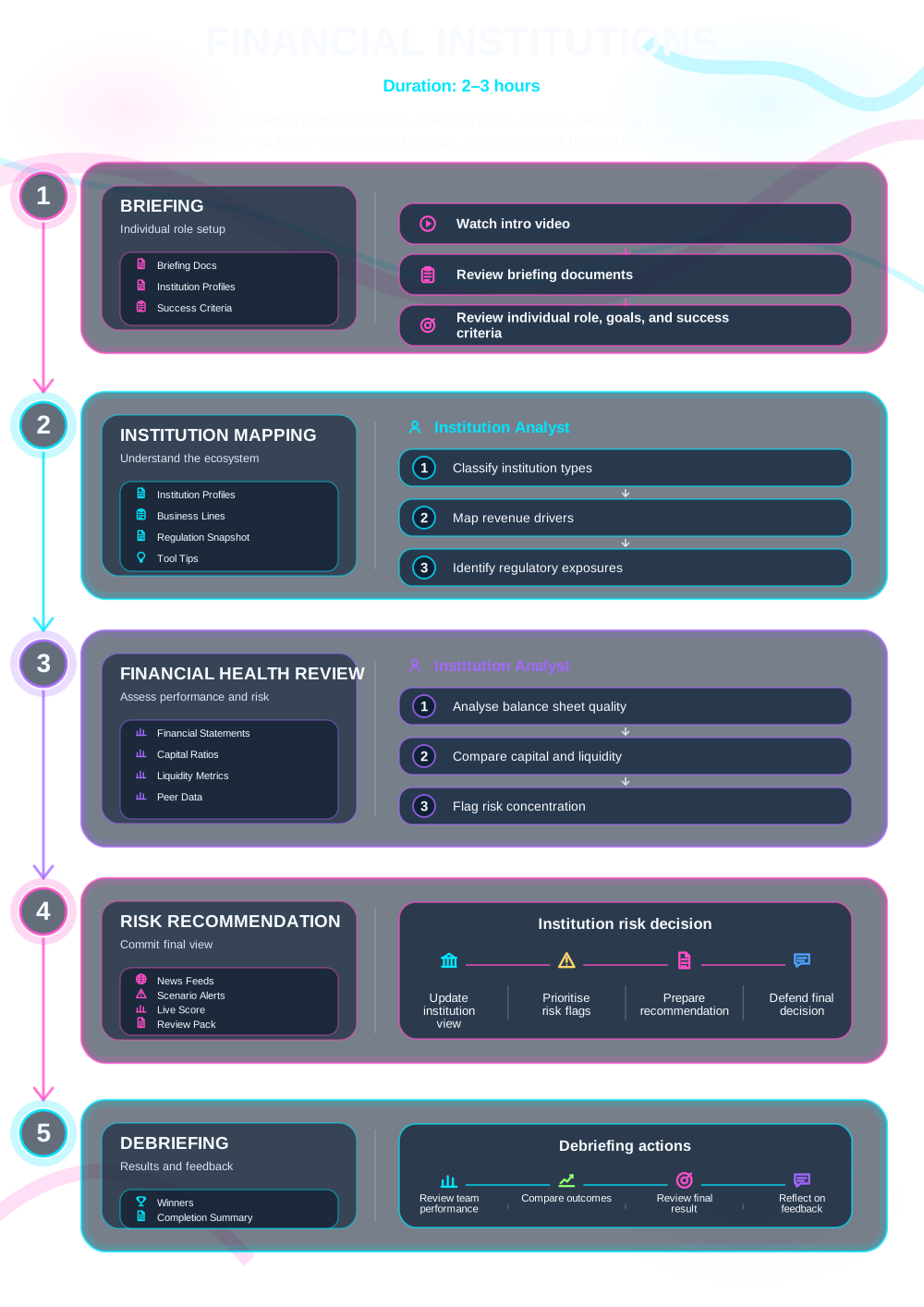

What Participants Do
In the simulation, participants will:
- Set the institution's risk appetite and strategic direction for different business units.
- Allocate precious capital across competing divisions like commercial lending and trading desks.
- Approve major loans and manage the credit quality of the overall portfolio.
- Oversee the trading desk's positions and risk exposures.
- Issue dividends, raise capital, or manage buybacks based on regulatory and strategic needs.
- Respond to real-time economic data releases, regulatory announcements, and simulated market crises.
- Present their institution's strategy and performance to a supervisory board (instructors or peers).

Learning Objectives
By the end of the simulation, participants will be able to:
- Understand the core functions, interdependencies, and regulatory constraints of a complex financial institution.
- Apply key regulatory concepts, including capital and liquidity ratios, in strategic decision-making.
- Analyze and manage the fundamental trade-off between risk and return at an institutional level.
- Evaluate the impact of micro-decisions (a single large trade or loan) on the firm's macro-financial health.
- Develop integrated strategies that align business unit goals with overall firm stability and profitability.
- Interpret financial results and regulatory metrics to diagnose institutional strengths and vulnerabilities.
- Communicate complex financial strategies and outcomes clearly to stakeholders.
- Build confidence in making high-stakes decisions under uncertainty, mirroring the pressures faced by real financial executives.
How the Financial Institutions Simulation Works
This simulation can be run individually or in teams in academic or corporate contexts. Each cycle represents a stage of getting through a pressing financial situation.
1. Receive the Mandate Teams are given control of a financial institution with a specific starting position, history, and stakeholder expectations.
** 2. Analyze the Landscape** Teams review economic forecasts, their current balance sheet, risk exposures, regulatory standings, and competitive intelligence.
3. Make Integrated Decisions Participants make a series of coordinated decisions on capital allocation, loan pricing, trading positions, funding strategies, and more.
4. Navigate the Round The simulation processes decisions, introducing random market events, competitor actions, and regulatory feedback that teams must react to.
5. Review Outcomes Teams receive detailed reports on their financial performance, risk metrics, regulatory compliance, and market ranking.
6. Adapt Strategy Based on feedback, teams refine their strategy for the next round, learning from past successes and mistakes in a continuous cycle of analysis and action.
Frequently Asked Questions
Assessment
Assessment of participant performance can be tailored according to the host institution’s objectives (business school, corporate training, assessment centre). Typical assessment criteria include:
- Achievement of target profitability metrics while maintaining capital and liquidity above regulatory minimums.
- Ability to identify, measure, and proactively manage key risks throughout the simulation.
- Clarity of the chosen strategy and the quality of tactical adjustments in response to market changes.
- Quality of analysis and justification for key decisions during debriefs or in submitted strategy memos.
- Effectiveness in team discussions and in presenting results to the "board." The simulation provides detailed performance data, and facilitators can easily incorporate peer reviews, reflective memos, and final presentations into a graded structure.