This simulation is ideal for MBA students, finance majors, early-career professionals in FP&A or accounting, and managers seeking to deepen their understanding of corporate finance and financial control functions.

Financial Controller Simulation
Move beyond accounting theory and step into the high-stakes role of a Financial Controller. This simulation immerses participants in the day-to-day and strategic financial decisions that drive business performance, cash flow, and shareholder value.

Financial Controller Simulation Overview
The Financial Controller Simulation places participants in the central nervous system of a dynamic company. As the Financial Controller, they are not just recorders of history but key players in shaping the company's future. You will grapple with real-world challenges: managing cash flow, optimizing working capital, making critical investment decisions, ensuring accurate and timely financial reporting, and providing data-driven insights to the executive team.
This hands-on simulation bridges the gap between academic knowledge and practical application, transforming financial concepts into actionable business intelligence. Participants will experience the direct consequences of their decisions on the company's financial health and learn to communicate financial performance effectively to stakeholders.
Although ideal for undergraduate and graduate finance courses, executive training, and corporate finance skill workshops, the simulation is modular and scalable, allowing instructors to vary complexity.

Financial Controller Simulation Concepts
Participants work through realistic scenarios, which can be customized to emphasize or exclude specific topics depending on the learning goals. This modular structure allows the simulation to be tailored to any type of session. Key concepts include:
- Financial Reporting and Compliance
- Cash Flow Management
- Working Capital Optimization
- Budgeting and Forecasting
- Cost Management and Analysis
- Capital Budgeting
- Internal Controls
- Performance Metrics
- Management Reporting

Gameflow
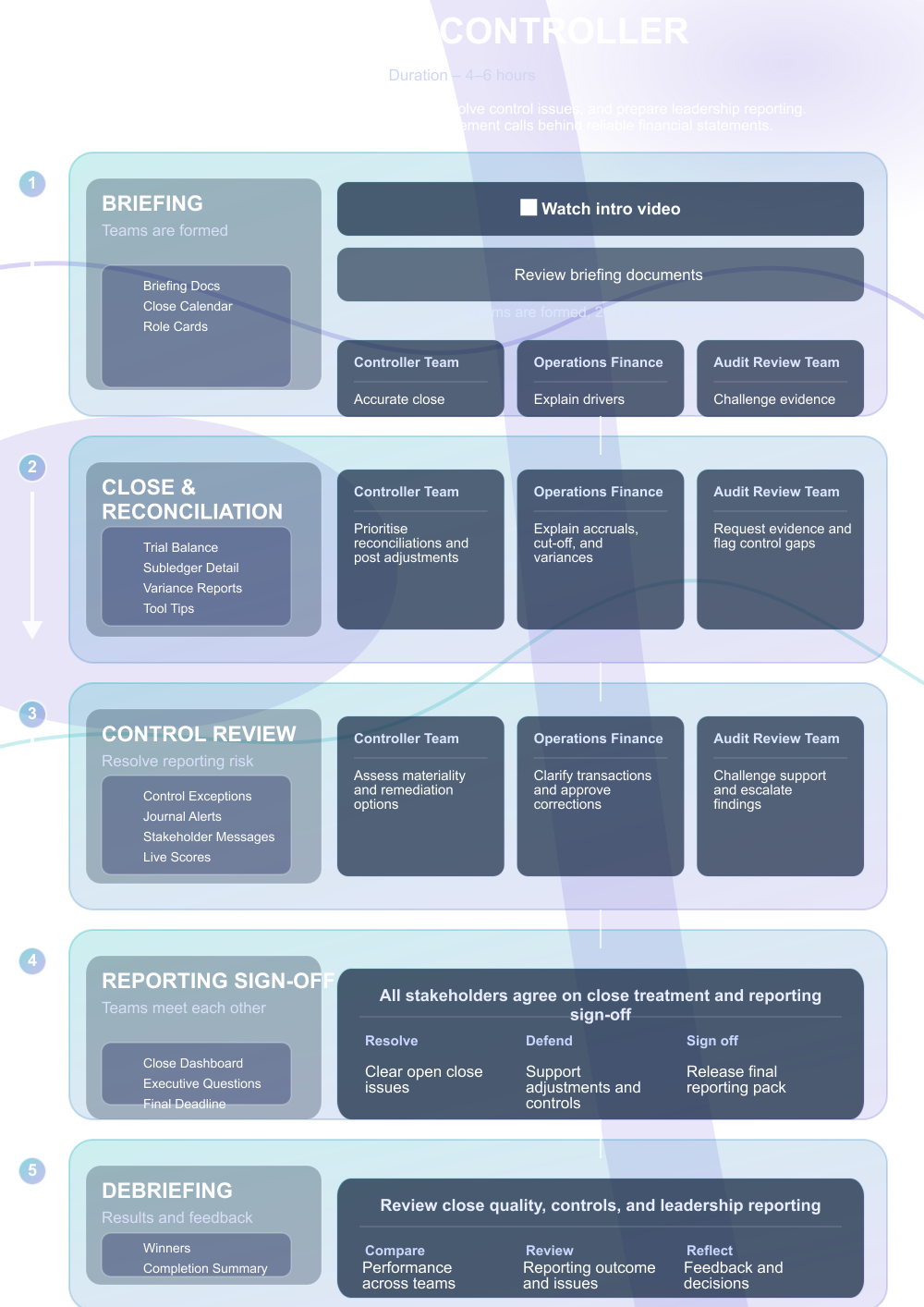

What Participants Do
In the simulation, participants will:
- Analyze daily transaction data and record them in the general ledger.
- Prepare monthly and quarterly financial statements under tight deadlines.
- Build a 12-month cash flow forecast to predict funding needs.
- Make strategic decisions on credit policies for customers and payment terms with suppliers.
- Evaluate and approve or reject capital expenditure requests from department heads.
- Identify significant budget variances and investigate their root causes.
- Present quarterly financial results to the "board of directors" (instructors/peers).
- Respond to unexpected economic events, such as supply chain disruptions or sudden shifts in demand.

Learning Objectives
By the end of the simulation, participants will be able to:
- Construct the three core financial statements and articulate the linkages between them.
- Forecast cash flow requirements and implement strategies to mitigate shortfalls.
- Analyze a company's working capital cycle and recommend improvements.
- Apply capital budgeting techniques to make sound long-term investment decisions.
- Evaluate departmental performance through variance analysis and KPI tracking.
- Design effective internal controls to reduce risk and prevent fraud.
- Communicate financial information clearly and persuasively to support strategic decision-making.
- Develop a comprehensive understanding of the Financial Controller's strategic role within an organization.
How the Financial Controller Simulation Works
This simulation can be run individually or in teams in academic or corporate contexts. Each cycle represents a stage of getting through a pressing financial situation.
1. Introduction You are introduced to your simulated company, its industry, current financial position, and strategic goals.
2. Quarterly Cycles The simulation progresses in quarterly decision rounds. Each round represents one fiscal quarter.
3. Decision-Making In each round, you analyze data, run reports, and make critical decisions impacting all areas of the company's finances.
4. Results and Analysis After submitting your decisions, the simulation engine processes the outcomes. You receive a new set of financial statements and performance dashboards.
5. Review and Iterate You analyze the results, see the impact of your choices, and receive feedback. You then use these insights to make better decisions in the next quarter.
6. Final Review The simulation culminates in a final debrief, comparing your company's performance against peers and learning objectives.
Frequently Asked Questions
Assessment
Assessment of participant performance can be tailored according to the host institution’s objectives (business school, corporate training, assessment centre). Typical assessment criteria include:
- Key financial health metrics achieved in the simulation: Cash Flow Stability, Return on Invested Capital, and Accuracy of Financial Forecasts.
- Justifications for major decisions, evaluating analytical depth and strategic rationale.
- A cohesive presentation of the company's annual performance to the "board," assessing communication skills, data storytelling, and ability to defend strategy.
- Individual contribution, collaboration, and teamwork within the finance group.
- Short tests to ensure mastery of fundamental accounting and finance principles applied throughout the simulation.