It is ideal for undergraduate and MBA students in finance, career-changers seeking to break into finance, and professionals in related fields (e.g., accounting, sales and trading) who want to build core valuation skills.

Financial Analyst Simulation
Step beyond the textbook and learn by doing, as you analyze companies, build financial models, and make critical investment recommendations that drive real-world business decisions.

Financial Analyst Simulation Overview
The Financial Analyst Simulation is a dynamic, online learning platform that replicates the core responsibilities of an entry-level financial analyst at a leading asset management firm or investment bank. Participants are tasked with conducting in-depth fundamental analysis of a publicly traded company.
They will be provided with a company's financial statements (Income Statement, Balance Sheet, Cash Flow Statement), industry research reports, and market data. Participants’ mission is to dissect this information, forecast future performance, and determine the intrinsic value of the company.
The simulation challenges them to integrate qualitative factors with hard numbers, culminating in a professional investment thesis and valuation report. This hands-on experience bridges the gap between academic theory and the practical skills demanded by top employers in finance.

Financial Analyst Simulation Concepts
Participants work through realistic scenarios, which can be customized to emphasize or exclude specific topics depending on the learning goals. This modular structure allows the simulation to be tailored to any type of session. Key concepts include:
- Financial Statement Analysis
- Discounted Cash Flow Modeling
- Comparable Company Analysis
- Precedent Transactions Analysis
- Free Cash Flow Calculation
- Weighted Average Cost of Capital
- Financial Forecasting and Projection Modeling
- Investment Thesis Development
- Financial Modeling Best Practices
- Data Synthesis and Professional Reporting

Gameflow

What Participants Do
In the simulation, participants will:
- Conduct a thorough review of a company's past performance using ratio and trend analysis.
- Create a robust, three-statement financial model to forecast future revenue, expenses, and cash flows.
- Calculate the company's intrinsic value using primary valuation methodologies: DCF, Comparable Companies, and Precedent Transactions.
- Synthesize your quantitative and qualitative findings into a clear and compelling Buy, Hold, or Sell recommendation.
- Draft a concise investment memo, justifying your valuation and thesis with supporting data and analysis.
- Defend your analysis and recommendation in a clear, professional manner, mirroring a real-world analyst presentation.

Learning Objectives
By the end of the simulation, participants will be able to:
- Interpret and analyze the three core financial statements.
- Build a dynamic, integrated three-statement financial model from scratch.
- Calculate a company's cost of capital (WACC) and unlevered free cash flows.
- Construct a DCF model to determine the intrinsic value of a company.
- Perform relative valuation using comparable company and precedent transaction analyses.
- Formulate a data-driven investment thesis and support it with a valuation range.
- Communicate complex financial analysis clearly and effectively in a written report.
How the Financial Analyst Simulation Works
This simulation can be run individually or in teams in academic or corporate contexts. Each cycle represents a stage of getting through a pressing financial situation.
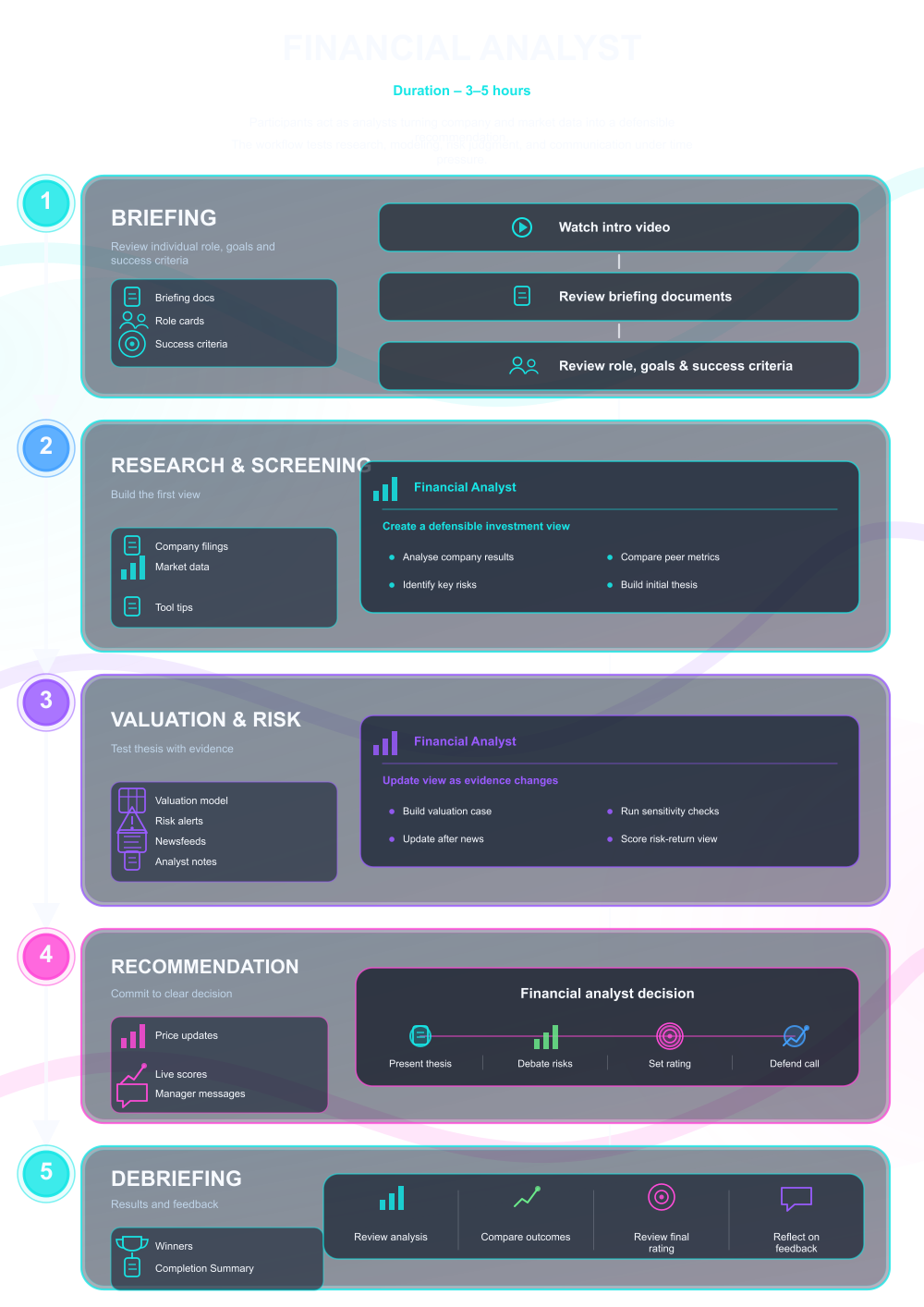
1. Introduction and Case Materials Participants are assigned the roles of financial analysts and given a comprehensive company case study, including historical financials and industry data.
2. Financial Analysis Module Participants analyze the company's profitability, liquidity, and efficiency through ratio analysis and identify key performance drivers.
3. Financial Modeling Module Participants build a projected Income Statement, Balance Sheet, and Cash Flow Statement for the next 5 years.
4. Valuation Module Participants apply DCF, Comparable Companies, and Precedent Transactions methods to arrive at a target share price and valuation range.
5. Final Recommendation Participants consolidate all your work into a final investment memo, presenting your valuation, thesis, and final recommendation.
Frequently Asked Questions
Assessment
Assessment of participant performance can be tailored according to the host institution’s objectives (business school, corporate training, assessment centre). Typical assessment criteria include:
- Mathematical integrity of participants’ financial model and the logic of your forecasting assumptions.
- Final valuation range and the methodological soundness of participants’ DCF and comparable analyses are evaluated.
- The strength and clarity of the written investment thesis and the justification for your recommendation are assessed.
- Depth and logic of scenario analysis and sensitivity ranges
- Clarity, coherence, and persuasiveness of the valuation memo and presentation.