No deep prior experience in strategy simulation is required. Basic business understanding is helpful, but the simulation includes guided materials and facilitation so participants of differing backgrounds can engage.

Executive Decision-Making Under Uncertainty Simulation
In this simulation, participants must make strategic decisions under volatility, ambiguity and incomplete information, all while balancing growth, risk mitigation and stakeholder expectations.

Executive Decision-Making Under Uncertainty Simulation Overview
The simulation replicates real-world leadership challenges where direction is unclear, the external environment is shifting, and rapid, informed decisions matter.
Participants will act as an executive team within a company operating in an evolving market: they’ll face surprises such as competitor moves, regulatory changes or macroeconomic shocks. Across multiple rounds they’ll analyse data, debate strategic options, set priorities, allocate resources and respond to unfolding events.
Participants not only make decisions but also must reflect on the outcomes, adapt their strategy and communicate their choices to stakeholders. The experience is designed to sharpen judgment, enhance agility and boost confidence in high-stakes leadership scenarios.

Executive Decision-Making Under Uncertainty Simulation Concepts
Participants work through realistic scenarios, which can be customized to emphasize or exclude specific topics depending on the learning goals. This modular structure allows the simulation to be tailored to any type of session. Key concepts include:
- Strategic decision-making under uncertainty and volatility
- Scenario analysis, sensitivity and “what-if” thinking
- Balancing short-term operational imperatives with long-term strategic vision
- Resource allocation and prioritisation when information is incomplete
- Risk management and resilience in ambiguous settings
- Stakeholder management: investors, board, employees, regulators
- Adaptive leadership: pivoting strategy in response to shocks
- Communication and change management in uncertain contexts
- Competitive dynamics and market disruption
- Metrics and feedback: how decisions translate into outcomes

Gameflow
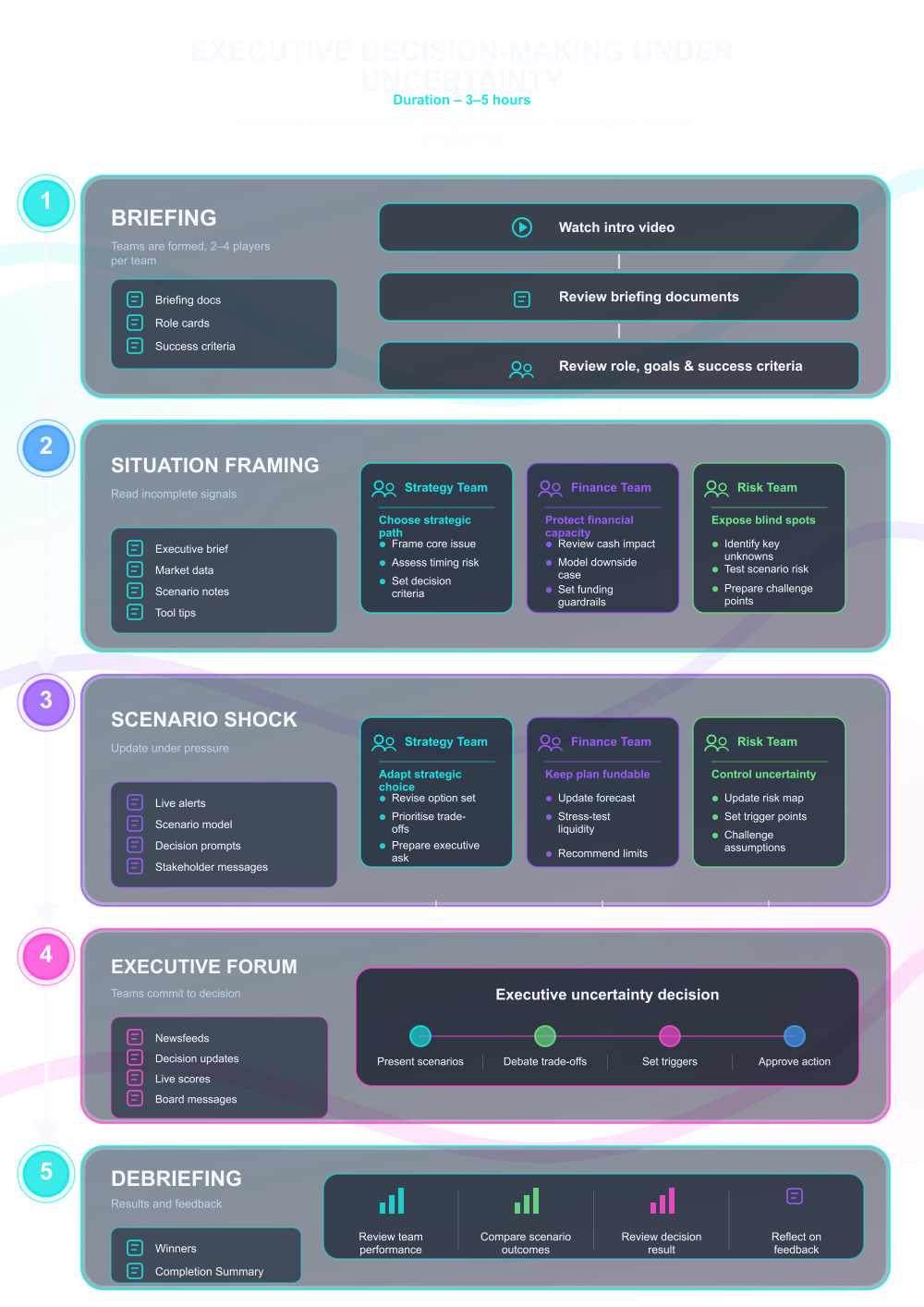

What Participants Do
In the simulation, participants will:
- Analyse available data
- Identify key uncertainties and potential scenario paths
- Formulate strategic decisions
- Allocate resources
- Respond to surprise events (regulatory shocks, competitor launches, supply-chain disruptions) that require recalibration
- Communicate their strategy to stakeholders and field questions
- Reflect on the outcome of each round: what worked, what didn’t, why — then adjust strategy for the next round
- Optionally prepare a debrief memo or presentation summarising lessons, performance and next steps

Learning Objectives
By the end of the simulation, participants will be able to:
- Understand the nature of uncertainty and how executives must make decisions without full information
- Apply scenario-planning and adaptive thinking in strategic leadership contexts
- Make resource allocation decisions that balance growth, risk and resilience
- Detect early signals of disruption or competitive shifts and respond appropriately
- Communicate strategic choices and rationale clearly to diverse stakeholders under pressure
- Learn how to pivot strategy dynamically in response to new data or environmental changes
- Build confidence in leading through ambiguity, not just in stable environments
- Enhance collaboration across functions (strategy, operations, finance, communications) under uncertain conditions
- Use feedback loops (metrics, outcomes) to refine decisions and close the “learning loop”
The simulation’s flexible structure ensures that these objectives can be calibrated to match the depth, duration, and focus areas of each program, whether in higher education or corporate learning.
How the Executive Decision-Making Under Uncertainty Simulation Works
This simulation can be run individually or in teams in academic or corporate contexts.
1. Analyze the Situation Participants receive a detailed company scenario, market overview, internal performance indicators and initial decision-options.
2. Identify Key Risks and Draft a Plan Teams review the information, identify key risks and opportunities, discuss strategic options and agree on a plan.
3. Manage Finance and Team Dynamics Participants allocate limited resources - time, money, energy - while keeping burn rate low and team morale high.
4. Communicate your Decisions Teams present their decisions to a “stakeholder panel” and answer questions.
5. Assess the Outcome The simulation reveals the results of the decisions: how the environment evolved, how competitors responded, what the impact was on performance metrics. Teams receive feedback on effectiveness, agility and risk-management.
6. Review Performance Participants review performance, identify learning points, adjust their strategy, and begin the next round with updated context..
Frequently Asked Questions
Assessment
Participants may be evaluated on:
- Strategic decision-outcome
- Agility and adaptability, team's ability to respond to surprise events and revise their strategy
- Quality of resource allocation and prioritisation decisions
- Effectiveness of stakeholder communication
- Ability to identify what worked and what did not, and to propose improved next steps
- Team collaboration and leadership dynamics
- Peer and self-assessment components: participants rate their own and their peers’ contributions, decisions and learning progress
Assessment can combine numeric scoring, qualitative feedback, peer review, and instructor debriefing. This flexibility allows the simulation to serve both graded university courses and corporate finance training environments.