No. Ethical dilemmas are designed to be relatable for varied audiences.

Ethics in Finance Simulation
In this simulation, participants act as finance professionals facing dilemmas - balancing profitability, compliance, and integrity while navigating stakeholder pressures, regulatory requirements, and reputational risks under real-world constraints.

Ethics in Finance Simulation Overview
Participants take on roles such as bankers, investment managers, regulators, or corporate executives, confronted with ethical challenges across finance. Each round presents new dilemmas: insider trading, mis-selling, ESG trade-offs, or aggressive earnings targets.
They must decide how to respond - choosing between maximizing short-term gains, maintaining compliance, or upholding ethical standards. Each choice carries consequences for financial outcomes, stakeholder trust, and personal credibility.
This simulation is ideal for business schools, corporate training, and executive education programs. It makes ethics tangible, showing how financial decisions ripple across organizations, markets, and society.

Ethics in Finance Simulation Concepts
Participants work through realistic scenarios, which can be customized to emphasize or exclude specific topics depending on learning goals. This modular structure allows the simulation to be tailored to any type of session. Key concepts include:
- Insider trading and market abuse
- Conflicts of interest in finance
- Mis-selling and client protection
- ESG, sustainability, and ethical investment choices
- Pressure from earnings targets and performance incentives
- Whistleblowing and reporting protocols
- Reputational risk and media scrutiny
- Ethical frameworks for decision-making
- Cultural and global perspectives on finance ethics
- Long-term trust vs short-term profit trade-offs

Gameflow
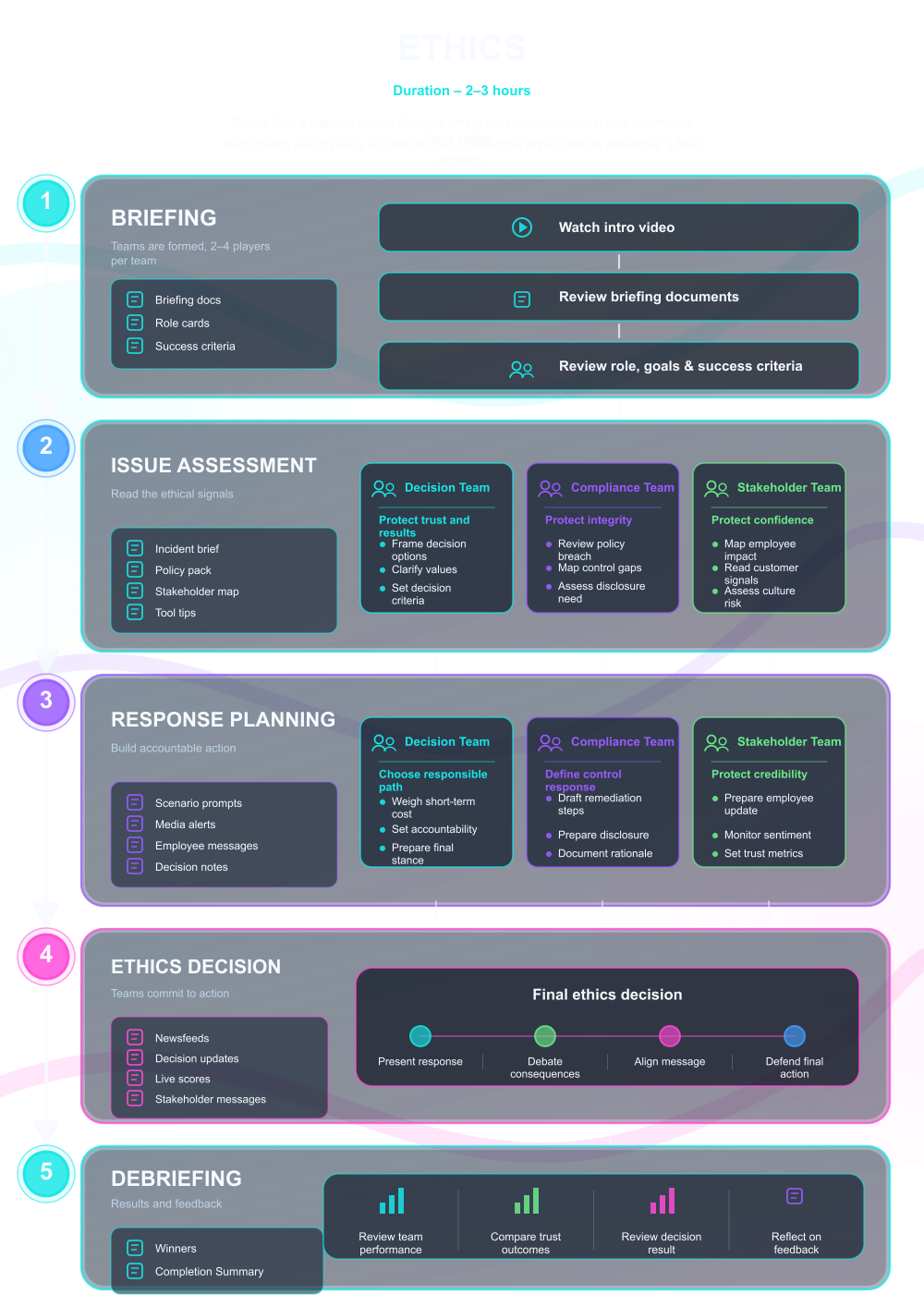

What Participants Do
In this simulation, participants act as finance professionals navigating ethical dilemmas. They:
- Review case scenarios with competing interests
- Debate trade-offs between compliance, profitability, and integrity
- Decide on actions under time pressure and uncertainty
- Communicate choices to boards, clients, or regulators
- Respond to whistleblowers, media coverage, or regulatory audits
- Reflect on how their decisions shape trust and credibility

Learning Objectives
By the end of the simulation, participants will be able to:
- Recognize common ethical dilemmas in finance
- Apply ethical frameworks to complex decisions
- Balance profitability with integrity and compliance
- Communicate transparently with stakeholders under pressure
- Reflect on the reputational consequences of decisions
- Anticipate long-term risks of unethical practices
- Manage conflicts of interest responsibly
- Foster cultures of transparency and accountability
- Understand global perspectives on finance ethics
- Strengthen judgment and self-awareness in leadership roles
The simulation’s flexible structure ensures that these objectives can be calibrated to match the depth, duration, and focus areas of each program, whether in higher education or corporate learning.
How the Ethics in Finance Simulation Works
The simulation can be run individually or in teams, across classrooms or professional programs. Each cycle represents a decision-making round.
1. Receive a Scenario or Brief: Participants are presented with an ethical challenge shaped by financial, regulatory, and reputational factors.
2. Analyse the Situation: They review key details, stakeholder positions, and trade-offs.
3. Make Strategic Decisions: Participants decide whether to prioritize profit, compliance, or ethical considerations.
4. Collaborate Across Roles: Teams role-play as executives, regulators, or clients debating outcomes.
5. Communicate Outcomes: Participants justify choices through board memos, press statements, or client updates.
6. Review and Reflect: Feedback highlights financial impact, reputational outcomes, and stakeholder trust. Participants refine strategies across rounds.
Frequently Asked Questions
Assessment
Assessment can be tailored to focus on ethical reasoning, communication, or judgment. Participants may be evaluated on:
- Consistency in applying ethical frameworks
- Balance between financial and ethical outcomes
- Clarity in communicating rationale
- Responsiveness to new information or scrutiny
- Collaboration and peer/self-assessment in dilemmas
You can also include memo writing and debrief presentations as part of the assessment structure. Additionally, you can also add a built-in peer and self-assessment tool to see how participants rate themselves. This flexibility allows the simulation to be easily integrated by professors as graded courses at universities and by HR at assessment centres at companies.