No. The simulation introduces core ethical concepts as part of the gameplay.

Ethical Leadership Simulation
In this Ethical Leadership Simulation, participants act as organizational leaders facing ethical dilemmas, stakeholder conflicts, and high-pressure decisions - balancing integrity, performance, and long-term trust in complex business environments.

Ethical Leadership Simulation Overview
Participants take on leadership roles in an organization navigating real-world ethical challenges. Across multiple rounds, they are presented with dilemmas involving employee treatment, compliance, governance, sustainability, diversity, and stakeholder pressures.
They must weigh competing values - profitability, fairness, responsibility, and growth - while making choices that impact organizational performance, reputation, and employee morale. Each decision carries consequences, shaping trust among teams, boards, regulators, and the public.
This simulation is ideal for MBA programs, corporate leadership training, and executive education workshops. It encourages participants to reflect deeply on their values while practicing ethical decision-making under uncertainty.

Ethical Leadership Simulation Concepts
Participants work through realistic scenarios, which can be customized to emphasize or exclude specific topics depending on the learning goals. This modular structure allows the simulation to be tailored to any type of session. Key concepts include:
- Ethical decision-making frameworks
- Stakeholder management and moral trade-offs
- Governance and accountability in leadership
- Diversity, equity, and inclusion
- Environmental and social responsibility
- Communication and transparency
- Whistleblowing and compliance reporting
- Long-term trust vs short-term gain
- Cultural and global perspectives on ethics
- Leading with integrity in high-pressure contexts

Gameflow
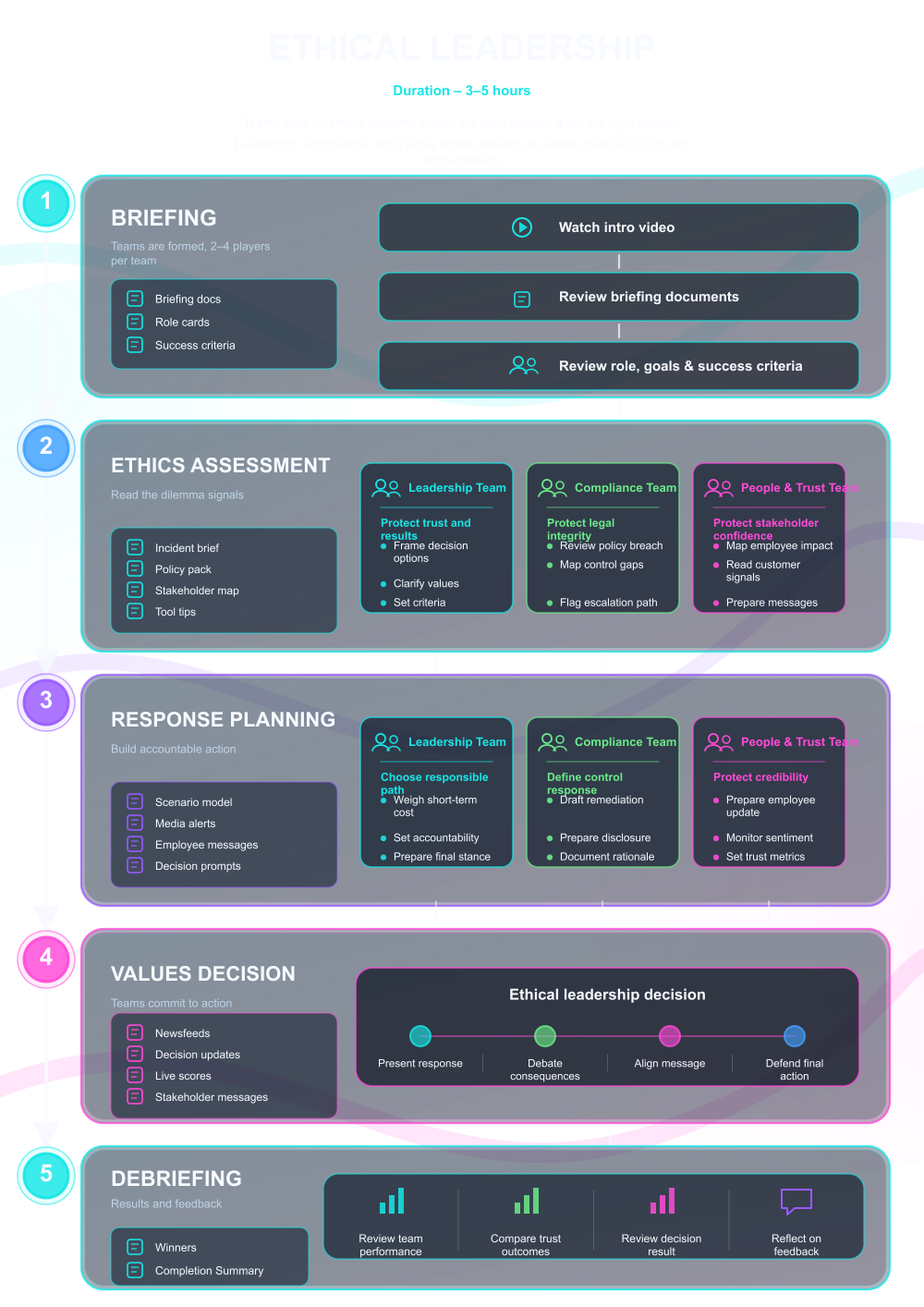

What Participants Do
In the simulation, participants act as senior leaders or managers tasked with steering an organization through ethical challenges. They:
- Review case scenarios involving ethical conflicts
- Debate trade-offs across financial, social, and governance perspectives
- Make tough decisions under time pressure and uncertainty
- Respond to whistleblower reports, media scrutiny, or regulatory changes
- Communicate rationale through board memos, press statements, or team updates
- Reflect on the long-term consequences of their actions

Learning Objectives
By the end of the simulation, participants will be able to:
- Recognize and evaluate ethical dilemmas in leadership contexts
- Balance competing stakeholder interests with fairness and responsibility
- Apply ethical frameworks to complex decisions
- Communicate transparently with integrity under pressure
- Lead inclusively and responsibly in diverse environments
- Build trust and credibility with stakeholders
- Anticipate reputational risks from unethical behavior
- Reflect on personal leadership values and biases
- Foster a culture of integrity within teams and organizations
- Adapt ethical leadership approaches to global and cultural contexts
The simulation’s flexible structure ensures that these objectives can be calibrated to match the depth, duration, and focus areas of each program, whether in higher education or corporate learning.
How the Ethical Leadership Simulation Works
The simulation works in both individual and team settings and can be delivered in classrooms, corporate workshops, or executive programs. Each round represents an evolving ethical scenario.
1. Receive a Scenario or Brief: Participants receive a case with background, conflicting interests, and decision points.
2. Analyse the Situation: They examine the ethical, financial, and reputational implications of different actions.
3. Make Leadership Decisions: Participants select actions, policies, or communications to resolve dilemmas.
4. Collaborate or Debate: In teams, participants negotiate and defend their ethical positions to peers.
5. Communicate Outcomes: They justify decisions through memos, press releases, or board updates.
6. Review and Reflect: Feedback highlights organizational results, stakeholder trust, and reputational outcomes. Participants reflect on lessons learned.
Frequently Asked Questions
Assessment
Assessment can be tailored to focus on judgment, communication, collaboration, or leadership maturity. Participants may be evaluated on:
- Consistency and clarity in ethical reasoning
- Stakeholder balance and decision outcomes
- Communication transparency under scrutiny
- Adaptability in handling new developments
- Peer/self-assessments capturing collaboration and reflection
You can also include memo writing and debrief presentations as part of the assessment structure. This flexibility allows the simulation to be easily integrated by professors as graded courses at universities and by HR at assessment centres at companies.