By completing the simulation, participants will develop practical understanding of equity capital markets, enhance valuation and negotiation skills, understand regulatory compliance, and build confidence in making financing decisions under market uncertainty.

Equity Financing Simulation
The Equity Financing Simulation immerses participants in the dynamic world of raising capital through equity, offering hands-on experience in structuring, negotiating, and executing equity deals.

Equity Financing Simulation Overview
In this simulation, participants experience the full lifecycle of equity financing, from initial fundraising to exit strategies. They analyze company financials, pitch to investors, negotiate term sheets, and manage post-investment relationships.
Participants step into the roles of entrepreneurs, investors, and advisors, navigating the complexities of valuation, deal terms, and investor relations in a competitive, fast-paced environment. The simulation emphasizes practical skills in financial modeling, negotiation, and strategic decision-making, all within realistic scenarios that mirror real-world challenges faced by startups and growth-stage companies.
Although ideal for undergraduate and graduate finance courses, executive training, and corporate finance skill workshops, the simulation is modular and scalable, allowing instructors to vary complexity.

Equity Financing Simulation Concepts
Participants work through realistic scenarios, which can be customized to emphasize or exclude specific topics depending on the learning goals. This modular structure allows the simulation to be tailored to any type of session. Key concepts include:
- Equity financing structures (common shares, preferred shares, convertible notes)
- Valuation methods (DCF, comparables, venture capital method)
- Term sheet negotiation and deal structuring
- Investor relations and fundraising dynamics
- Exit strategies (IPO, acquisition, secondary sale)
- Impact of dilution and ownership on company control
- Regulatory and compliance considerations
- ESG integration in equity financing

Gameflow
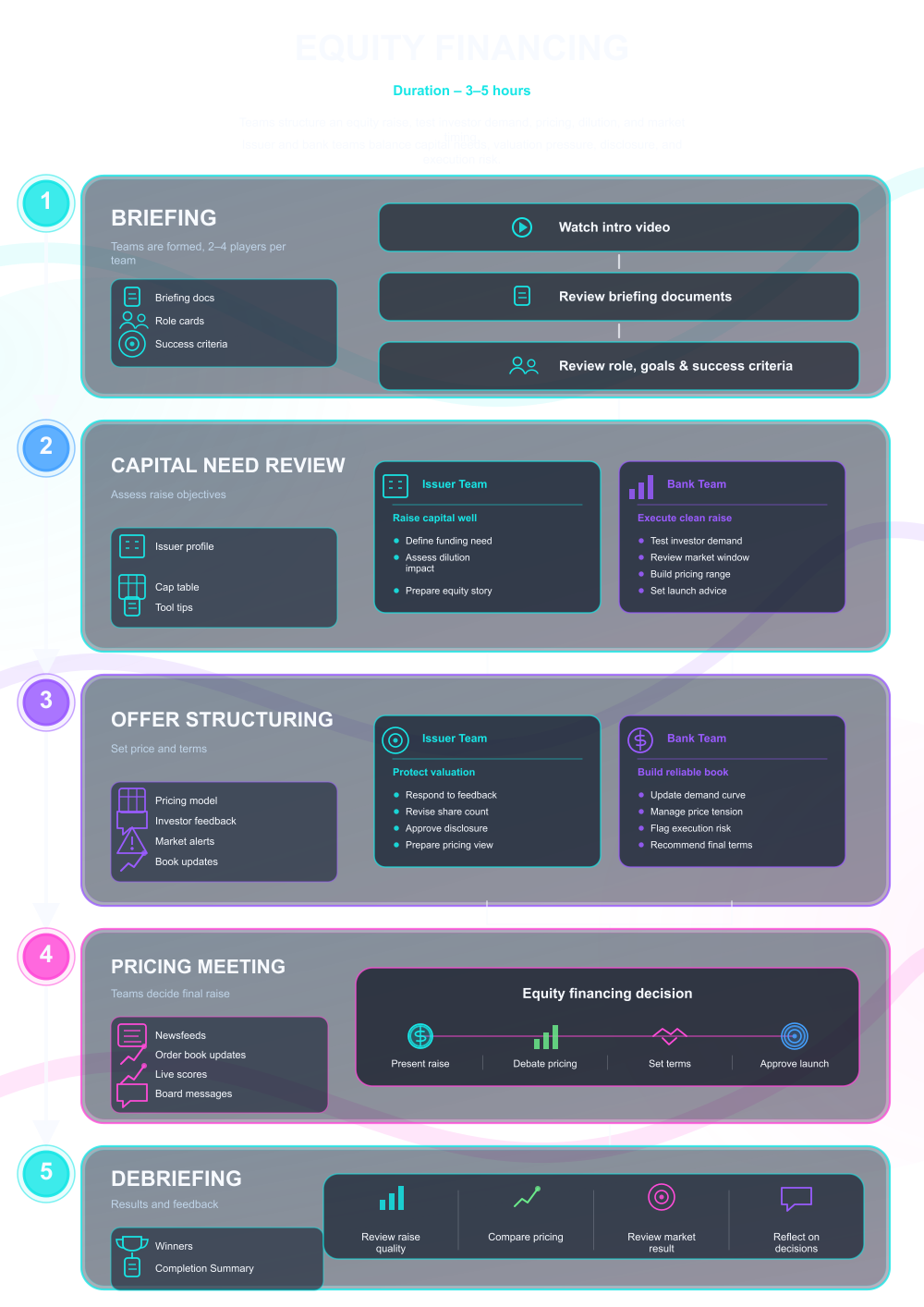

What Participants Do
In the simulation, participants will:
- Analyze company financials and market opportunities
- Develop fundraising strategies and pitch decks
- Negotiate term sheets and deal terms with investors
- Model financial outcomes under different funding scenarios
- Manage investor expectations and reporting
- Explore exit options and timing
- Collaborate in teams to simulate real-world deal teams
- Present investment memos and deal updates

Learning Objectives
By the end of the simulation, participants will be able to:
- Understand the mechanics and structures of equity financing
- Apply valuation techniques to real-world scenarios
- Negotiate and structure equity deals effectively
- Manage investor relations and reporting requirements
- Evaluate the impact of dilution and ownership changes
- Develop strategic thinking for fundraising and exits
- Recognize regulatory and compliance issues in equity financing
- Integrate ESG considerations into financing decisions
How the Equity Financing Simulation Works
This simulation can be run individually or in teams in academic or corporate contexts. Each cycle represents a stage of getting through a pressing financial situation.
1. Receive a Scenario or Brief Participants are introduced to a company seeking equity financing, with background financials and market context.
2. Analyze the Situation Teams review financial statements, market data, and investor expectations.
3. Make Strategic Decisions Participants choose fundraising strategies, structure deals, and negotiate terms.
4. Collaborate Across Roles Teams may act as entrepreneurs, investors, or advisors, negotiating priorities and deal terms.
5. Communicate Outcomes Participants deliver investor pitches, memos, or deal presentations.
6. Review and Reflect Feedback highlights deal outcomes, negotiation effectiveness, and investor sentiment. Strategies evolve across rounds.
Frequently Asked Questions
Assessment
Assessment of participant performance can be tailored according to the host institution’s objectives (business school, corporate training, assessment centre). Typical assessment criteria include:
- Quality of fundraising strategy and pitch
- Effectiveness in deal negotiation and structuring
- Accuracy of financial modeling and scenario analysis
- Clarity and persuasiveness of investor communication
- Collaboration and adaptability in team settings
- Understanding of regulatory and compliance issues
- Integration of ESG considerations