It is designed for students and professionals aspiring to careers in investment banking, corporate finance, or investor relations, as well as anyone seeking a deep, practical understanding of how companies go public.

Equity Capital Markets Simulation
In this Equity Capital Markets Simulation, participants manage the entire IPO lifecycle, from initial valuation and investor roadshows to final pricing and allocation, under intense market pressure.

Equity Capital Markets Simulation Overview
Participants are immersed in the fast-paced world of Equity Capital Markets, acting as bankers for either the issuing company or the underwriting syndicate. The simulation replicates the multi-stage, high-pressure environment of a real initial public offering or follow-on offering. Each decision round introduces new challenges, shifting investor sentiment, volatile market conditions, competitive deals, and evolving company fundamentals.
Teams must analyze financials, determine valuation ranges, structure the offering, craft the equity story, and negotiate critical terms. Success depends not just on securing a high price but on achieving a stable aftermarket performance and building a strong investor base.
This simulation is ideal for MBA programs, Masters in Finance courses, and corporate training for banks and financial institutions, providing an unparalleled practical understanding of how companies access public equity markets.

Equity Capital Markets Simulation Concepts
Participants work through realistic scenarios, which can be customized to emphasize or exclude specific topics depending on the learning goals. This modular structure allows the simulation to be tailored to any type of session. Key concepts include:
- IPO process and timeline from kick-off to listing
- Company valuation methodologies
- Equity story development and investor messaging
- Offering structuring (primary vs. secondary shares, greenshoe option)
- Bookbuilding process and investor targeting
- Pricing strategy and allocation philosophy
- Syndicate dynamics and roles of lead managers
- Due diligence and regulatory compliance
- Market risk and timing considerations
- Aftermarket stabilization and trading

Gameflow
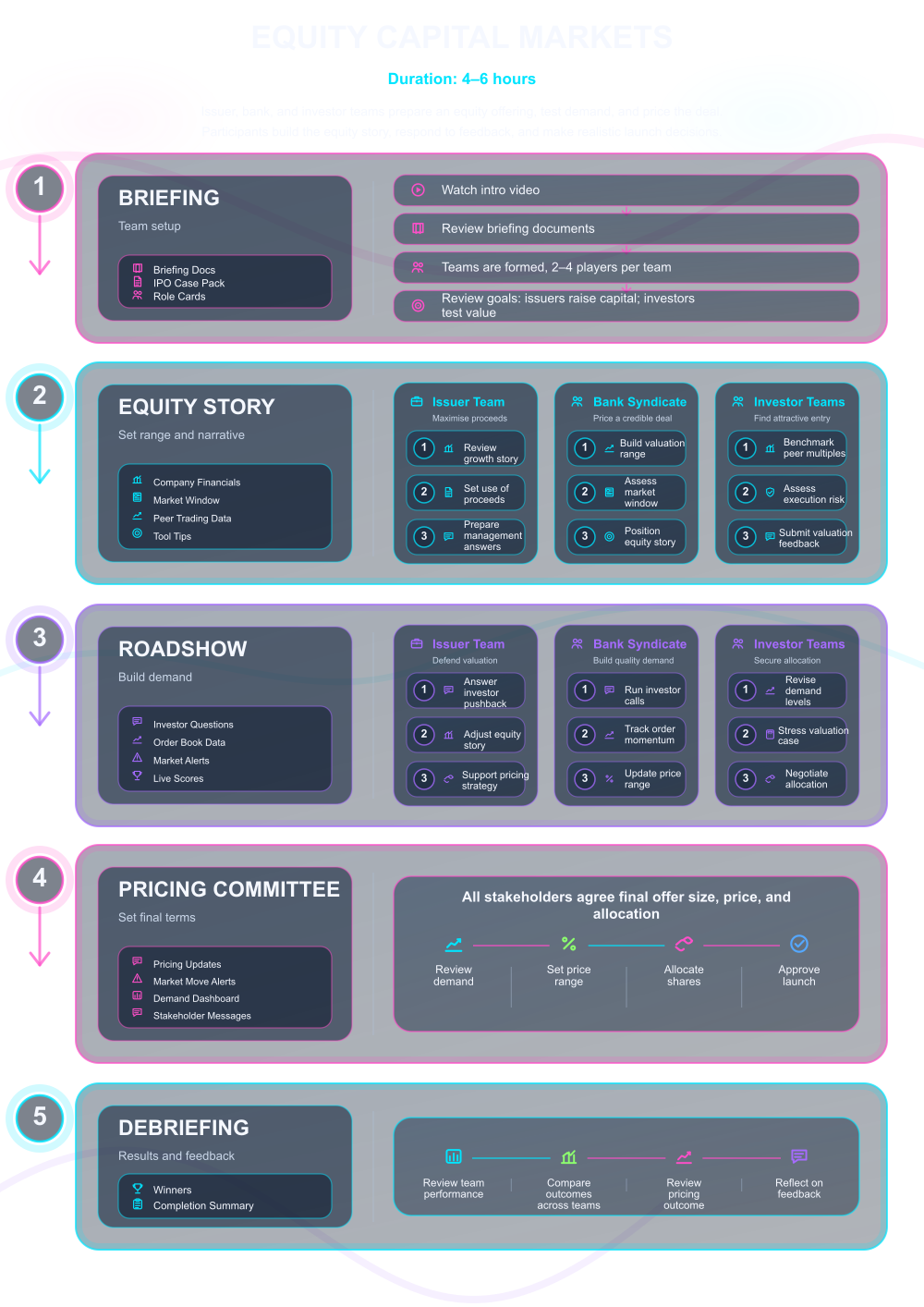

What Participants Do
In the simulation, participants will:
- Analyze a company’s financials and industry position to build an investment thesis.
- Develop a valuation range and recommend an initial price target.
- Create a compelling investor presentation and equity story.
- Manage the bookbuilding process, gauging demand from institutional investors.
- Make critical pricing decisions balancing issuer goals and market reality.
- Negotiate fees and allocations with syndicate banks and the issuing company.
- Respond to real-time market shocks and competitor deal flow.
- Present final recommendations to the simulated company's board.

Learning Objectives
By the end of the simulation, participants will be able to:
- Map out the end-to-end process of an equity capital markets transaction.
- Apply core valuation techniques in a live deal context.
- Understand the roles and incentives of different parties in a syndicate.
- Design a strategy to market an equity offering to investors.
- Make data-driven decisions on pricing and allocation under uncertainty.
- Evaluate the trade-offs between offer price, aftermarket performance, and issuer relations.
- Communicate complex financial recommendations clearly and persuasively.
- Develop strategic judgment and resilience in a high-pressure transactional environment.
How the Equity Capital Markets Simulation Works
This simulation can be run individually or in teams in academic or corporate contexts. Each cycle represents a stage of getting through a pressing financial situation.
1. Deal Kick-off and Analysis Teams receive the company's confidential information memorandum and market data. They perform initial valuation and strategy analysis.
** 2. Strategy Formulation** Participants develop their offering structure, preliminary valuation range, and core equity story for the investor roadshow.
3. Investor Marketing and Bookbuilding Teams present to simulated investors, gauge demand, and manage an evolving order book. Market conditions may shift.
4. Pricing and Allocation Negotiation Based on demand, teams must finalize the offer price and negotiate the allocation of shares with the issuer and co-managers.
5. Deal Closing and Review The transaction concludes. Teams receive detailed feedback on their financial performance, pricing accuracy, and the stability of the stock in the simulated aftermarket.
Frequently Asked Questions
Assessment
Assessment of participant performance can be tailored according to the host institution’s objectives (business school, corporate training, assessment centre). Typical assessment criteria include:
- Accuracy of valuation, appropriateness of pricing strategy, and achieved valuation for the issuer.
- Effectiveness of the bookbuilding process and quality of the final investor allocation.
- Decisions made in response to market volatility and competitive dynamics.
- Clarity and strength of the equity story presented to investors and the issuing company.
- Ability to work within a team and negotiate terms with other parties.