The main goal is to provide a realistic, end-to-end experience of an equity analyst's role, from financial modeling and valuation to crafting and defending a compelling investment thesis, thereby bridging the gap between academic finance and a career in asset management.

Equity Analyst Simulation
Replicating the complete workflow of a buy-side equity analyst we challenge participants to research companies and make compelling investment recommendations to a portfolio manager.

Equity Analyst Simulation Overview
In this simulation, participants step into the shoes of an equity analyst at a growing asset management firm. You will be tasked with covering a specific, dynamic public company. The goal is simple but demanding: determine whether the stock is a "Buy," "Hold," or "Sell," and defend your thesis.
The simulation encompasses the entire investment research process. You will begin by conducting top-down macroeconomic and bottom-up company-specific analysis. You will delve into the company's financial statements, build an integrated financial model to forecast future performance, and apply critical valuation methodologies including DCF, Comparable Company Analysis, and Precedent Transactions.
The culmination of participant’s work is a professional investment report and a live stock pitch to a skeptical Portfolio Manager, where your analytical rigor and communication skills will be put to the test.

Equity Analyst Simulation Concepts
Participants work through realistic scenarios, which can be customized to emphasize or exclude specific topics depending on the learning goals. This modular structure allows the simulation to be tailored to any type of session. Key concepts include:
- Financial Statement Analysis
- Financial Modeling
- Valuation Methodologies (DCF, Comps)
- Investment Thesis Development
- Industry and Competitive Analysis
- Cost of Capital (WACC)
- Terminal Value Calculation
- Stock Pitching and Communication

Gameflow
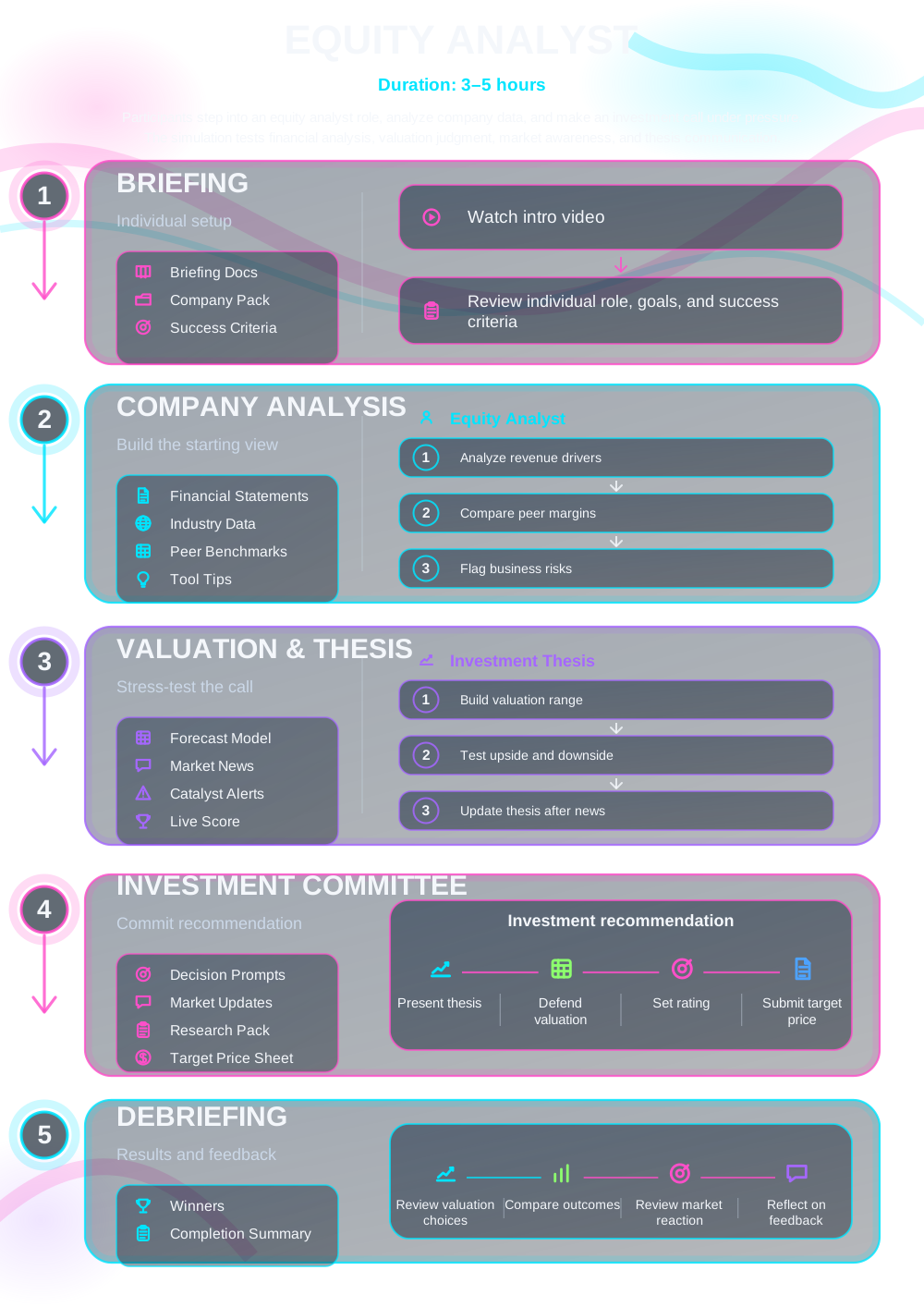

What Participants Do
In the simulation, participants will:
- Conduct fundamental research on an assigned public company and its industry.
- Analyze historical financial data and identify key performance drivers.
- Build a from-scratch, integrated financial model in Excel to forecast financial statements.
- Perform a DCF valuation, a Comparable Company analysis, and a Precedent Transaction analysis.
- Synthesize findings to arrive at a target price and a final investment recommendation (Buy/Hold/Sell).
- Draft a professional-grade equity research report.
- Prepare and deliver a compelling 5-minute stock pitch to a "Portfolio Manager" (instructor or peers).
- Defend their thesis under questioning and challenge the theses of their peers.

Learning Objectives
By the end of the simulation, participants will be able to:
- Execute the end-to-end workflow of a professional equity analyst.
- Construct a robust, three-statement integrated financial model from scratch.
- Apply core valuation techniques (DCF, Comps, Precedents) to determine a target share price.
- Develop a logically sound and evidence-backed investment thesis.
- Critique financial models and investment theses for strengths and weaknesses.
- Communicate an investment recommendation effectively, both in writing and orally, under pressure.
- Interpret the impact of macroeconomic and industry-specific factors on a company's valuation.
How the Equity Analyst Simulation Works
This simulation can be run individually or in teams in academic or corporate contexts. Each cycle represents a stage of getting through a pressing financial situation.
1. Company Assignment and Briefing Participants are assigned a fictional publicly-traded company and given access to its financial data, annual reports, and equity research database summaries.
2. Research and Financial Modeling Phase Using provided data and templates, participants conduct their analysis and build their financial models in a controlled platform. The simulation dashboard provides key industry data and competitor information.
3. Valuation and Decision Phase Participants run their valuation models, reconcile the different valuation outputs, and determine their final investment recommendation and target price.
4. Reporting Phase Participants compile their analysis into a standardized equity research report template.
5. Stock Pitch and Defense Participants present their stock pitch in a live session. They are challenged by the instructor (acting as Portfolio Manager) and peers, simulating a real investment committee meeting.
6. Debrief and Feedback Instructors provide personalized feedback on the financial model, research report, and pitch performance, highlighting areas of excellence and improvement.
Frequently Asked Questions
Assessment
Assessment of participant performance can be tailored according to the host institution’s objectives (business school, corporate training, assessment centre). Typical assessment criteria include:
- Accuracy and integrity of the three-statement model.
- Logical and defensible forecasting assumptions.
- Correct implementation of DCF and other valuation methodologies.
- Clarity, structure, and executive summary.
- Strength of the investment thesis and supporting evidence.
- Professional presentation and clarity of writing.
- Persuasiveness, confidence, and clarity of the oral presentation.
- Ability to handle challenging questions and defend the thesis.
- Time management and professional demeanor.