An emerging market is a nation with some characteristics of a developed market but does not yet meet standards to be classified as one. Examples include Brazil, India, and South Africa.

Emerging Markets Business Simulation
Students act as emerging markets analysts, crafting entry strategies, managing investments, and mitigating risks to drive growth under real-world pressures with our emerging markets management simulation.

Emerging Market Business Simulation Overview
The emerging market business simulation is designed to immerse students in the complexities and potential of investing in developing economies. Through engaging, real-world scenarios, participants navigate the challenges unique to these high-growth regions, including regulatory shifts, currency volatility, and evolving market structures.
This emerging market management simulation enables students to approach emerging markets with a strategic, risk-conscious mindset, equipping them to make informed investment decisions and recognize growth opportunities.

Emerging Market Business Simulation Concepts
- Market Entry Strategy
- Risk and Return Analysis
- Currency and Inflation Risk Management
- Local Regulatory Compliance
- Political Risk Assessment
- Capital Allocation Strategies
- Infrastructure Investment Analysis
- Sector-Specific Opportunities
- Hedging and Risk Mitigation
- Exit Strategy Development

Gameflow
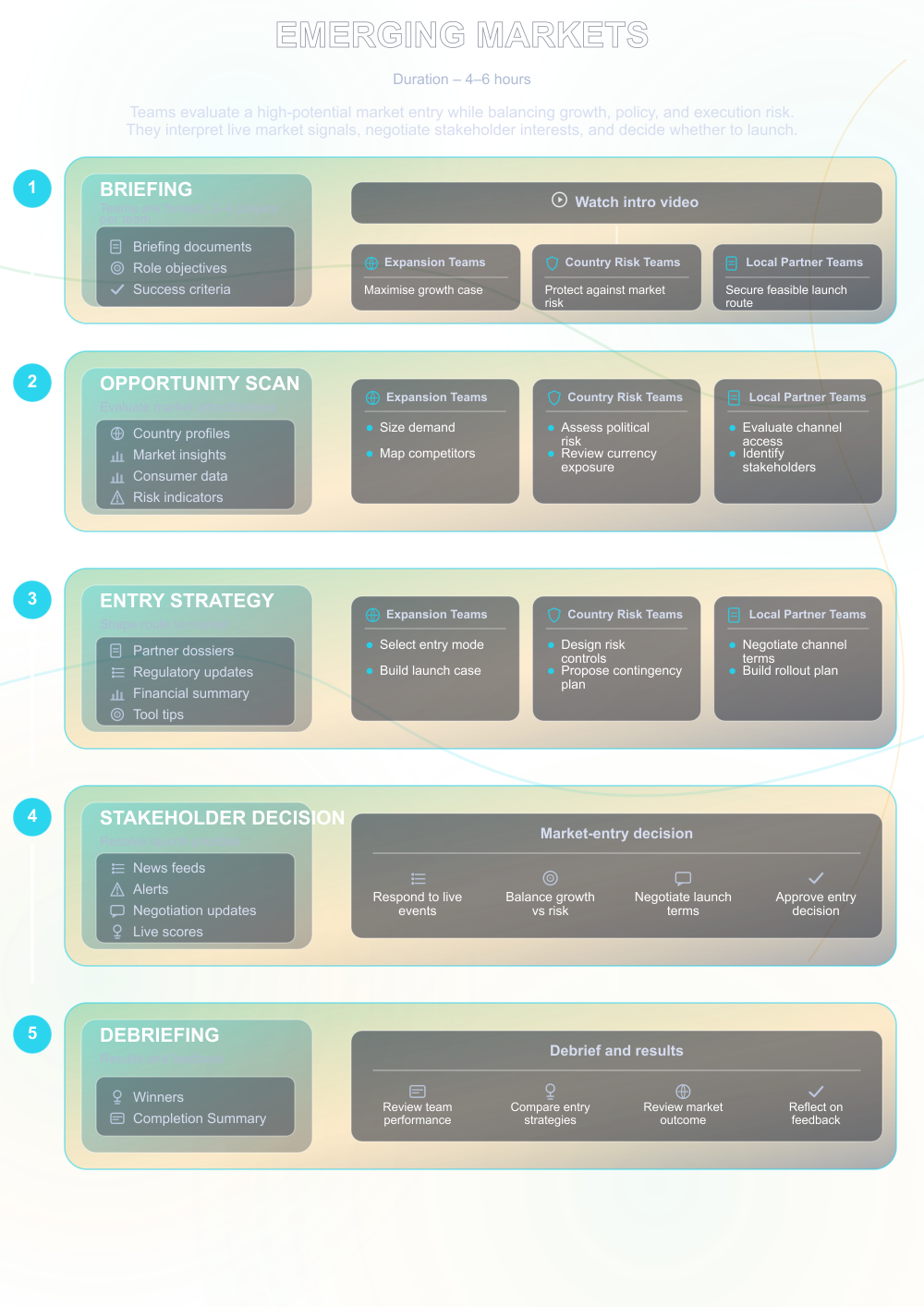

Where Skills Are Used
Professionals skilled in emerging market strategies are sought after in industries such as investment banking, global asset management, private equity, and international business consulting. These skills are crucial when analyzing new opportunities, managing financial risk in volatile regions, and making strategic decisions that require local insights and global perspectives.

What Students Do
Throughout the emerging markets management simulation, students take on the role of financial analysts or investment professionals tasked with evaluating, entering, and managing investments in a developing economy. They will:
- Conduct market entry research, analyzing the economic and regulatory landscape of the target region.
- Develop strategies for managing currency and inflation risk, adjusting decisions based on simulated economic changes.
- Make decisions on capital allocation to key sectors, balancing risk with potential growth opportunities.
- Create risk mitigation strategies for political and regulatory uncertainties using advanced financial tools.
- Build an exit strategy based on performance metrics and changing market conditions.

What Students Learn
- Market Analysis Techniques: Gain hands-on experience assessing emerging markets for growth potential.
- Strategic Entry Decision-Making: Learn to identify and prioritize factors in market entry, such as local demand and regulatory hurdles.
- Currency Risk Management: Understand tools like hedging to manage exposure to currency fluctuations.
- Regulatory Adaptation: Acquire skills to navigate and comply with local laws and changing regulations.
- Risk Mitigation Strategies: Develop a framework for evaluating and reducing financial and operational risk.
- Sector-Specific Insights: Identify which industries are primed for growth and potential challenges within each.
- Political Risk Assessment: Learn how to weigh the impact of political stability on investment viability.
- Capital Allocation: Practice effective resource allocation in response to evolving market dynamics.
- Performance Metrics Analysis: Track and evaluate the success of strategic choices using financial metrics. • Exit Planning: Develop strategies for a well-timed and profitable exit from emerging markets.

Where Skills Are Used
Professionals skilled in emerging market strategies are increasingly sought after across a range of high-stakes, global industries. In investment banking, these experts are essential for originating and executing cross-border transactions, such as taking a local company public or advising on a merger between a multinational corporation and a regional player. In global asset management, portfolio managers rely on this expertise to identify undervalued assets, diversify holdings, and structure investments that can capture the outsized growth potential of developing economies while mitigating their unique risks. For private equity, the ability to navigate emerging markets is a critical differentiator. It enables firms to source proprietary deals, conduct rigorous due diligence in challenging information environments, and successfully execute value-creation plans in regions with different regulatory and operational landscapes. Similarly, international business consulting firms depend on these professionals to guide multinational clients through market entry strategies, regulatory hurdles, and the complexities of building supply chains or joint ventures in unfamiliar territory. So, what do emerging market analysts actually do? Their role is a blend of financial analyst, political risk assessor, and cultural interpreter. On a given day, they might be building complex financial models with variables for currency devaluation or inflation, while simultaneously tracking local election results or regulatory shifts that could impact an investment. They go beyond traditional financial statements, often conducting on-the-ground research—visiting retail sites, interviewing local suppliers, or meeting with industry experts—to verify data and gather qualitative insights that official numbers just don't capture.