A basic understanding of financial statements is helpful, but the simulation includes enough guidance to support learners from varied backgrounds.

Earnings Management Simulation
In this hands-on simulation, participants act as senior finance professionals navigating earnings targets, accounting judgment calls, and ethical boundaries - exploring how financial decisions impact credibility, compliance, and stakeholder trust.

Earnings Management Simulation Overview
Participants play the role of CFOs or senior finance teams in a public company under pressure to meet analyst expectations. Each round presents new business events, investor calls, and accounting options - some aggressive, others conservative. They must decide how to handle revenue recognition, provisions, cost capitalization, and other accounting treatments while staying within (or stretching) regulatory bounds.
The simulation mirrors the real-world tension between short-term performance and long-term credibility. Participants experience how earnings management choices ripple through stakeholder trust, stock price, internal culture, and audit relationships.
This simulation is ideal for courses on financial reporting, ethics in finance, audit practices, or capital markets. Its modular structure allows it to be customized by difficulty, region, or accounting standards.

Earnings Management Simulation Concepts
Participants work through realistic scenarios, which can be customized to emphasize or exclude specific topics depending on the learning goals. This modular structure allows the simulation to be tailored to any type of session. Key concepts include:
- Earnings Smoothing and Revenue Timing
- Discretionary Accruals and Provisions
- Accounting Policy Choices and Justifications
- Internal Controls and Governance Constraints
- Auditor and Regulator Response
- Market Reactions and Investor Calls
- Ethical Dilemmas in Reporting
- Consequences of Overreach or Manipulation
- Long-term vs. Short-term Shareholder Strategy

Gameflow
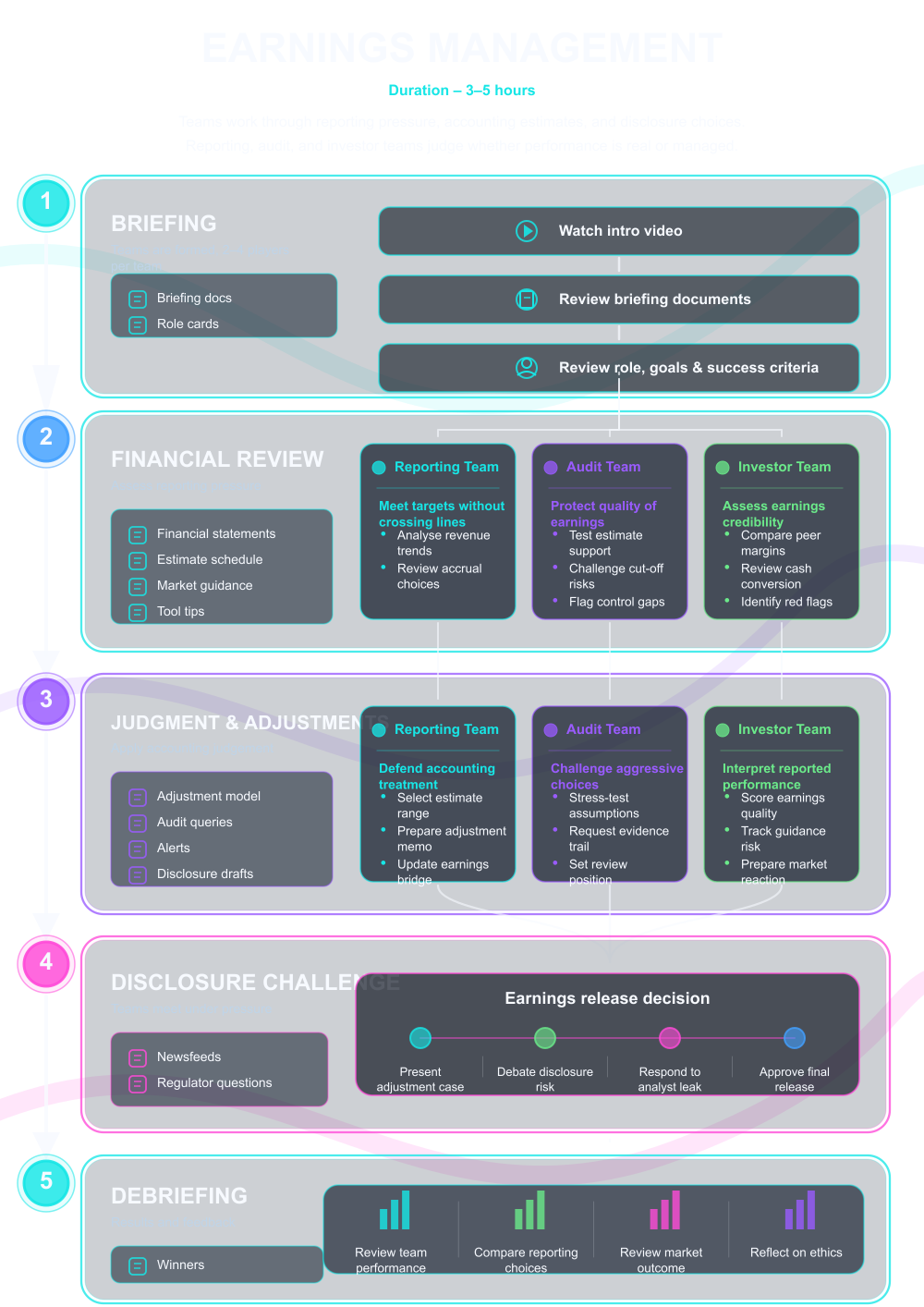

What Participants Do
In the simulation, participants are put in high-pressure situations where they must:
- Review quarterly financials and upcoming earnings calls
- Make judgment-based decisions about accounting treatments
- Weigh the impact of choices on KPIs, analyst expectations, and audit flags
- Respond to market events, competitor earnings, and board pressure
- Draft internal memos explaining or justifying accounting decisions
- Navigate interactions with the CFO, CEO, board, and external auditors

Learning Objectives
By the end of the simulation, participants will:
- Understand the techniques and motivations behind earnings management
- Identify red flags and risk factors in earnings manipulation
- Develop confidence navigating accounting choices under pressure
- Reflect on ethical boundaries in corporate reporting
- Experience the trade-offs between transparency, ambition, and compliance
- Communicate accounting rationale to internal and external stakeholders
- Gain insight into auditor dynamics and regulatory scrutiny
- Strengthen their ability to defend or challenge earnings decisions
- Build storytelling skills around financial results
- Recognize how reputation, investor trust, and long-term value intersect
The simulation’s flexible structure ensures that these objectives can be calibrated to match the depth, duration, and focus areas of each program, whether in higher education or corporate learning.
How the Earnings Management Simulation Works
This simulation is adaptable to individual or team formats and is suitable for academic, onboarding, or professional development settings. Each round simulates a financial quarter, with escalating pressure and complexity.
- 1. Receive a Scenario or Brief: Each round opens with a quarterly business update, financial target, and internal pressure point. Participants review context, past earnings, and market expectations.
- 2. Analyse the Situation: Participants examine financials, earnings forecasts, and accounting options. They assess legal, reputational, and financial consequences of possible reporting decisions.
- 3. Make Decisions in the Simulation Interface: Participants choose how to treat revenues, costs, provisions, and disclosures. These choices impact reported EPS, audit risk, and long-term trust metrics.
- 4. Individual or Team Interactions: In team setups, roles may include CFO, Controller, Investor Relations, or Audit Liaison. Participants must agree on an approach and defend it internally.
- 5. Review Results and Reflect: After each round, participants receive feedback on stock price impact, audit concerns, and stakeholder sentiment. This drives group discussion and ethical reflection.
- 6. Repeat the Cycle: Subsequent rounds introduce new challenges - missed sales, auditor scrutiny, whistleblower alerts, or activist investor questions - forcing evolution in strategy and ethics.
Frequently Asked Questions
Assessment
Assessment can be tailored to focus on analytical judgment, communication, or ethical decision-making. Participants may be evaluated on:
- Accuracy and transparency of reporting decisions
- Risk exposure created by accounting choices
- Communication skills in stakeholder contexts
- Ethical reasoning and boundary awareness
- Peer and self-assessment reflections
You can also include memo writing and debrief presentations as part of the assessment structure. Additionally, you can also add a built-in peer and self-assessment tool to see how participants rate themselves. This flexibility allows the simulation to be easily integrated by professors as graded courses at universities and by HR at assessment centres at companies.