A basic understanding of cash flow and capital structure is helpful but not mandatory.

Dividend Policy Simulation
In this hands-on Dividend Policy Simulation, participants act as corporate finance leaders responsible for adapting a company’s dividend strategy responding to pressures from investors, cash flow dynamics, and strategic opportunities.

Dividend Policy Simulation Overview
The Dividend Policy Simulation places participants at the executive table of a listed company evaluating its dividend decisions over multiple business cycles. As CFOs or finance managers, they must weigh earnings volatility, investor expectations, capital needs, and tax implications to determine the most effective dividend policy.
Participants explore whether to maintain, increase, reduce, or suspend dividends across evolving financial scenarios - ranging from high-growth years to downturns and unexpected liquidity shocks. The simulation challenges them to justify choices to shareholders, align payout with strategy, and evaluate alternatives like share buybacks or reinvestment.
Developed with input from finance professors and CFOs, the simulation offers a dynamic experience in one of the most visible - and debated - areas of corporate finance.

Dividend Policy Simulation Concepts
Participants work through realistic scenarios, which can be customized to emphasize or exclude specific topics depending on the learning goals. This modular structure allows the simulation to be tailored to any type of session. Key concepts include:
- Dividend Policy Types: Residual, stable, constant payout, hybrid
- Shareholder Expectations: Institutional vs. retail investors
- Signaling Effect: How dividend changes influence market perception
- Cash Flow Management: Balancing liquidity with long-term investment
- Alternative Payouts: Buybacks, special dividends, retained earnings
- Tax and Regulatory Impact: Jurisdictional considerations and dividend taxation
- Investor Relations: Framing dividend decisions to the market
- Lifecycle Considerations: Growth phase vs. mature company dividend strategy

Gameflow
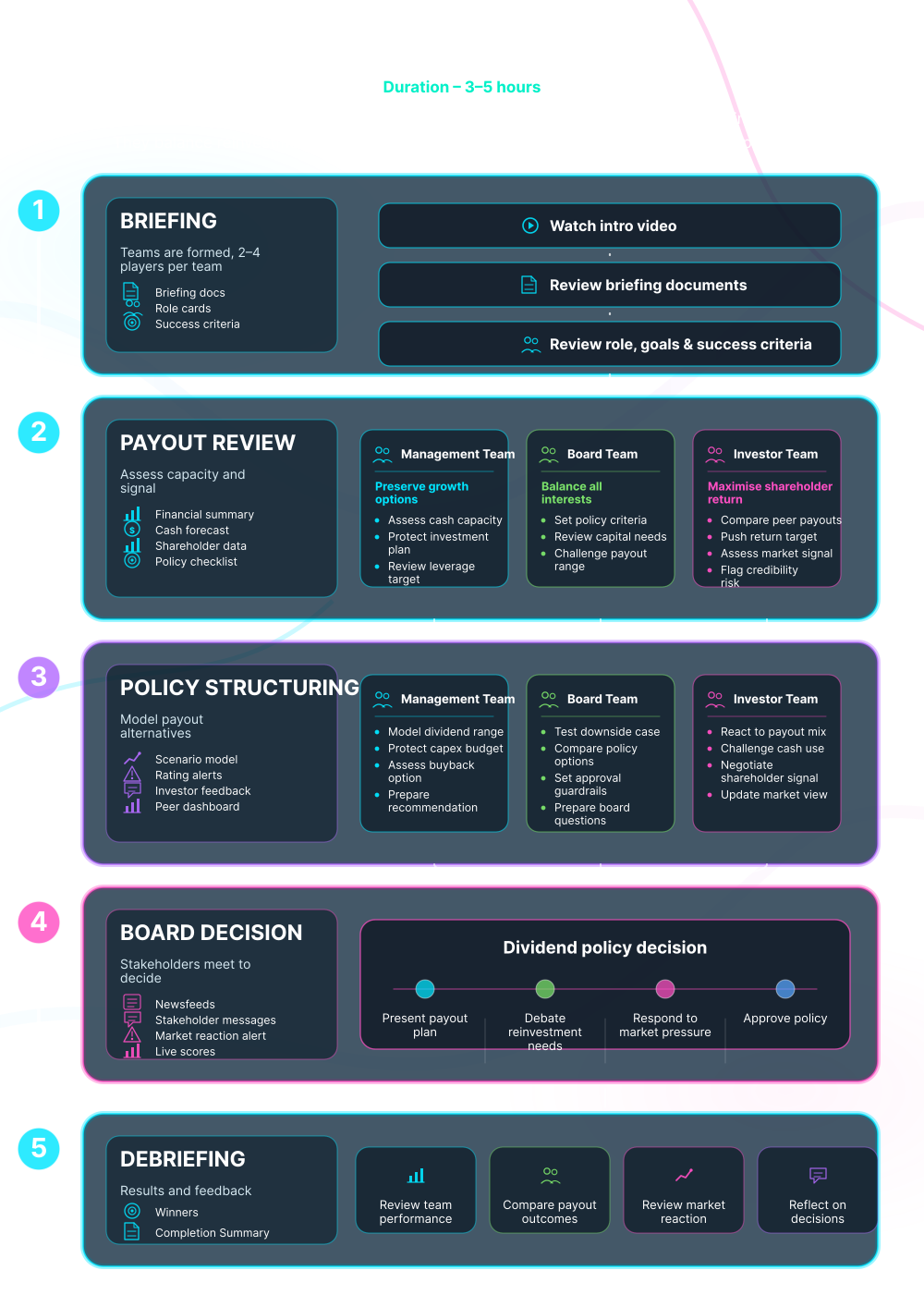

What Participants Do
Participants manage the company’s dividend decisions over multiple simulation rounds, facing real-world challenges. They:
- Analyze quarterly earnings and cash flows
- Review capital expenditure and debt obligations
- Choose between dividend options: increase, decrease, suspend, or maintain
- Consider issuing share buybacks as an alternative
- Evaluate the long-term financial sustainability of their policy
- Monitor investor sentiment and stock price reactions
- Justify decisions to the board, analysts, and shareholders
- Adapt to external shocks such as recession, litigation, or windfall profits
Each round brings new data and context, pushing participants to re-evaluate and iterate their strategy.

Learning Objectives
By the end of the simulation, participants will:
- Understand how dividend policies are formed and evolve
- Evaluate the trade-offs between investor expectations and capital needs
- Respond to market sentiment and communicate policy decisions effectively
- Analyze financials to determine feasible and sustainable payouts
- Consider tax and signaling implications of payout decisions
- Explore the lifecycle of a firm and its dividend policy alignment
- Justify dividend actions to multiple stakeholders with different goals
- Navigate external pressure from activist investors or analysts
The simulation is ideal for students studying corporate finance, investor relations, or capital markets - and for early-career professionals preparing for real-world financial decision-making.
How the Dividend Policy Simulation Works
This simulation runs effectively in both individual and team formats, over one or multiple decision-making cycles.
1. Review Company Performance Participants receive financial statements, strategic priorities, and capital forecasts.
2. Choose a Dividend Strategy They select a policy approach or make specific dividend payout decisions for the quarter.
3. Model Financial Implications Participants analyze cash flow impacts, debt capacity, and reinvestment trade-offs.
4. Monitor Stakeholder Reactions Market feedback, shareholder sentiment, and analyst coverage reflect the results of their actions.
5. Communicate Decisions Participants write or present a rationale for their decisions to the board, investors, or the media.
6. Adapt Over Time New events (e.g. macro shocks, profit windfalls, investment opportunities) change the game in future rounds.

Why This Dividend Policy Simulation Works
Dividend decisions are high-visibility and emotionally charged - yet few courses let students experience their complexity firsthand. This simulation makes the tension between cash, growth, and investor pressure come alive.
Participants must apply financial logic and communication skills in equal measure. It's a highly relevant experience for anyone heading into finance, consulting, investor relations, or corporate strategy.
Frequently Asked Questions
Assessment
Participants are assessed on:
- Strategic alignment of dividend decisions
- Financial accuracy and sustainability
- Adaptability to changing business contexts
- Communication to internal and external stakeholders
- Balancing short-term pressure with long-term goals
- Team collaboration and stakeholder negotiation
Deliverables may include policy memos, board presentations, or post-simulation debriefs. Additionally, you can also add a built-in peer and self-assessment tool to see how participants rate themselves. This flexibility allows the simulation to be easily integrated by professors as graded courses at universities and by HR at assessment centres at companies.