No. The focus is on leadership and strategy, not coding or technical skills.

Digital Transformation Simulation
In this hands-on Digital Transformation Simulation, participants act as executives driving digital change - balancing innovation, culture, investment, and risk while adapting business models to disruptive technologies and evolving customer expectations.

Digital Transformation Simulation Overview
Participants step into leadership roles at an established company facing the pressures of digital disruption. They must decide how to prioritize investments in technology, redesign processes, and reshape culture, all while keeping profitability and customer satisfaction intact.
Each round introduces new developments - emerging technologies, shifting market trends, competitor innovations, or internal resistance. Participants experience the real-world challenges of driving transformation, from aligning stakeholders to managing resistance to change.
This simulation is highly adaptable for MBA programs, executive education, and corporate training workshops. It blends strategic thinking, innovation management, and leadership development, making it a versatile tool for teaching digital strategy.

Digital Transformation Simulation Concepts
Participants work through realistic scenarios, which can be customized to emphasize or exclude specific topics depending on the learning goals. This modular structure allows the simulation to be tailored to any type of session. Key concepts include:
- Digital transformation strategy and roadmaps
- Investment trade-offs in technology adoption
- Customer-centric innovation and user experience
- Cultural and organizational change management
- Data-driven decision-making and analytics
- Cybersecurity, compliance, and digital risk management
- Agile vs traditional execution models
- Disruption from fintech, AI, and platform businesses
- Talent reskilling and workforce transformation
- Long-term digital sustainability and scalability

Gameflow

What Participants Do
In this simulation, participants act as executives leading digital transformation initiatives. They:
- Evaluate technology investments across AI, cloud, data, and automation
- Balance innovation budgets with core business needs
- Manage resistance from employees, managers, and boards
- Redesign customer experiences through digital channels
- Respond to competitive threats and disruptive entrants
- Communicate transformation progress to stakeholders through board updates or press releases

Learning Objectives
By the end of the simulation, participants will be able to:
- Design and execute digital transformation strategies
- Balance innovation investment with financial stability
- Navigate resistance and align organizational culture with digital goals
- Evaluate risks and compliance in digital adoption
- Apply data-driven approaches to decision-making
- Understand customer behavior and digital expectations
- Lead cross-functional collaboration in transformation projects
- Respond strategically to disruption and competition
- Communicate transformation strategies to diverse stakeholders
- Reflect on leadership challenges in digital change initiatives
The simulation’s flexible structure ensures that these objectives can be calibrated to match the depth, duration, and focus areas of each program, whether in higher education or corporate learning.
How the Digital Transformation Simulation Works
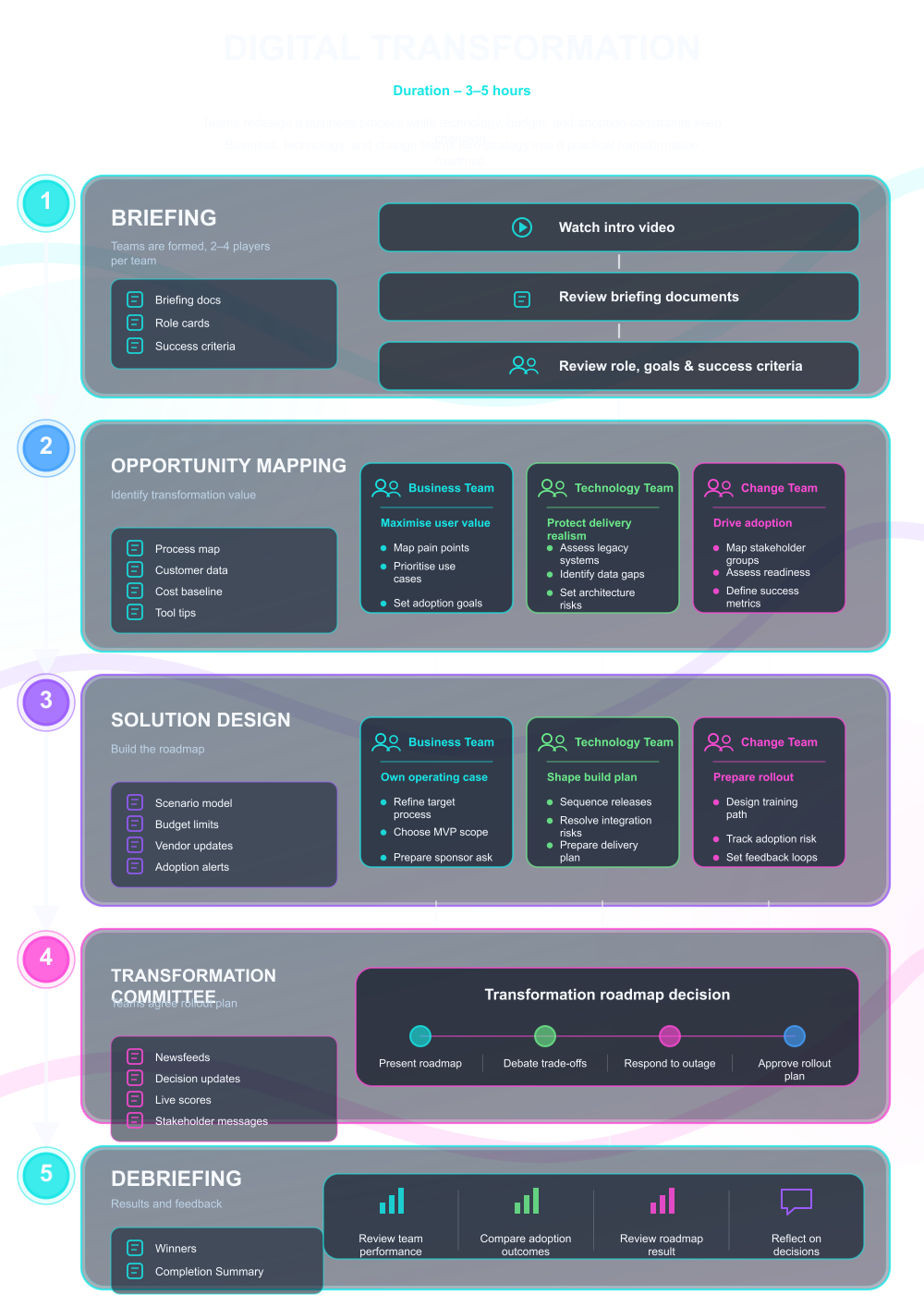
This simulation works in both academic and corporate contexts and can be run individually or in teams. Each round simulates a phase of transformation - vision, execution, and scaling.
1. Receive a Scenario or Brief: Participants are introduced to a company under digital disruption, along with performance challenges and technology options.
2. Analyse the Situation: They review financials, customer trends, cultural barriers, and competitive benchmarks.
3. Make Strategic Decisions: Participants allocate budgets, prioritize technologies, and set transformation goals.
4. Collaborate and Align: Teams role-play as executives (CIO, CMO, COO) to negotiate and align decisions.
5. Communicate Outcomes: They deliver transformation updates to boards, employees, or the market.
6. Review and Iterate: Feedback shows financial results, cultural shifts, and stakeholder responses. Each round introduces new complexities.
Frequently Asked Questions
Assessment
Assessment can be tailored to focus on digital strategy, leadership, communication, or adaptability. Participants may be evaluated on:
- Quality of transformation roadmap and decisions
- Balancing financial and innovation priorities
- Handling resistance and stakeholder alignment
- Clarity in communication and storytelling
- Responsiveness to disruption and new technologies
You can also include memo writing and debrief presentations as part of the assessment structure. Additionally, you can also add a built-in peer and self-assessment tool to see how participants rate themselves. This flexibility allows the simulation to be easily integrated by professors as graded courses at universities and by HR at assessment centres at companies.