It is ideal for university students in finance, business, or technology programs, as well as professionals in banking, fintech, consulting, or any role seeking to understand the dynamics of the modern payments industry.

Digital Payments Simulation
In this Digital Payments Simulation, participants balance innovation, regulation, and profitability while navigating market competition, evolving technologies, and shifting consumer demands in a fast-paced financial ecosystem.

Digital Payments Simulation Overview
The Digital Payments Simulation is an immersive, interactive experience that places participants at the forefront of the financial technology revolution. Acting as the strategic leaders of a digital wallet or payments service provider, teams are tasked with building a scalable and compliant business from the ground up.
Each simulation round introduces realistic challenges. All from sudden shifts in regulatory compliance and cybersecurity threats to the emergence of disruptive competitors and new technologies like blockchain or Central Bank Digital Currencies.
Participants must analyze market data, allocate development resources, set pricing and partnership strategies, and manage operational risks. The simulation is designed for university finance and business programs, executive fintech training, and corporate innovation workshops, providing a comprehensive understanding of how technology, finance, and strategy intersect in the real-world payments landscape.

Digital Payments Simulation Concepts
Participants work through realistic scenarios, which can be customized to emphasize or exclude specific topics depending on the learning goals. This modular structure allows the simulation to be tailored to any type of session. Key concepts include:
- Payments Ecosystem Fundamentals
- Business Model Innovation
- Regulatory Compliance and Risk
- Technology Infrastructure
- Product Strategy
- Partnerships and Network Effects
- Financial Management
- Competitive Strategy
- Emerging Trends

Gameflow
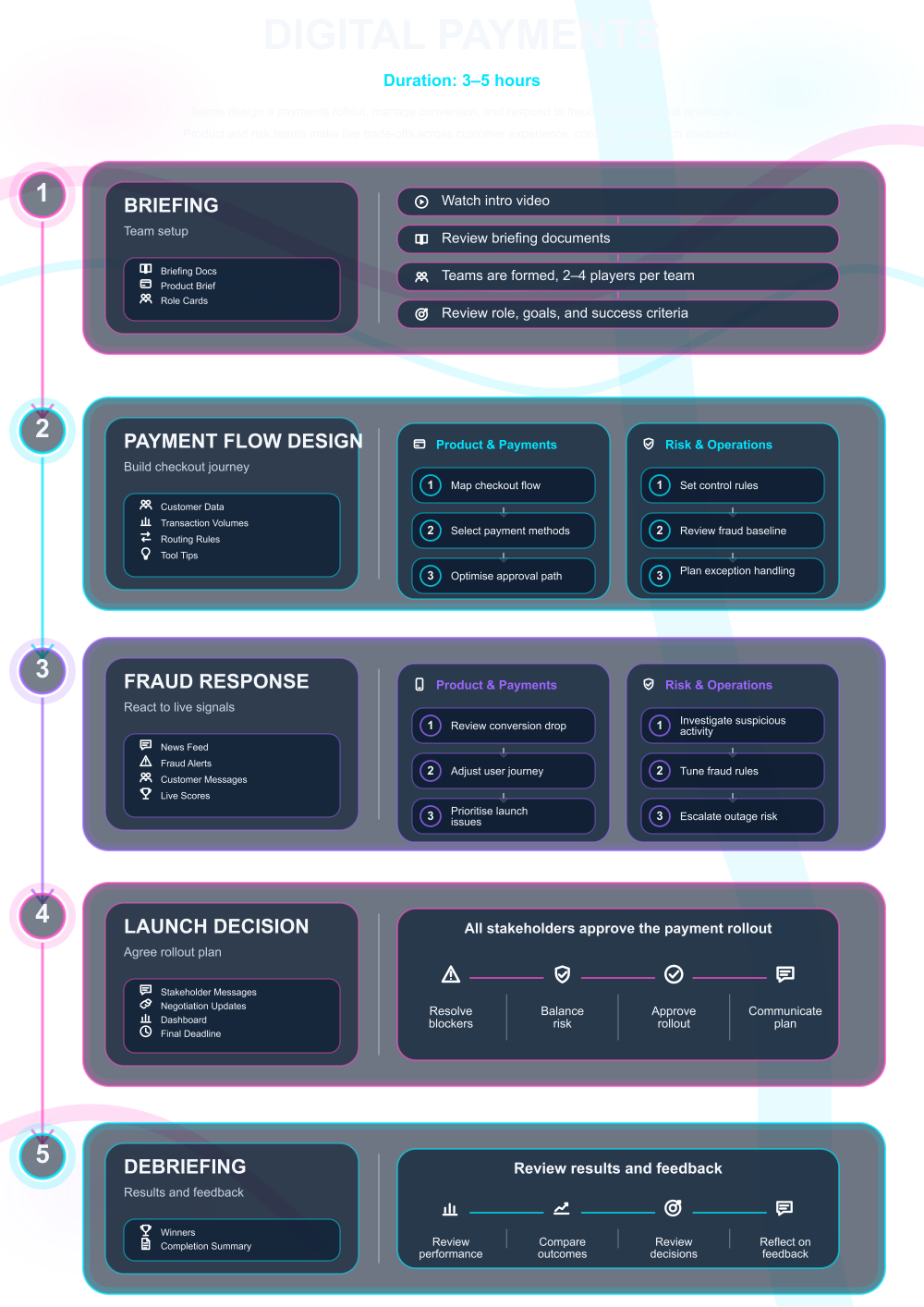

What Participants Do
In the simulation, participants will:
- Review simulated data on consumer behavior, competitor moves, and regulatory announcements.
- Choose which customer segments to target and which payment products to develop or enhance.
- Allocate budget across R&D, marketing, security, and compliance.
- Negotiate with simulated banking and retail partners to expand their network.
- Respond to real-time events like fraud attacks, system outages, or new market entrants.
- Communicate their strategy and performance to simulated investors or a board of directors.
- Refine their approach each round based on performance feedback and changing market conditions.

Learning Objectives
By the end of the simulation, participants will be able to:
- Map the core components and revenue flows of the digital payments value chain.
- Design a viable business and product strategy for a digital payments service.
- Evaluate the impact of key financial regulations on product design and operations.
- Analyze the trade-offs between growth investment, risk management, and profitability.
- Develop strategies to build network effects and manage key partnerships.
- Communicate a coherent payments strategy to technical and non-technical stakeholders.
- Anticipate how emerging technologies could disrupt the payments landscape.
- Build confidence in making strategic decisions under uncertainty in a high-growth sector.
How the Digital Payments Simulation Works
This simulation can be run individually or in teams in academic or corporate contexts. Each cycle represents a stage of getting through a pressing financial situation.
1. Receive a Market Brief Teams are introduced to their simulated company and the current market landscape.
** 2. Analyze and Plan** They assess their position, study competitor intelligence, and review financial dashboards.
3. Make Strategic Decisions Teams submit their plans for product development, marketing, partnerships, and risk management through an intuitive interface.
4. Collaborate and Negotiate Teams may interact to form alliances or compete for exclusive partnerships in a multiplayer environment.
5. Receive Round Results The simulator processes all decisions, generating outcomes on market share, financial performance, and operational incidents.
6. Review and Adapt Teams receive detailed feedback on their performance metrics. They then refine their strategy for the next round, responding to new market developments.
Frequently Asked Questions
Assessment
Assessment of participant performance can be tailored according to the host institution’s objectives (business school, corporate training, assessment centre). Typical assessment criteria include:
- Growth in key metrics like active users, transaction volume, and profitability.
- Effectiveness in maintaining security and adhering to regulatory rules.
- Coherence and adaptability of their product and partnership strategies.
- Clarity and persuasiveness of investor pitches or board updates.
- How effectively the team works together to analyze data and make decisions.