It's ideal for marketing students, early-career digital marketers, business owners, and anyone seeking to understand how SEO drives sustainable business growth.

Digital Marketing Simulation
In this SEO Simulation, participants design and execute real-time Search Engine Optimization (SEO) campaigns, driving qualified traffic, and balancing strategic investments across content, technical optimization, and link-building in a dynamic market.

Digital Marketing Simulation Overview
This simulation places participants at the helm of a digital marketing team responsible for the online visibility of their company. They navigate a realistic digital ecosystem where they must analyze search landscapes, allocate budgets, and make critical decisions across all pillars of SEO. Each round introduces new market conditions: such as shifting consumer search trends, core algorithm updates from the "search engine", or aggressive competitive actions.
Participants must interpret analytics, prioritize technical site improvements, commission and optimize content, and build a sustainable backlink profile. The simulation emphasizes data-driven decision-making and strategic foresight, teaching how to balance long-term authority-building with achieving short-term performance goals.
It is ideal for university marketing programs, digital marketing bootcamps, and corporate training workshops, bringing the complex, ever-evolving world of SEO to life in a practical, competitive environment.

Digital Marketing Simulation Concepts
Participants work through realistic scenarios, which can be customized to emphasize or exclude specific topics depending on the learning goals. This modular structure allows the simulation to be tailored to any type of session. Key concepts include:
- Search Engine Fundamentals
- Keyword Strategy and Intent
- On-Page SEO
- Technical SEO
- Content Marketing for SEO
- Off-Page SEO and Link Building
- SEO Analytics and Reporting
- Managing Algorithm Updates
- Budget Allocation and ROI

Gameflow
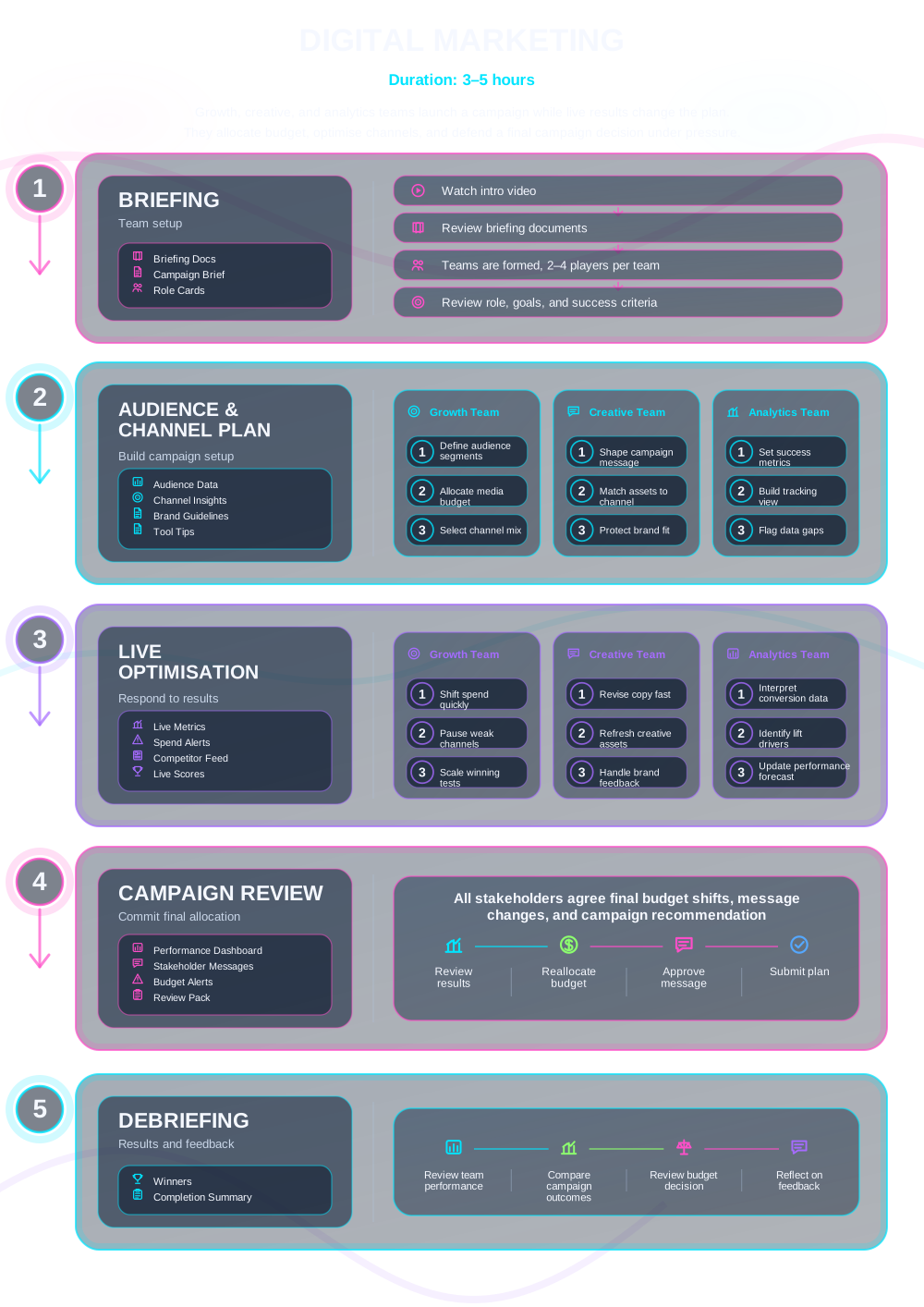

What Participants Do
In the simulation, participants will:
- Analyze a website’s current SEO health and competitive landscape.
- Allocate a limited budget across technical fixes, content creation, and link-building initiatives.
- Select target keywords and optimize web pages to improve rankings.
- Respond to in-simulation events like algorithm updates or negative SEO attacks.
- Analyze performance dashboards to adjust strategy each round.
- Present campaign results and strategic rationale to company stakeholders.

Learning Objectives
By the end of the simulation, participants will be able to:
- Understand the core technical, on-page, and off-page pillars of effective SEO.
- Conduct keyword and competitor analysis to inform a digital strategy.
- Allocate resources efficiently across competing SEO projects to maximize ROI.
- Interpret analytics data to diagnose problems and identify opportunities.
- Adapt an SEO strategy in response to algorithm changes and competitive actions.
- Communicate the value and performance of SEO initiatives to non-specialists.
- Build a holistic, sustainable SEO plan that balances short-term gains with long-term authority.
How the Digital Marketing Simulation Works
This simulation can be run individually or in teams in academic or corporate contexts. Each cycle represents a stage of getting through a pressing financial situation.
1. Receive the Brief Participants are given control of a company's digital presence with specific traffic and conversion goals.
** 2. Analyze the Landscape** They review initial ranking reports, competitor analysis, and site audit data.
3. Make Strategic Decisions Each round, teams decide how to invest their budget in various SEO actions.
4. Collaborate and Negotiate In team settings, participants may role-play as content specialists, technical experts, and strategists.
5. Review Results and Adapt After each decision cycle, the simulation generates new performance data, showing the impact of their choices on traffic, rankings, and conversions.
6. Present and Reflect The final phase involves presenting their strategic journey and outcomes, followed by a guided debrief on key learnings.
Frequently Asked Questions
Assessment
Assessment of participant performance can be tailored according to the host institution’s objectives (business school, corporate training, assessment centre). Typical assessment criteria include:
- Improvement in key metrics (traffic, rankings, conversions) over the simulation period.
- ROI achieved through optimal allocation of resources.
- Ability to diagnose performance issues and pivot strategy based on data.
- Clarity and persuasiveness in presenting results and strategic rationale.
- Responsiveness to market changes and effectiveness in collaborative settings.