It’s ideal for finance, economics, or business students preparing for roles in trading, risk, or corporate finance.

Derivatives Simulation
Students take on the role of derivatives professionals, pricing instruments, managing risk, and executing trades to optimize financial outcomes under real-world pressures with our derivatives simulator.

Derivatives Simulation Overview
The Derivatives Simulation gives students the opportunity to work hands-on with the instruments that define modern financial risk management and speculative strategy. Acting as derivatives traders and risk managers, students use options, futures, swaps, and other structured products to build hedging strategies, enhance portfolio performance, and respond to shifting market dynamics in real time.
This immersive experience brings together theoretical knowledge and applied decision-making. From pricing and strategy design to trade execution and post-trade analysis, the derivatives simulation covers the full lifecycle of derivatives usage in institutional and corporate finance. Whether for hedging commodity risk, managing currency exposure, or structuring payoffs, students gain fluency in using derivatives for real-world financial outcomes.

Derivatives Concepts
- Option Pricing Models (Black-Scholes, Binomial Trees)
- Futures and Forward Contracts
- Interest Rate Swaps
- Hedging Strategies with Derivatives
- Put-Call Parity
- Greeks and Risk Sensitivities
- Structured Products Design
- Margin and Collateral Management
- Implied vs. Historical Volatility
- Exotic Options and Path-Dependent Derivatives
- Basis Risk and Cross-Hedging
- Derivatives Market Microstructure

Gameflow
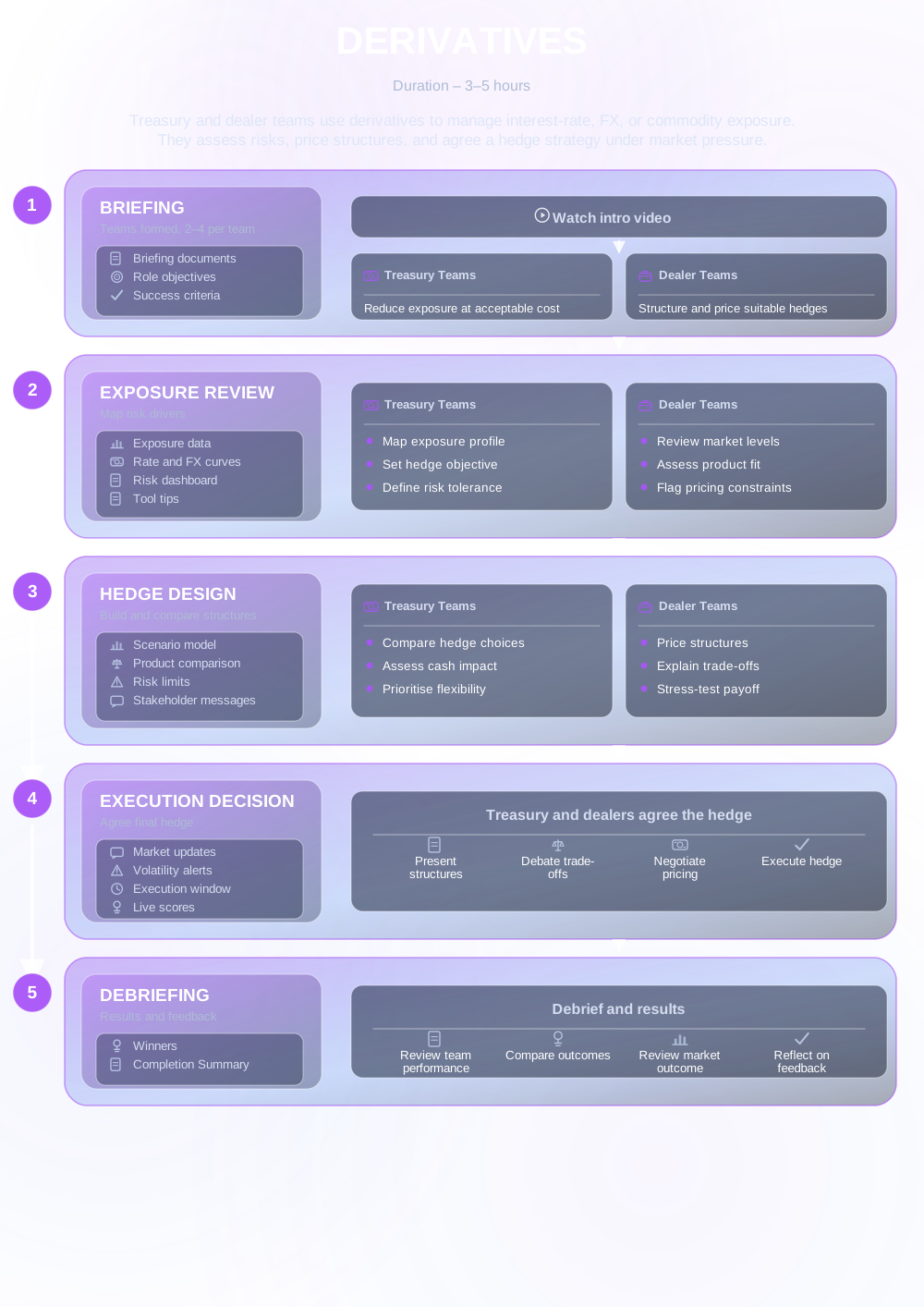

What Students Do
During the derivatives simulation, students engage in the following tasks to develop and apply derivatives skills:
- Price Derivatives Instruments: Use Black-Scholes and binomial models for valuation.
- Construct Hedging Strategies: Build derivatives-based solutions for managing portfolio or corporate risk.
- Trade Futures and Options: Execute simulated trades in a dynamic market environment.
- Analyze Volatility: Interpret implied and historical volatility to shape trading decisions.
- Use the Greeks: Apply delta, gamma, vega, and theta to manage position sensitivity.
- Structure Custom Products: Create payoffs tailored to client needs or investment theses.
- Manage Margin Requirements: Monitor and adjust for variation margin and leverage constraints.
- Evaluate Trade Outcomes: Analyze profitability and risk-adjusted returns of executed strategies.
- Simulate Real Market Conditions: React to macroeconomic events and policy announcements.
- Report to Stakeholders: Present hedging strategies, rationales, and results to peers or simulated clients.

What Students Learn
- Derivative Pricing Proficiency: Understand models and logic behind options and futures pricing.
- Hedging and Risk Control: Design strategies to reduce exposure to market fluctuations.
- Volatility Analysis: Use volatility measures to assess risk and opportunity.
- Greeks Mastery: Learn how sensitivities impact the value and risk profile of positions.
- Margin and Leverage Management: Navigate the mechanics of trading with margin.
- Product Structuring Skills: Gain experience in tailoring complex derivatives.
- Trade Execution and Analysis: Practice placing, tracking, and evaluating derivatives trades.
- Scenario-Based Decision-Making: Respond to changing market dynamics in real time.
- Regulatory Awareness: Learn the operational and compliance elements of derivatives trading.
- Effective Communication: Present complex strategies clearly to stakeholders and non-specialist audiences.

Why The Quantitative Finance Simulation Works
The Derivatives Simulation transforms abstract derivatives theory into applied experience. By giving students direct control over pricing, hedging, and trading decisions, the simulation bridges the gap between classroom learning and the real financial marketplace. Each decision has consequences, reinforcing lessons in a high-stakes, feedback-rich environment.
This derivatives simulation is especially valuable for developing both technical proficiency and strategic thinking. It empowers students to not only understand the instruments, but also to use them with confidence in diverse financial contexts - from trading floors to corporate treasury departments. By immersing learners in realistic, time-sensitive challenges, it prepares them for the analytical demands of today’s financial careers.