It's ideal for students and professionals in finance, compliance, risk management, cybersecurity, legal studies, and business management who need to understand the practical application of data privacy laws.

Data Privacy and Protection Simulation
In this Data Privacy and Protection in Finance Simulation, participants navigate the intricate landscape of evolving regulations, cybersecurity threats, and ethical dilemmas to safeguard sensitive customer data while enabling business innovation.

Data Privacy and Protection Simulation Overview
This simulation plunges participants into the high-stakes arena of data governance in the modern financial sector. As financial institutions become increasingly data-driven, they face relentless pressure from regulatory bodies, sophisticated cyber-attacks, and heightened customer expectations for transparency and control over their personal information.
Participants must balance competing priorities: driving business growth through data analytics, ensuring ironclad compliance with global frameworks like GDPR (General Data Protection Regulation) and CCPA (California Consumer Privacy Act), and maintaining robust security postures against breaches. Each simulation round introduces new, dynamic challenges—such as a sudden regulatory audit, an emerging data vulnerability, a contentious data-sharing proposal from the business side, or a real-time privacy incident.
Success hinges on making strategic decisions under pressure, allocating resources wisely, and communicating effectively with stakeholders ranging from the boardroom to front-line customers. This simulation is ideal for university programs in finance, law, or information systems, as well as corporate training for compliance, risk, and IT security teams.

Data Privacy and Protection Simulation Concepts
Participants work through realistic scenarios, which can be customized to emphasize or exclude specific topics depending on the learning goals. This modular structure allows the simulation to be tailored to any type of session. Key concepts include:
- Core principles of data privacy
- Key global regulatory frameworks
- Data classification and lifecycle management
- Designing and implementing a Data Protection Impact Assessment
- Incident response planning and breach notification procedures
- Managing third-party vendor and data processor risks
- Privacy by Design and Default principles in product development
- The ethics of data use, profiling, and AI in finance
- Cross-border data transfer mechanisms
- Communicating privacy policies and managing customer data rights requests

Gameflow
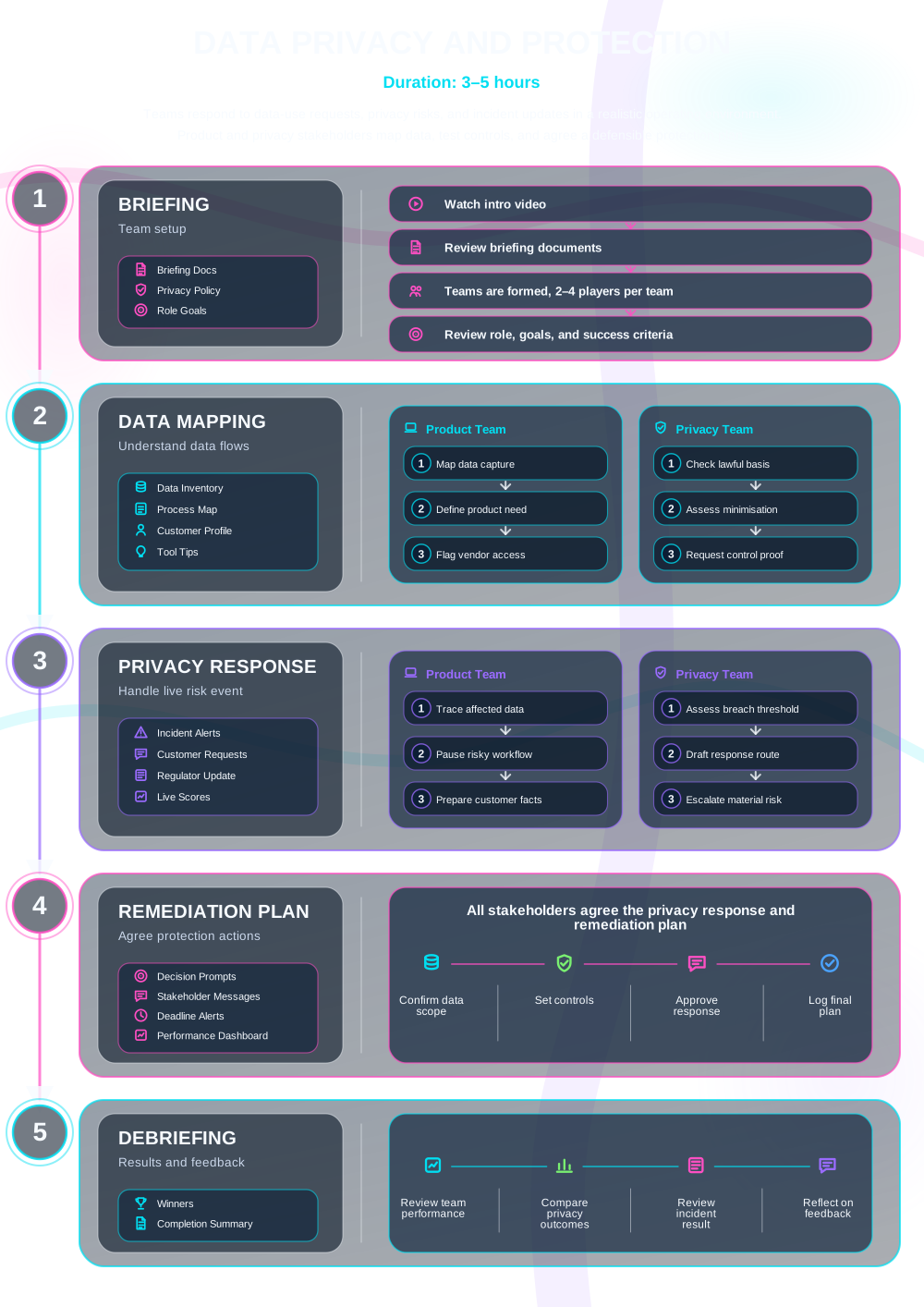

What Participants Do
In the simulation, participants will:
- Analyze complex business proposals for privacy and compliance risks.
- Design and execute a DPIA to identify and mitigate potential harms.
- Allocate a limited budget across competing needs: security tools, staff training, audit processes, or technology upgrades.
- Respond to a simulated data breach, managing the technical response, regulatory notifications, and customer communications.
- Negotiate data processing agreements with third-party vendors.
- Advise senior management and "the board" on privacy strategy, balancing risk with commercial opportunity.
- Handle customer data subject requests and balance operational fulfillment with regulatory deadlines.

Learning Objectives
By the end of the simulation, participants will be able to:
- Understand the core requirements and enforcement powers of major data privacy regulations.
- Apply Privacy by Design principles to a financial product or service.
- Develop a structured process for conducting and documenting a DPIA.
- Formulate a crisis communication plan for a data breach incident.
- Evaluate and mitigate risks associated with third-party data processors and cross-border data flows.
- Articulate the business case for robust data protection, linking it to trust, reputation, and competitive advantage.
- Navigate the ethical trade-offs between data utility for innovation and individual privacy rights.
- Build confidence in making high-stakes compliance decisions under uncertainty and time pressure.
How the Data Privacy and Protection Simulation Works
This simulation can be run individually or in teams in academic or corporate contexts. Each cycle represents a stage of getting through a pressing financial situation.
1. Receive a Scenario Brief Participants are introduced to a business initiative or an unfolding incident with significant privacy implications.
** 2. Analyze the Situation** They review relevant regulations, internal policies, system architectures, and stakeholder interests.
3. Make Strategic Decisions Participants choose how to proceed: approve, modify, or halt the initiative; allocate resources; draft key documents; and plan communications.
4. Collaborate Across Roles Teams may represent different functions (Legal, IT Security, Marketing, Product Development) to negotiate a unified strategy.
5. Communicate Outcomes Participants present their action plan to "regulators," deliver a board briefing, or draft a customer notification.
6. Review and Reflect Feedback highlights the compliance effectiveness, risk exposure, financial impact, and reputation score of their decisions. Strategies evolve across multiple rounds as scenarios escalate in complexity.
Frequently Asked Questions
Assessment
Assessment of participant performance can be tailored according to the host institution’s objectives (business school, corporate training, assessment centre). Typical assessment criteria include:
- Accuracy and completeness of regulatory analysis and DPIA documentation.
- Effectiveness of decisions in mitigating risk while supporting business objectives.
- Quality and clarity of stakeholder communications.
- Collaboration and adaptability in responding to new information and team input.
- Ethical reasoning applied to dilemmas involving data use.