No. The simulation introduces key blockchain and crypto concepts in an accessible way.

Cryptocurrency Simulation
In this simulation, participants act as investors, regulators, and entrepreneurs navigating digital currency markets - balancing volatility, innovation & strategy while responding to shocks, speculation, and evolving blockchain-driven ecosystems.

Cryptocurrency Simulation Overview
Participants step into the fast-moving world of cryptocurrencies, where market swings, regulatory changes, and innovation pressures demand sharp decision-making. Each round introduces challenges such as token launches, price bubbles, government crackdowns, or security breaches.
They must manage portfolios, evaluate blockchain projects, respond to speculative behaviour, and assess regulatory risks - all while competing or collaborating with peers. The simulation highlights both opportunities and vulnerabilities in the crypto ecosystem.
This simulation is ideal for finance, technology, and strategy courses, as well as executive and corporate training. It makes abstract cryptocurrency concepts tangible and shows their impact on real-world decision-making.

Cryptocurrency Simulation Concepts
Participants work through realistic scenarios, which can be customized to emphasize or exclude specific topics depending on the learning goals. This modular structure allows the simulation to be tailored to any type of session. Key concepts include:
- Cryptocurrency market dynamics and volatility
- Blockchain fundamentals and digital asset design
- Initial Coin Offerings (ICOs) and token launches
- Regulation, compliance, and global policy differences
- Speculative bubbles and investor psychology
- Cybersecurity and fraud in crypto markets
- Stablecoins, DeFi, and evolving financial innovations
- Market liquidity and trading strategies
- ESG considerations in crypto mining and sustainability
- Long-term adoption vs short-term speculation

Gameflow
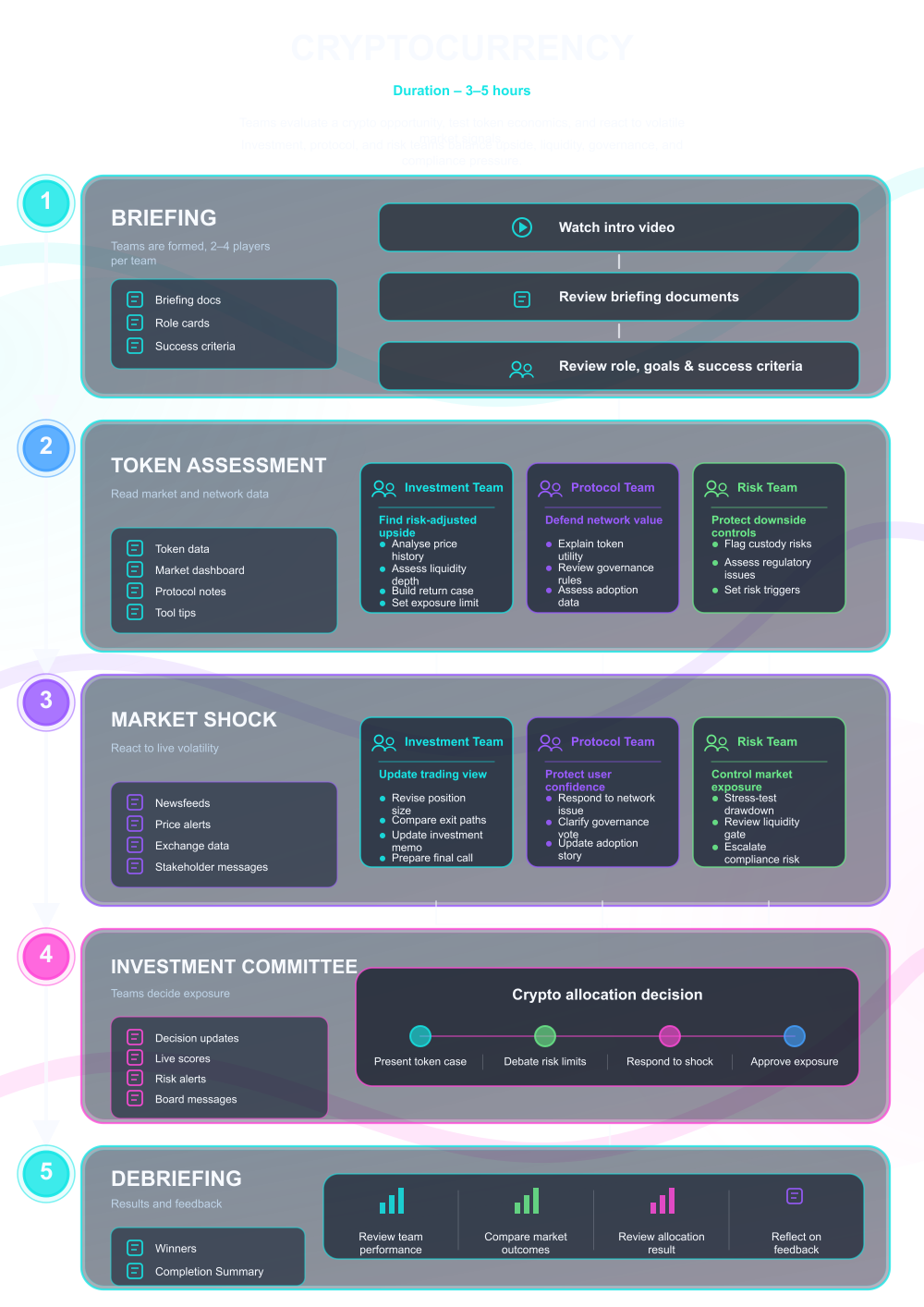

What Participants Do
In this simulation, participants act as stakeholders in the crypto economy. They:
- Build and manage cryptocurrency portfolios under volatile conditions
- Evaluate ICOs and blockchain projects for credibility and value
- React to news, regulations, and speculative shifts in markets
- Negotiate with regulators, investors, or exchanges
- Decide between speculation, hedging, and long-term adoption strategies
- Reflect on lessons from successes, failures, and missed opportunities

Learning Objectives
By the end of the simulation, participants will be able to:
- Understand cryptocurrency market mechanics and drivers
- Balance risk, speculation, and long-term adoption strategies
- Evaluate blockchain projects and token economics
- Navigate regulatory uncertainty and compliance requirements
- Recognize investor psychology in speculative markets
- Respond effectively to external shocks and crises
- Communicate investment reasoning and risk management approaches
- Explore the role of crypto in global finance and innovation
- Identify vulnerabilities like fraud, scams, and cyberattacks
- Build confidence in applying crypto knowledge to real-world contexts
The simulation’s flexible structure ensures that these objectives can be calibrated to match the depth, duration, and focus areas of each program, whether in higher education or corporate learning.
How the Cryptocurrency Simulation Works
The simulation can be run individually or in teams in classrooms or corporate workshops. Each cycle represents a decision-making round in crypto markets.
1. Receive a Scenario or Brief: Participants are given a crypto market update with context, objectives, and challenges.
2. Analyse the Situation: They review project fundamentals, market sentiment, and regulatory risks.
3. Make Strategic Decisions: Participants decide on trading, investing, or regulatory responses under time pressure.
4. Collaborate Across Roles: Teams may act as regulators, investors, or entrepreneurs negotiating in the ecosystem.
5. Communicate Outcomes: Participants present investment memos, regulatory updates, or project pitches.
6. Review and Reflect: Feedback highlights portfolio results, project viability, and stakeholder trust. Participants adapt strategies in subsequent rounds.
Frequently Asked Questions
Assessment
Assessment can be tailored to focus on financial acumen, risk management, or communication. Participants may be evaluated on:
- Effectiveness in portfolio and project decisions
- Judgment in balancing risk, speculation, and adoption
- Responsiveness to regulation and market volatility
- Clarity in communicating investment strategies
- Collaboration and negotiation across roles
You can also include memo writing and debrief presentations as part of the assessment structure. Additionally, you can also add a built-in peer and self-assessment tool to see how participants rate themselves. This flexibility allows the simulation to be easily integrated by professors as graded courses at universities and by HR at assessment centres at companies.