Not necessarily. The simulation is accessible to learners at all levels, with guided explanations of key concepts.

Credit Risk Simulation
In this hands-on Credit Risk Simulation, participants act as credit analysts and risk managers, evaluating borrower profiles, structuring loans, and managing defaults while balancing profitability, regulatory requirements, and portfolio stability.

Credit Risk Simulation Overview
Participants step into the role of professionals responsible for assessing and managing credit risk at a financial institution. Each round presents new lending opportunities, market conditions, and borrower profiles, requiring careful evaluation and structured decision-making.
They must decide how much credit to extend, under what terms, and at what price. Along the way, they experience the challenges of balancing growth ambitions with risk exposure, regulatory compliance, and reputational considerations.
The simulation introduces dynamic developments such as interest rate changes, borrower defaults, sector downturns, or credit rating updates - forcing participants to adapt strategy and reassess portfolios in real time. It is ideal for finance, banking, and risk management programs at universities, business schools, or corporate training centers.

Credit Risk Simulation Concepts
Participants work through realistic scenarios, which can be customized to emphasize or exclude specific topics depending on the learning goals. This modular structure allows the simulation to be tailored to any type of session. Key concepts include:
- Credit analysis and borrower profiling
- Loan structuring and pricing
- Probability of default and loss given default
- Portfolio diversification and risk concentration
- Credit ratings and external assessments
- Regulatory frameworks and capital adequacy
- Collateral, covenants, and risk mitigation tools
- Stress testing and scenario analysis
- Trade-offs between profitability and risk appetite
- Stakeholder communication and reporting

Gameflow
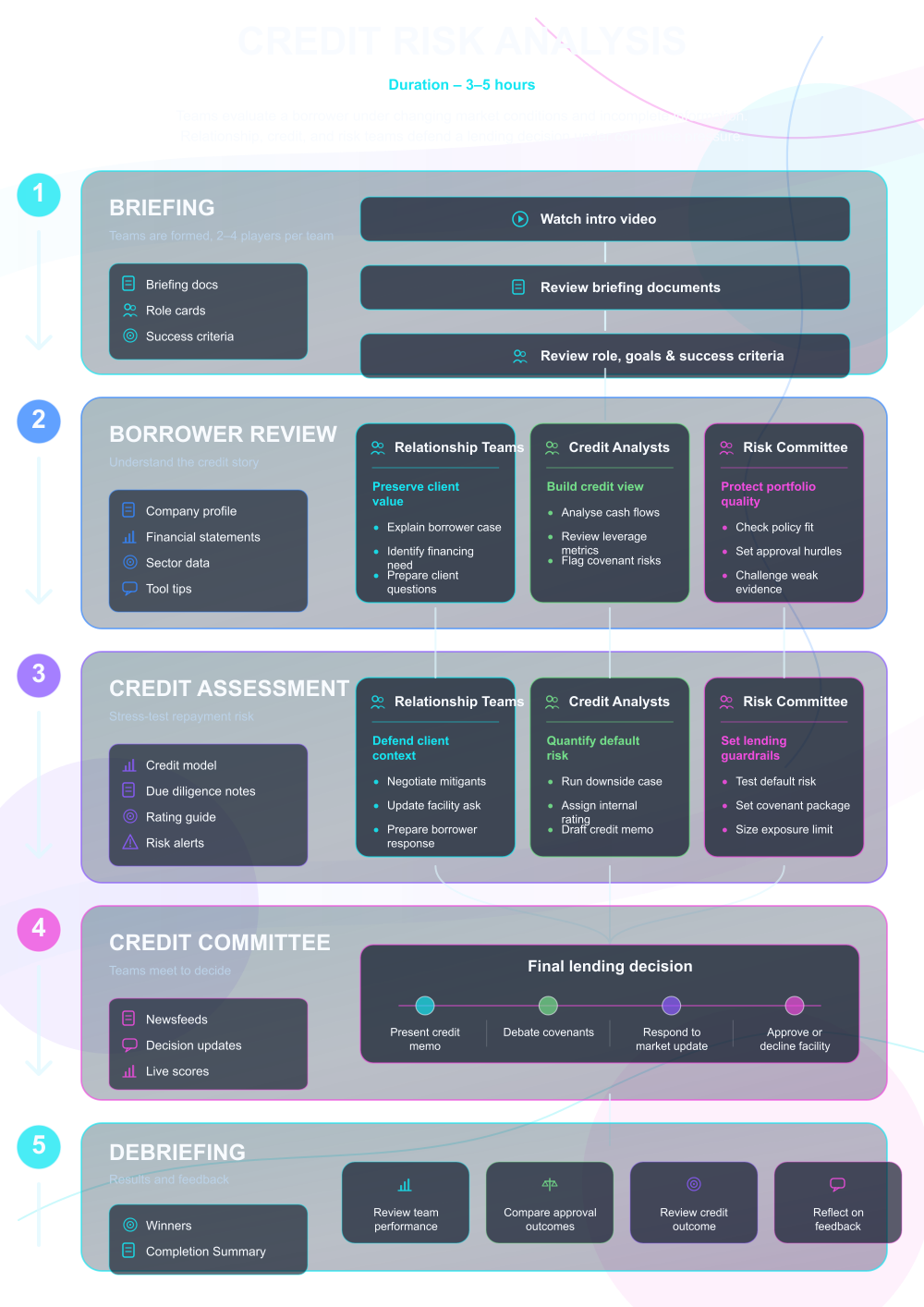

What Participants Do
In this simulation, participants take on the role of credit officers and risk managers. They:
- Review borrower financials, industry data, and qualitative factors
- Assign internal credit ratings and decide loan terms
- Evaluate portfolio exposure and manage sector concentration
- Respond to shocks such as defaults, downgrades, or policy changes
- Balance growth goals with regulatory capital requirements
- Communicate credit rationale to committees, boards, or regulators

Learning Objectives
By the end of the simulation, participants will be able to:
- Conduct structured credit risk analysis using financial and qualitative data
- Assess default probabilities and loss impacts across portfolios
- Design loan structures aligned with risk-return goals
- Apply stress testing and scenario planning
- Navigate regulatory capital requirements and compliance
- Manage portfolio concentration and diversification
- Communicate risk assessments effectively to stakeholders
- Balance profitability, ethics, and long-term stability
- Adapt credit strategies to changing economic conditions
- Strengthen collaboration across risk, business, and compliance teams
The simulation’s flexible structure ensures that these objectives can be calibrated to match the depth, duration, and focus areas of each program, whether in higher education or corporate learning.
How the Credit Risk Simulation Works
The simulation can run individually or in teams, in both academic and corporate contexts. Each cycle represents a lending decision or portfolio review.
1. Receive a Scenario or Brief: Participants are given a lending request, borrower profile, and macroeconomic conditions.
2. Analyse the Situation: They review financial statements, ratios, sector trends, and qualitative risks.
3. Make Credit Decisions: Participants set terms, decide on loan approval, and determine collateral or covenants.
4. Manage Portfolios: Over multiple rounds, participants adjust exposure, diversify, and manage defaults or downgrades.
5. Review Results and Reflect: They receive feedback on profitability, capital impact, and portfolio risk metrics.
6. Iterate with New Developments: Subsequent rounds introduce economic shifts, defaults, or regulatory changes requiring adaptation.
Frequently Asked Questions
Assessment
Assessment can be tailored to focus on analytical rigor, decision-making, communication, or adaptability. Participants may be evaluated on:
- Quality and accuracy of credit analysis
- Loan structuring and pricing decisions
- Portfolio diversification and risk management
- Responsiveness to shocks and stress scenarios
- Communication clarity in committee or stakeholder settings
- Peer/self-assessments to measure collaboration and reflection
You can also include memo writing and debrief presentations as part of the assessment structure. Additionally, you can also add a built-in peer and self-assessment tool to see how participants rate themselves. This flexibility allows the simulation to be easily integrated by professors as graded courses at universities and by HR at assessment centres at companies.