We recommend teams of 3-5 participants. This size is optimal for fostering discussion, dividing analytical tasks, and making collaborative strategic decisions.

Corporate Treasurer Simulation
This simulation immerses you in the dynamic world of corporate finance, where you will manage liquidity, mitigate financial risks, and make strategic capital structure decisions to maximize firm value and ensure financial stability.

Corporate Treasurer Simulation Overview
The Corporate Treasurer Simulation is a dynamic, online-based learning experience that replicates the core responsibilities and challenges faced by a corporate treasury department. Participants are placed at the helm of a multinational corporation's treasury function and must navigate a realistic economic environment.
Over multiple rounds, teams or individuals will be tasked with managing the company's cash flow, making critical funding decisions, and developing a comprehensive strategy to hedge against market risks such as foreign exchange (FX) and interest rate fluctuations. The simulation bridges the gap between theoretical finance and the practical, often ambiguous, decision-making required in a real corporate setting. Success is measured not just by profitability, but by the stability, efficiency, and strategic foresight of the treasury function.
Although ideal for undergraduate and graduate finance courses, executive training, and corporate finance skill workshops, the simulation is modular and scalable, allowing instructors to vary complexity.

Corporate Treasurer Simulation Concepts
Participants work through realistic scenarios, which can be customized to emphasize or exclude specific topics depending on the learning goals. This modular structure allows the simulation to be tailored to any type of session. Key concepts include:
- Liquidity Management
- Cash Flow Forecasting
- Working Capital Optimization
- Debt Financing and Capital Structure
- Interest Rate Risk Management
- Foreign Exchange Risk Management
- Hedging Strategies (Forwards, Options, Swaps)
- Bank Relationship Management
- Credit Ratings and Debt Covenants
- Investment of Surplus Cash

Gameflow
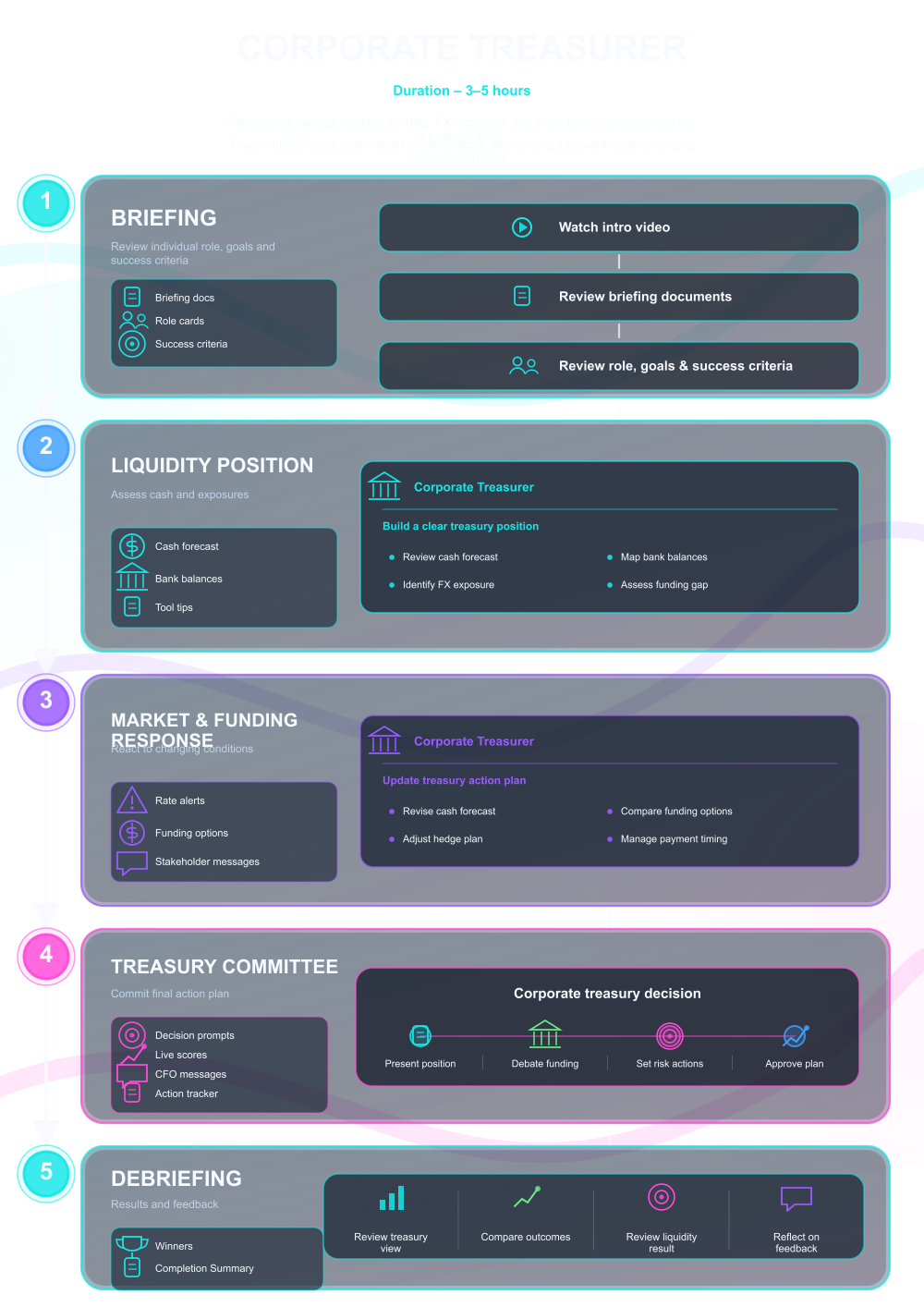

What Participants Do
In the simulation, participants will:
- Analyzing the company's cash position and projecting short-term and long-term cash flows.
- Executing transactions in the simulated financial markets (FX, money markets, derivatives).
- Deciding on the optimal capital structure and sourcing debt (commercial paper, bonds, loans).
- Designing and implementing hedging strategies to protect the company's P&L and balance sheet from market volatility.
- Managing relationships with multiple banking counterparts.
- Responding to unexpected market shocks and corporate events (e.g., M&A opportunities, supply chain disruptions).
- Reporting on the treasury's performance and risk exposure to the board (simulated).

Learning Objectives
By the end of the simulation, participants will be able to:
- Analyze a company's financial statements to identify key treasury-related risks and opportunities.
- Forecast cash flows and manage daily liquidity to avoid shortfalls and optimize returns on surplus cash.
- Evaluate different sources of debt financing and their impact on the company's cost of capital and credit rating.
- Design and execute effective hedging strategies using financial derivatives to mitigate interest rate and foreign exchange risk.
- Articulate the strategic role of the treasury function in supporting corporate goals and ensuring financial resilience.
- Interpret real-time market data and news to make informed, proactive financial decisions.
How the Corporate Treasurer Simulation Works
This simulation can be run individually or in teams in academic or corporate contexts. Each cycle represents a stage of getting through a pressing financial situation.
1. Setup Participants are divided into teams, each managing the treasury of an identical, simulated multinational corporation.
2. Analysis Reviewing the company's financials, market data, and news feeds.
3. Decision-Making Making funding, investment, and hedging decisions through an online platform.
4. Execution Placing orders in the simulated market, which features real-time pricing and multiple banking partners.
5. Results After decisions are submitted, the platform processes the results, generating new financial statements and a performance dashboard.
6. Debrief An instructor-led debrief session analyzes the outcomes, discusses different team strategies, and reinforces key learning points before the next round begins.
Frequently Asked Questions
Assessment
Assessment of participant performance can be tailored according to the host institution’s objectives (business school, corporate training, assessment centre). Typical assessment criteria include:
- Treasury Performance Score
- Evaluation of the end-state balance sheet and income statement, focusing on stability, profitability, and risk exposure.
- Collaboration, division of work, integration of roles, and final coherence.
- Rating by peers and self-reflection on approach and decisions.