This simulation is designed for MBA students, executives in leadership development programs, and managers being groomed for general management or strategic roles who need to understand the big-picture decisions that drive a corporation.

Corporate Strategy Simulation
In this Corporate Strategy Simulation, participants step into the role of the C-suite, making holistic decisions that shape the long-term direction, competitive positioning, and financial health of a company in a dynamic market.

Corporate Strategy Simulation Overview
Participants take on the challenge of steering a company through multiple strategic planning cycles. Acting as top executives, they must analyze the competitive landscape, allocate scarce resources across business units, and make pivotal choices regarding market entry, product development, M&A, and organic growth.
Each decision round introduces new market disruptions, competitor moves, and global economic shifts, forcing teams to adapt their master plan while balancing short-term performance with long-term vision.
This simulation moves beyond functional silos, requiring an integrated approach to corporate development, portfolio management, and value creation. It is ideal for MBA programs, executive education, and senior leadership workshops, providing a safe environment to practice the high-stakes art of corporate strategy.

Corporate Strategy Simulation Concepts
Participants work through realistic scenarios, which can be customized to emphasize or exclude specific topics depending on the learning goals. This modular structure allows the simulation to be tailored to any type of session. Key concepts include:
- Strategic Analysis
- Corporate Portfolio Management
- Growth Strategies
- Strategic Trade-offs and Resource Allocation
- Corporate Governance and Stakeholder Management
- Strategic Innovation and Digital Transformation
- Financial Strategy and Value Creation
- Strategy Execution and Change Management

Gameflow

What Participants Do
In the simulation, participants will:
- Analyze comprehensive internal financials, market research data, and competitor intelligence.
- Formulate a multi-year corporate strategy, defining vision, strategic objectives, and key initiatives.
- Decide on major investments, portfolio shifts, and strategic partnerships.
- Navigate unexpected economic events, activist investor pressure, and competitive threats.
- Balance the conflicting demands of growth, profitability, risk, and corporate responsibility.
- Communicate their strategic rationale and performance to the board of directors in a final capstone presentation.

Learning Objectives
By the end of the simulation, participants will be able to:
- Apply foundational frameworks for internal and external strategic analysis.
- Evaluate different corporate-level growth strategies and their associated risks.
- Manage a multi-business corporate portfolio to maximize overall firm value.
- Make integrated decisions that align functional areas (finance, marketing, operations) with corporate strategy.
- Understand how strategic choices directly impact financial statements and company valuation.
- Develop skills in negotiating strategic priorities and building consensus within a leadership team.
- Craft and deliver a compelling narrative to articulate and defend a corporate strategy.
How the Corporate Strategy Simulation Works
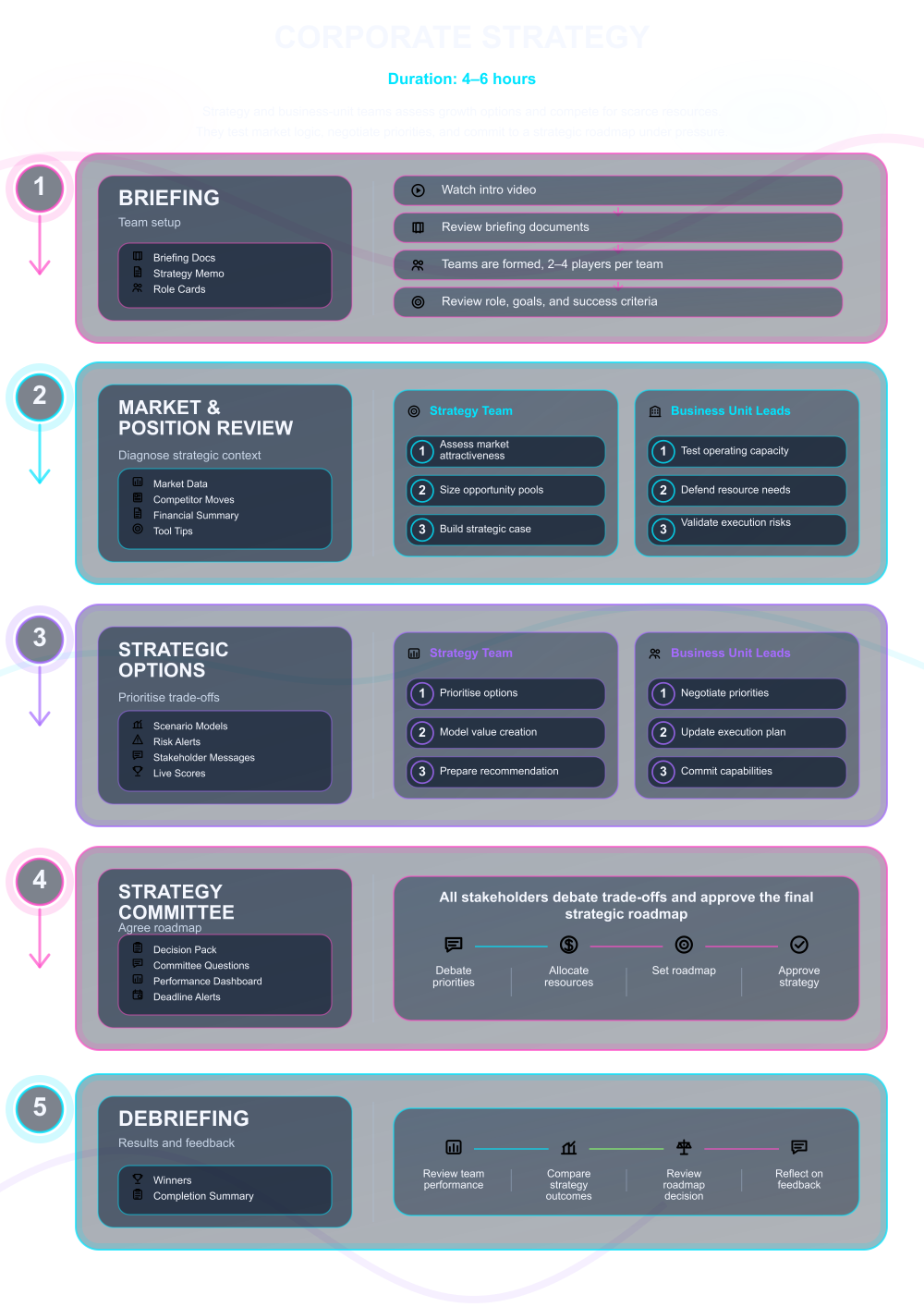
This simulation can be run individually or in teams in academic or corporate contexts. Each cycle represents a stage of getting through a pressing financial situation.
1. Receive the Strategic Brief Teams are given control of a corporation with a specific starting position, history, and initial challenges.
** 2. Conduct Strategic Analysis** They analyze performance data, industry reports, and competitor announcements to diagnose their situation.
3. Make Leadership Decisions Teams confer to set high-level goals and make concrete decisions on resource allocation, portfolio moves, and major strategic initiatives.
4. Submit Strategy and Receive Results Decisions are entered into the simulator, which processes them against a dynamic market engine. Teams receive detailed feedback on financial outcomes, market share changes, and investor reactions.
5. Adapt and Evolve Based on results and new market developments, teams refine their strategy for the next round, learning from past outcomes.
6. Present to the Board The simulation culminates in a final presentation where teams justify their strategic journey and future plans to a simulated board.
Frequently Asked Questions
Assessment
Assessment of participant performance can be tailored according to the host institution’s objectives (business school, corporate training, assessment centre). Typical assessment criteria include:
- Long-term shareholder value creation, portfolio strength, and market leadership achieved.
- The logical consistency of the strategy across rounds and the ability to pivot effectively in response to change.
- The application of strategic frameworks and the quality of analysis supporting key choices.
- The clarity, persuasiveness, and executive presence demonstrated in the final board presentation.
- Peer and self-assessments on contribution to team strategy formulation and dynamics.