This simulation is designed for MBA students, finance MSc candidates, and professionals in investment banking, private equity, turnaround consulting, and corporate development who want hands-on experience in managing company turnarounds.

Corporate Restructuring Simulation
In this Corporate Restructuring Simulation, participants are tasked with navigating a distressed company through the complexities of operational turnaround and financial reorganization to maximize stakeholder value and ensure survival.

Corporate Restructuring Simulation Overview
Participants are thrust into a pressurized environment where they must diagnose the root causes of a company's distress, develop a viable turnaround plan, and execute critical financial and operational restructuring steps.
Each round introduces new challenges, such as shifting creditor demands, volatile market conditions, urgent liquidity crises, or unexpected competitive threats. They must analyze financial statements and cash flows, negotiate with multiple stakeholder groups (including banks, bondholders, and suppliers), evaluate strategic alternatives like divestments or mergers, and make decisive operational changes.
The simulation emphasizes strategic decision-making under uncertainty, balancing short-term survival tactics with long-term strategic vision. It is ideal for advanced university finance programs, MBA courses, and executive training workshops for professionals in investment banking, private equity, or corporate finance. It brings the multifaceted challenge of corporate restructuring to life, demonstrating the intricate interplay between financial engineering, legal constraints, operational improvements, and intense stakeholder management.

Corporate Restructuring Simulation Concepts
Participants work through realistic scenarios, which can be customized to emphasize or exclude specific topics depending on the learning goals. This modular structure allows the simulation to be tailored to any type of session. Key concepts include:
- Diagnosis of financial distress and early warning signs
- Cash flow forecasting and liquidity crisis management
- Financial restructuring options: debt rescheduling, debt-for-equity swaps, and prepackaged plans
- Operational restructuring: cost rationalization, asset sales, and strategic refocusing
- Stakeholder analysis and negotiation
- Bankruptcy processes and insolvency regimes
- Business valuation in distress scenarios
- Legal and regulatory considerations in restructuring
- Communication strategies for management, creditors, and employees
- Ethical considerations in balancing competing stakeholder interests

Gameflow

What Participants Do
In the simulation, participants will:
- Perform a thorough analysis of the company's financial and operational distress.
- Develop and compare multiple restructuring scenarios and strategic alternatives.
- Negotiate terms with different creditor committees to reach a consensus plan.
- Manage week-to-week liquidity and make urgent funding decisions.
- Decide on operational turnaround initiatives, such as plant closures or headcount reductions.
- Navigate simulated court proceedings or regulatory hurdles.
- Present final restructuring plans to a simulated creditor vote or board of directors.
- Reflect on the trade-offs made between recovery rates, control, and future viability.

Learning Objectives
By the end of the simulation, participants will be able to:
- Understand the common causes and stages of corporate financial distress.
- Apply frameworks for diagnosing a company's operational and financial health.
- Evaluate and choose between different restructuring strategies and tools.
- Navigate the complexities of multi-party stakeholder negotiations.
- Construct and defend a coherent, financially sound restructuring plan.
- Appreciate the legal and ethical dimensions of restructuring processes.
- Develop confidence in making high-stakes decisions with incomplete information under time pressure.
- Communicate restructuring rationale effectively to diverse audiences.
How the Corporate Restructuring Simulation Works
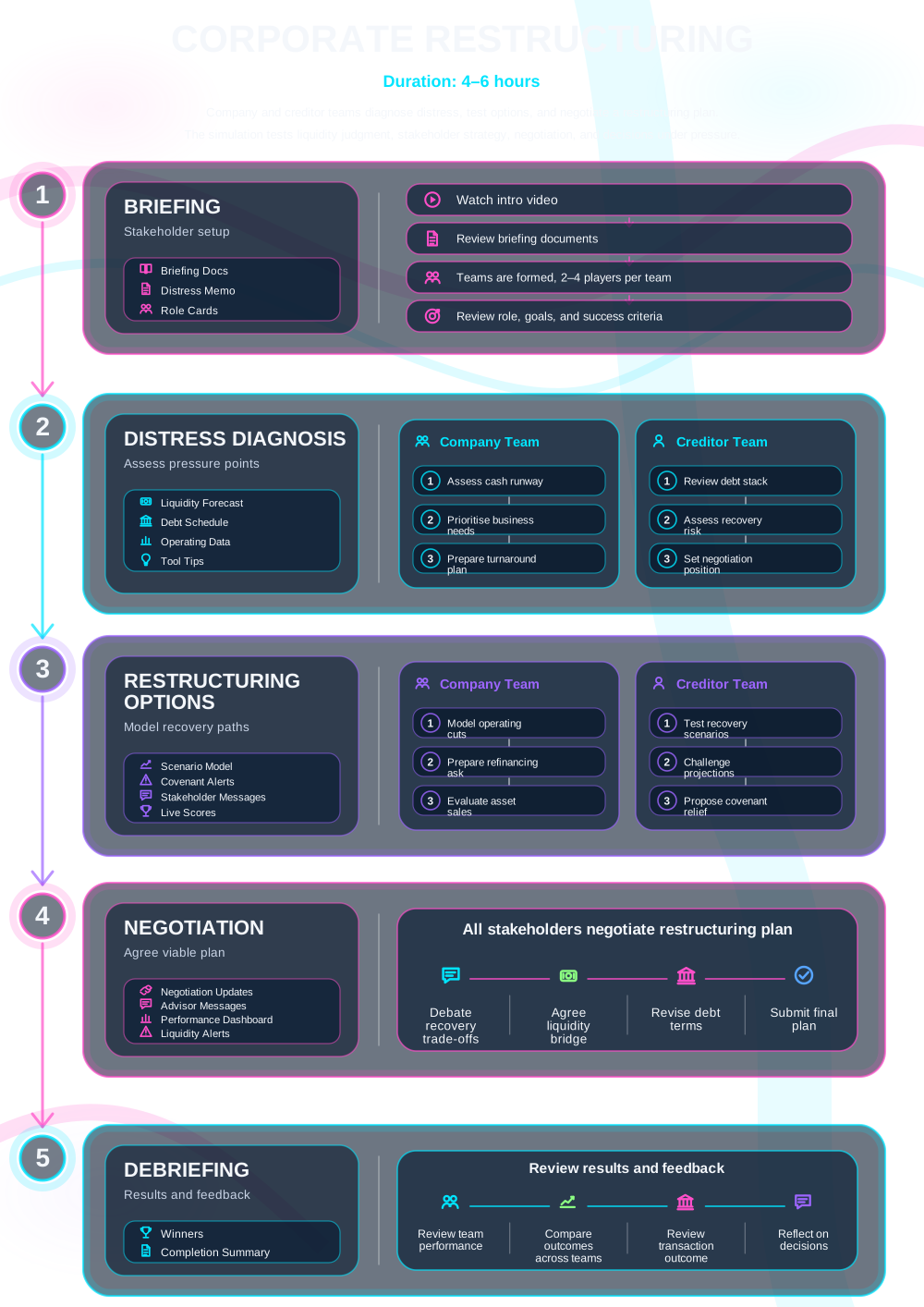
This simulation can be run individually or in teams in academic or corporate contexts. Each cycle represents a stage of getting through a pressing financial situation.
1. Receive the Case Brief Teams are introduced to a distressed company with detailed financials, industry context, and stakeholder profiles.
** 2. Diagnose and Analyze** They review financial models, covenant breaches, creditor claims, and market data to identify core problems.
3. Develop the Plan Participants build financial forecasts and formulate a proposed restructuring plan, selecting the optimal mix of financial and operational actions.
4. Negotiate with Stakeholders Teams engage in multi-round negotiations with other groups acting as different creditor classes or potential acquirers.
5. Finalize and Present Participants submit a final restructuring term sheet and deliver a persuasive presentation to a "creditors' committee" for approval.
6. Review and Reflect Detailed feedback is provided on the financial soundness, negotiation outcomes, and feasibility of the plan. Teams discuss lessons learned and how strategies evolved.
Frequently Asked Questions
Assessment
Assessment of participant performance can be tailored according to the host institution’s objectives (business school, corporate training, assessment centre). Typical assessment criteria include:
- The accuracy and depth of their financial diagnosis and forecasting.
- The creativity, coherence, and viability of their proposed restructuring plan.
- The effectiveness of their stakeholder negotiations and achieved outcomes.
- The clarity, persuasiveness, and professionalism of their final presentation.
- Team collaboration and strategic adaptability throughout the process.