The simulation aims to equip students with the practical skills needed to make strategic financial decisions that drive growth and manage risk.

Corporate Finance Simulation
Students act as corporate finance professionals, making strategic decisions on investments, cash flow, capital structure, and mergers.

Simulation Overview
The Corporate Finance Simulation is an immersive, decision-driven experience built by CFOs, investment professionals, and business school faculty to mirror the financial choices real companies face at the boardroom level.
Students step into the shoes of senior management, balancing growth ambitions with capital constraints. They make key decisions around capital budgeting, financing strategy, dividend policy, and working capital management - under pressure and in real time.
Each round presents fresh data and external shocks, testing students’ ability to adapt their strategy and defend it with sound financial reasoning. The Corporate Finance Simulation offers a practical, high-impact environment to develop the decision-making skills critical to CFOs, corporate strategists, and financial analysts.

Corporate Finance Topics
- Capital Budgeting
- Financial Statements Analysis
- Cost of Capital
- Corporate Valuation
- Risk Management
- Capital Structure Optimization
- Dividend Policy
- Mergers and Acquisitions (M&A)
- Working Capital Management
- Cash Flow Analysis

Gameflow
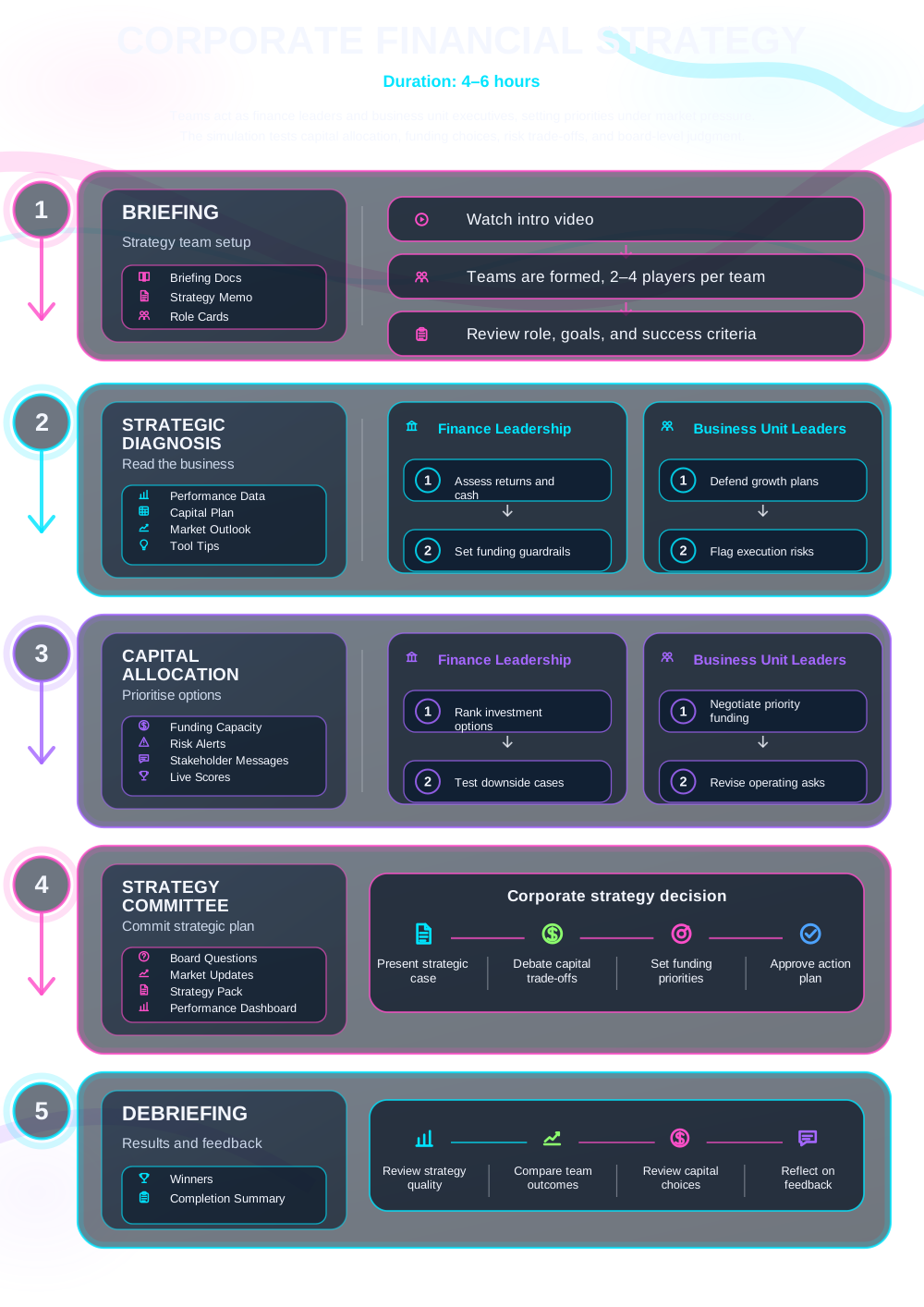

What Students Do
During the corporate finance simulation, students engage in the following tasks to develop and apply corporate finance skills:
- Analyze Financial Statements: Review and interpret balance sheets, income statements, and cash flow statements to assess company health.
- Evaluate Investment Opportunities: Identify and assess potential investments, weighing expected returns against risks.
- Determine Capital Structure: Decide on the mix of debt and equity financing to maximize value and minimize risk.
- Perform Capital Budgeting: Prioritize projects based on their potential to enhance company value, using techniques like NPV and IRR.
- Optimize Cash Flow: Develop strategies to improve cash flow and ensure liquidity for ongoing operations.
- Assess Cost of Capital: Calculate the cost of capital and assess its impact on the company’s investment decisions.
- Develop a Dividend Policy: Formulate a dividend policy that balances investor expectations with business growth needs.
- Make M&A Decisions: Analyze merger or acquisition opportunities, evaluating the strategic fit and financial implications.
- Manage Working Capital: Strategize to efficiently manage the company’s short-term assets and liabilities.
- Prepare for Real-World Scenarios: Work under simulated real-time pressure to make swift, informed financial decisions.

What Students Learn
- Financial Statement Analysis: Learn how to assess a company's financial health through comprehensive analysis of its financial reports.
- Investment Evaluation: Gain skills to evaluate and select the most promising investment opportunities for maximizing returns.
- Capital Structure Strategy: Understand how to structure debt and equity effectively to balance risk and growth potential.
- Risk Management: Develop approaches to identify, assess, and mitigate financial risks that impact company stability.
- Decision-Making Under Pressure: Build confidence in making rapid, high-stakes decisions with limited information.
- Cash Flow Management: Learn techniques for optimizing cash flow to ensure ongoing liquidity and operational efficiency.
- Corporate Valuation: Master methods to value companies accurately, which is essential in investment and acquisition decisions.
- Strategic Financial Planning: Gain a holistic understanding of planning and forecasting to support long-term business goals.

Where Corporate Finance Skills are Used
Corporate finance simulation skills are highly versatile and are applied in various roles and industries:
- Investment Banking: For structuring deals, analyzing financials, and advising clients on transactions.
- Private Equity: To assess and manage investments in private companies, focusing on maximizing value.
- Corporate Treasury: Managing the company’s finances, liquidity, and financial risks.
- Mergers & Acquisitions: For evaluating potential mergers or acquisitions, negotiating deals, and due diligence.
- Financial Planning and Analysis (FP&A): Forecasting, budgeting, and analyzing financial performance to guide strategic decisions.
- Risk Management: Identifying and managing financial risks in both corporate and investment settings.
- Consulting: Advising companies on capital structure, financing options, and value creation strategies.
- Real Estate Finance: Applying corporate finance principles to structure, finance, and evaluate real estate investments.
- Entrepreneurship: For startups and small businesses to make sound financial decisions and optimize funding.
- Public Sector Finance: Managing budgets, investments, and financing decisions within government or nonprofit organizations.