It is ideal for MBA students, early- to mid-career finance professionals (FP&A, controllers), managers from non-finance backgrounds who need budget responsibility, and corporate training programs.

Corporate Budgeting Techniques Simulation
Navigate the complexities of modern corporate finance. The Corporate Budgeting Techniques Simulation immerses participants in the high-stakes process of creating, managing, and defending a comprehensive corporate budget.

Corporate Budgeting Techniques Simulation Overview
In today's dynamic business environment, a budget is far more than a spreadsheet—it's a strategic blueprint, a communication tool, and a performance contract. This hands-on simulation places you in the role of a corporate finance team at a mid-sized, growing company.
Participants will be tasked with constructing the annual budget for the upcoming fiscal year, balancing operational demands with strategic investments, and presenting their plan to a skeptical "Board of Directors" (instructors or peers). Participants will grapple with realistic challenges: department heads lobbying for increased funding, unexpected economic shifts, competing projects with varying ROIs, and the constant tension between top-down strategic targets and bottom-up operational needs.
By experiencing the entire budgeting cycle, from forecasting and capital budgeting to variance analysis and re-forecasting, you will gain an intuitive, practical understanding that textbooks alone cannot provide. Move beyond theory and experience the pressure, trade-offs, and strategic thinking required to align financial resources with ambitious business goals.

Corporate Budgeting Techniques Simulation Concepts
Participants work through realistic scenarios, which can be customized to emphasize or exclude specific topics depending on the learning goals. This modular structure allows the simulation to be tailored to any type of session. Key concepts include:
- Top-Down vs. Bottom-Up Budgeting
- Zero-Based Budgeting
- Incremental Budgeting
- Activity-Based Budgeting
- Capital Budgeting and Investment Appraisal
- Cash Flow Forecasting
- Variance Analysis
- Rolling Forecasts and Re-budgeting
- Stakeholder Management and Communication

Gameflow
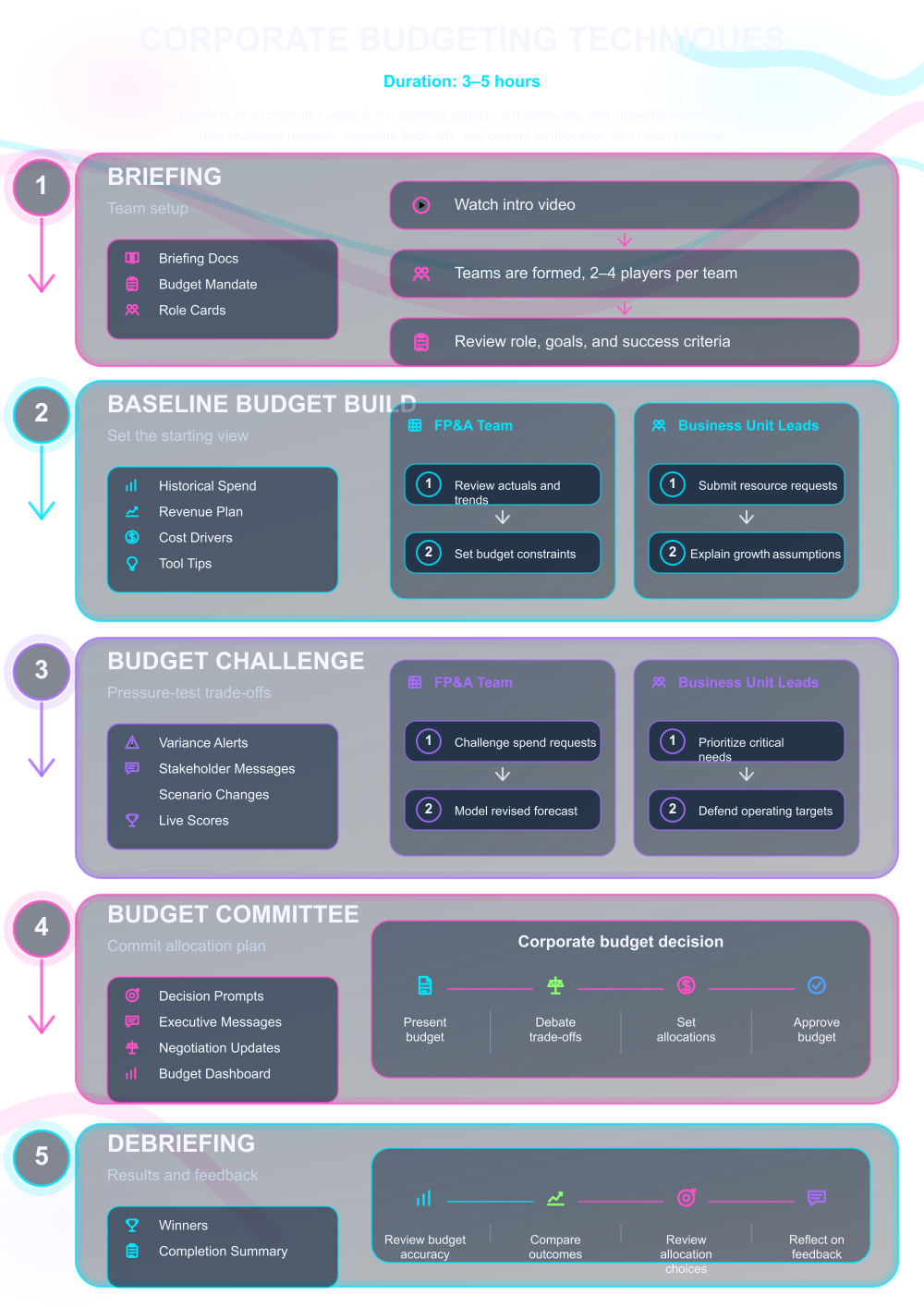

What Participants Do
In the simulation, participants will:
- Analyze historical company performance and market forecasts.
- Receive and negotiate funding requests from various departmental managers (Sales, Marketing, R&D, Operations).
- Build a detailed, integrated P&L, cash flow, and capital expenditure budget.
- Evaluate competing capital investment projects using financial metrics.
- Present and defend their finalized budget proposal to the "Board".
- Manage a simulated quarterly performance update, analyzing variances and making corrective adjustments.
- Re-forecast the annual budget based on in-simulation "unexpected events".

Learning Objectives
By the end of the simulation, participants will be able to:
- Critically compare and apply different budgeting methodologies in appropriate contexts.
- Construct a coherent, integrated master budget that aligns operational tactics with strategic objectives.
- Apply capital budgeting techniques to make rational, value-adding investment decisions.
- Identify key drivers of budget variances and propose actionable managerial responses.
- Communicate the strategic rationale behind a budget effectively to senior stakeholders.
- Develop the analytical and negotiation skills needed to navigate internal resource conflicts.
How the Corporate Budgeting Techniques Simulation Works
This simulation can be run individually or in teams in academic or corporate contexts. Each cycle represents a stage of getting through a pressing financial situation.
1. Introduction and Briefing Teams are formed and given the company background, strategic goals, and financial history.
2. The Planning Cycle Teams analyze data, meet with role-played department heads, and build their initial budget using the simulation's proprietary financial modeling platform.
3. The Board Review Teams present their budget to the Board, facing challenging questions on assumptions and priorities.
4. Execution and Variance Analysis The simulation engine generates Q1 results based on team budgets and hidden market variables. Teams analyze performance, identify variances, and prepare a management report.
5. Re-forecasting A "market disruption" event is introduced. Teams must adapt their budget for the remaining quarters and justify their changes.
6. Debrief and Awards Instructors lead a comprehensive debrief, linking simulation experiences to core concepts, and announce the top-performing team based on financial and strategic metrics.
Frequently Asked Questions
Assessment
Assessment of participant performance can be tailored according to the host institution’s objectives (business school, corporate training, assessment centre). Typical assessment criteria include:
- Teams are scored by the simulation engine on key metrics
- Instructors assess the rationale behind budget allocations and strategic trade-offs during the board presentation
- Depth and logic of scenario analysis
- Ability to adapt and revise valuations in light of news shocks or changes
- Collaboration, division of work, integration of roles, and final coherence
- Rating by peers and self-reflection on approach and decisions