It is ideal for corporate training programs, MBA courses, executive education, and leadership development initiatives aimed at managers, project leaders, HR professionals, and anyone tasked with leading organizational change.

Change Management Simulation
This immersive simulation challenges to apply change management theories in a dynamic, risk-free environment where stakeholder resistance, communication failures, and cultural inertia determine your success or failure.

Change Management Simulation Overview
The Change Management Simulation is a powerful, experiential learning tool designed for leaders, managers, and consultants. Participants lead a simulated company through a multi-stage transformation: digital overhaul, a merger integration, or a major strategic pivot.
Unlike theoretical case studies, this simulation reacts in real-time to your decisions. You will manage a diverse set of virtual employees and stakeholders, each with unique motivations, resistance levels, and communication preferences.
Your ability to diagnose the change landscape, build coalition support, communicate effectively, and reinforce new behaviors will directly impact project adoption, morale, and ultimately, the bottom-line results of the initiative. It bridges the gap between classic models like ADKAR or Kotter’s 8-Step Process and the messy reality of implementing change.

Change Management Simulation Concepts
Participants work through realistic scenarios, which can be customized to emphasize or exclude specific topics depending on the learning goals. This modular structure allows the simulation to be tailored to any type of session. Key concepts include:
- Change Management Frameworks
- Stakeholder Analysis and Influence Mapping
- Leading vs. Managing Change
- Communication Planning and Message Tailoring
- Resistance Management and Overcoming Barriers
- Building Coalition and Advocacy
- Cultural Alignment and Organizational Readiness
- Reinforcement Strategies and Sustaining Change
- Measuring Change Effectiveness and ROI

Gameflow
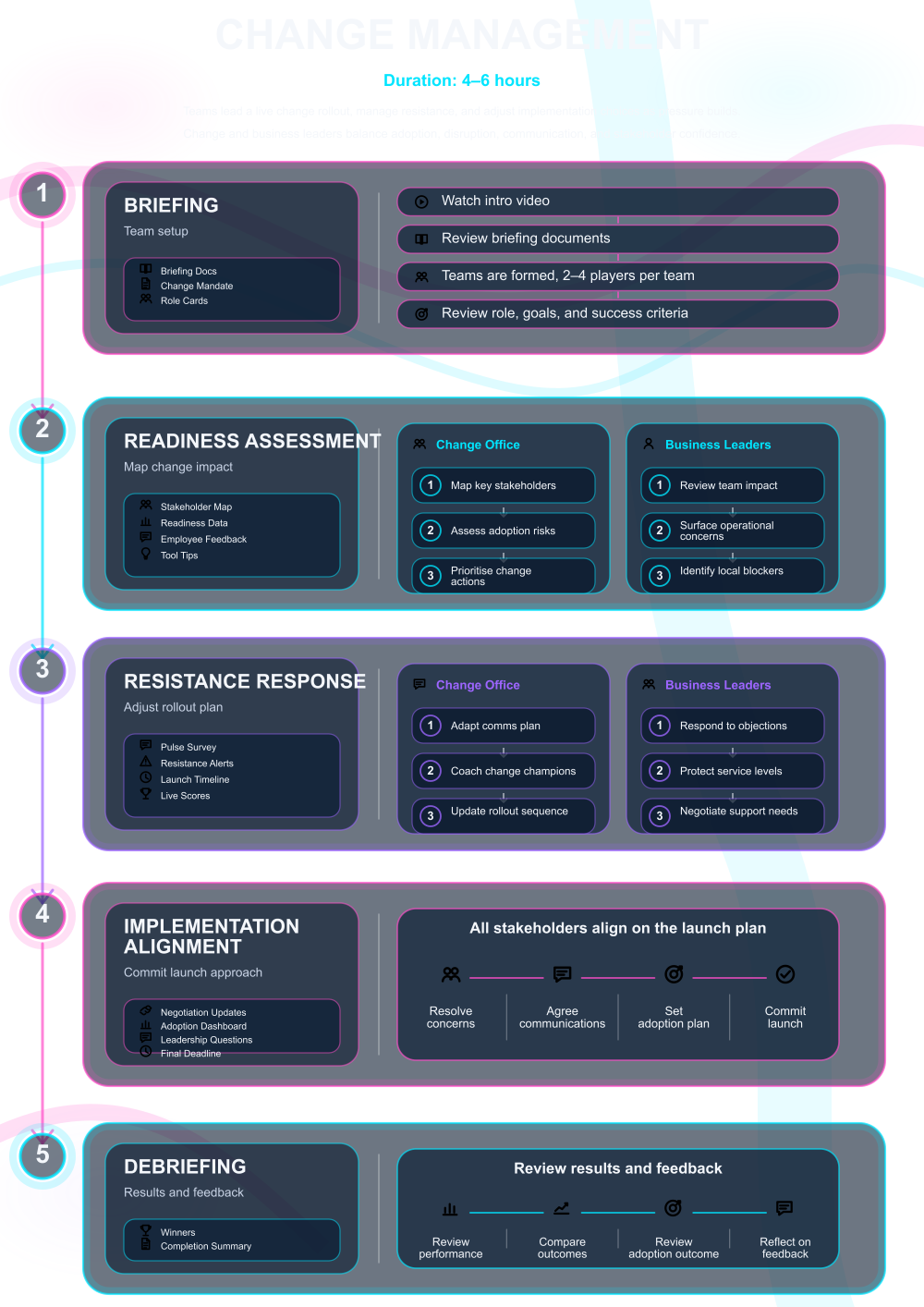

What Participants Do
In the simulation, participants will:
- Analyze the simulation environment, including organizational culture and stakeholder profiles.
- Develop a comprehensive change management plan with clear phases.
- Allocate limited resources (time, budget, change team effort) to communication, training, and support activities.
- Execute their plan through a series of decision rounds, choosing specific actions to address emerging challenges.
- Monitor real-time feedback via simulated metrics like employee engagement, adoption rate, and productivity.
- Adapt their strategy based on results, learning to pivot when faced with resistance or unexpected crises.
- Present their change journey outcomes and lessons learned to peers or instructors.

Learning Objectives
By the end of the simulation, participants will be able to:
- Diagnose an organization’s readiness for change and identify key stakeholders.
- Design a structured, phased change management strategy aligned with business goals.
- Select appropriate communication and engagement tactics for different stakeholder groups.
- Anticipate, identify, and develop strategies to mitigate resistance.
- Allocate change management resources effectively for maximum impact.
- Measure the progress and success of a change initiative using key behavioral and business metrics.
- Adapt their leadership style and approach to guide a team through uncertainty.
How the Change Management Simulation Works
This simulation can be run individually or in teams in academic or corporate contexts. Each cycle represents a stage of getting through a pressing financial situation.
1. Introduction and Briefing Participants are introduced to the simulated company, its change imperative, and the interactive dashboard.
** 2. Planning Phase** Teams analyze data, map stakeholders, and build their initial change plan within a set budget.
3. Decision Rounds The simulation progresses through several rounds. Each round, teams allocate resources to actions ("Host a town hall," "Run a pilot program," "Coach a resistant manager").
4. Feedback and Analysis After each round, the simulation engine generates results. Dashboards update with metrics on adoption, morale, and performance. Teams receive qualitative feedback from simulated stakeholders.
5. Adaptation Teams review outcomes, learn from missteps, and adjust their strategy for the next round.
6. Debrief and Conclusion The simulation ends with a final performance score. A guided debrief links the experiential learning back to core change management principles and frameworks.
Frequently Asked Questions
Assessment
Assessment of participant performance can be tailored according to the host institution’s objectives (business school, corporate training, assessment centre). Typical assessment criteria include:
- Depth and logic of scenario analysis and sensitivity ranges
- Clarity, coherence, and persuasiveness of the valuation memo and presentation
- Ability to adapt and revise valuations in light of news shocks or changes
- Collaboration, division of work, integration of roles, and final coherence
- Rating by peers and self-reflection on approach and decisions