The primary goal is to provide a hands-on, risk-free environment to understand and experience the core strategic decisions a CFO makes, and to see how those decisions directly impact a company's financial health and market value.

CFO Simulation
Navigate the high-stakes role of a Chief Financial Officer. Make critical decisions on capital structure, investment, and risk management to maximize firm value and ensure long-term solvency.

CFO Simulation Overview
The CFO Simulation is an immersive, online business game that replicates the core responsibilities and pressures of a modern Chief Financial Officer. Participants are placed at the helm of a company's financial department, tasked with steering the firm through multiple quarters of competitive market dynamics.
In this realistic simulation, teams or individuals must analyze financial statements, manage cash flow, and make high-level strategic decisions about fundraising, capital investments, dividend policies, and risk mitigation. They will experience firsthand how their financial choices directly impact the company's credit rating, stock price, cost of capital, and overall enterprise value. The simulation bridges the gap between theoretical finance and the complex, multi-faceted reality of corporate financial leadership.
Although ideal for undergraduate and graduate finance courses, executive training, and corporate finance skill workshops, the simulation is modular and scalable, allowing instructors to vary complexity.

CFO Simulation Concepts
Participants work through realistic scenarios, which can be customized to emphasize or exclude specific topics depending on the learning goals. This modular structure allows the simulation to be tailored to any type of session. Key concepts include:
- Capital Structure Optimization
- Cash Flow Management
- Financial Statement Analysis
- Valuation Techniques
- Cost of Capital
- Investment Appraisal
- Dividend Policy
- Credit Ratings and Debt Markets
- Risk Management
- Stakeholder Communication

Gameflow
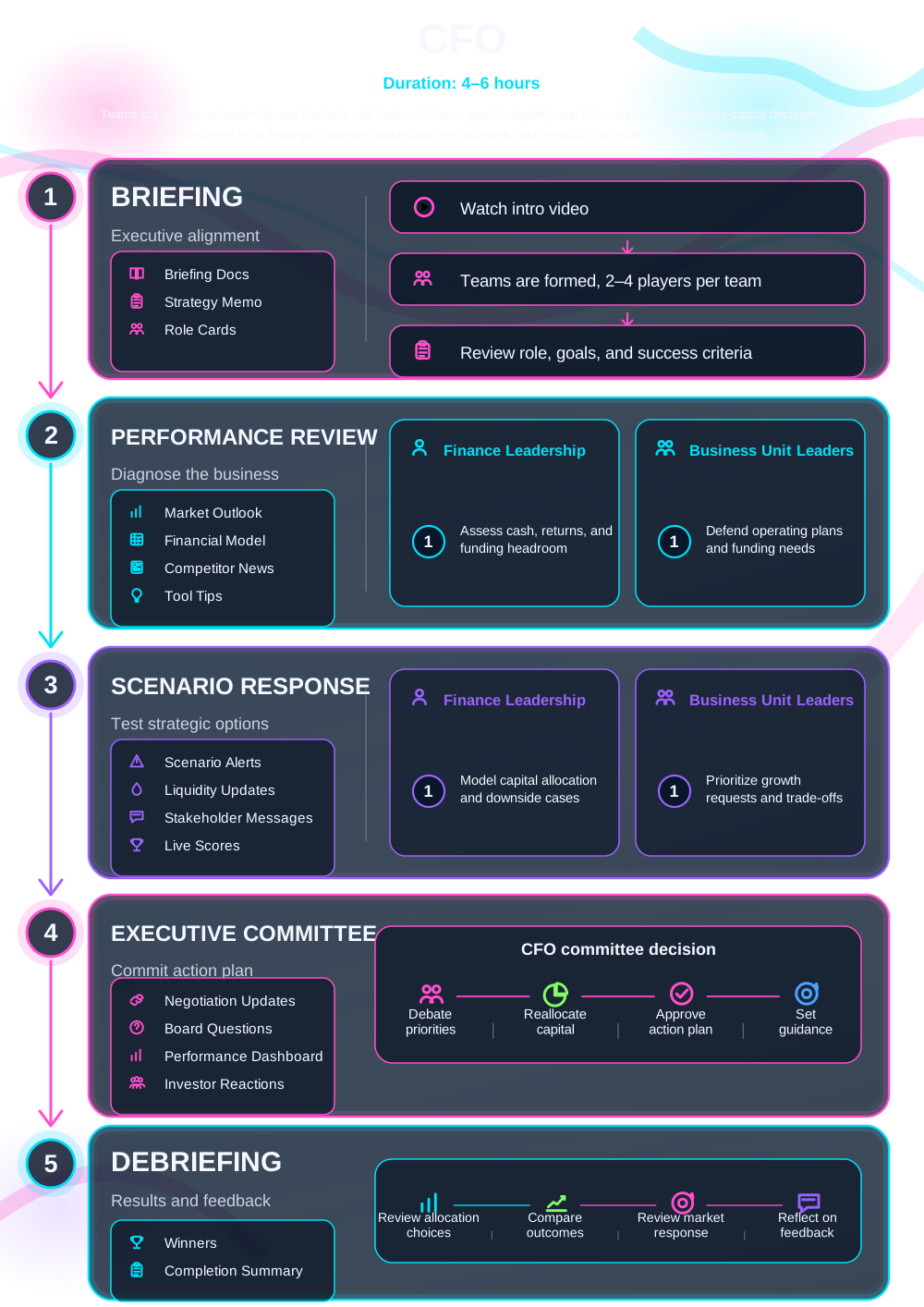

What Participants Do
In the simulation, participants will:
- Analyze dynamic market data and the company's financial performance.
- Issue corporate bonds or take out loans, negotiating interest rates and maturities.
- Execute equity issuances or share buybacks to optimize the capital structure.
- Allocate capital to R&D and evaluate major capital expenditure projects.
- Set the company's dividend policy and manage retained earnings.
- Monitor and react to changes in the company's credit rating.
- Manage financial risks through various hedging instruments.
- Present their financial strategy and results to the "board" (instructors or peers).

Learning Objectives
By the end of the simulation, participants will be able to:
- Articulate the strategic role of the CFO in creating enterprise value.
- Evaluate the trade-offs between different sources of capital (debt vs. equity).
- Implement a coherent financial strategy aligned with corporate goals.
- Analyze the impact of financial decisions on key metrics and valuation.
- Manage corporate liquidity and cash flow to avoid financial distress.
- Appraise long-term investment opportunities using capital budgeting techniques.
- Communicate financial performance and strategy effectively to stakeholders.
How the CFO Simulation Works
This simulation can be run individually or in teams in academic or corporate contexts. Each cycle represents a stage of getting through a pressing financial situation.
1. Form Teams and Review Participants are grouped into management teams, each running a simulated company. They review the initial company financials and market briefing.
2. Make Decisions Each round (representing a fiscal quarter or year), teams analyze their financial statements, market news, and competitor actions. They then enter a comprehensive set of financial decisions into the online platform.
3. Run Simulation The sophisticated algorithm processes all team decisions simultaneously, simulating competitive market dynamics, investor reactions, and economic conditions.
4. Review Results Teams receive detailed financial reports (Income Statement, Balance Sheet, Cash Flow Statement), an updated company valuation, credit rating, and a ranking dashboard showing their performance against other teams.
5. Debrief and Repeat Facilitators lead a debriefing session to discuss outcomes, strategic successes, and failures. The cycle repeats for multiple rounds, allowing teams to adapt and refine their long-term financial strategy.
Frequently Asked Questions
Assessment
Assessment of participant performance can be tailored according to the host institution’s objectives (business school, corporate training, assessment centre). Typical assessment criteria include:
- Financial Performance: Enterprise Value, Profitability Metrics, Liquidity and Solvency Ratios, Credit Rating.
- Quality and consistency of financial strategy, as evidenced by the choices made in each round and their justification.
- Final Presentation and Report
- Collaboration, division of work, integration of roles, and final coherence
- Rating by peers and self-reflection on approach and decisions