Some familiarity helps, but the simulation introduces all necessary concepts during gameplay.

Central Banking Simulation
In this hands-on Central Banking Simulation, participants take on policymaker roles to balance inflation, growth, and stability. They explore real-time trade-offs between interest rates, money supply, communication, and credibility.

Central Banking Simulation Overview
Participants step into the shoes of central bank governors and monetary policy committees navigating complex macroeconomic environments. With fluctuating inflation, unemployment, fiscal pressure, and geopolitical risk, they must make critical monetary decisions across multiple rounds.
Through realistic scenarios, participants set interest rates, implement quantitative tools, and manage expectations through central bank communications. Each decision affects financial markets, consumer sentiment, and long-term economic health.
Whether responding to supply shocks or overheating economies, participants must balance political influence with institutional independence. The simulation can be tailored for undergraduates, MBA students, or professionals, and works equally well in macroeconomics, public policy, and finance courses.

Central Banking Simulation Concepts
Participants work through realistic scenarios, which can be customized to emphasize or exclude specific topics depending on the learning goals. This modular structure allows the simulation to be tailored to any type of session. Key concepts include:
- Monetary policy tools: interest rates, open market operations, and reserve requirements
- Inflation targeting vs. dual mandate decision-making
- Central bank independence and political pressure
- Currency stability and foreign exchange dynamics
- Forward guidance and market signalling
- Crisis management and lender-of-last-resort actions
- Communication strategy and central bank credibility
- Quantitative easing and tightening
- Coordination with fiscal policy
- Global economic interdependence and spillover effects

Gameflow
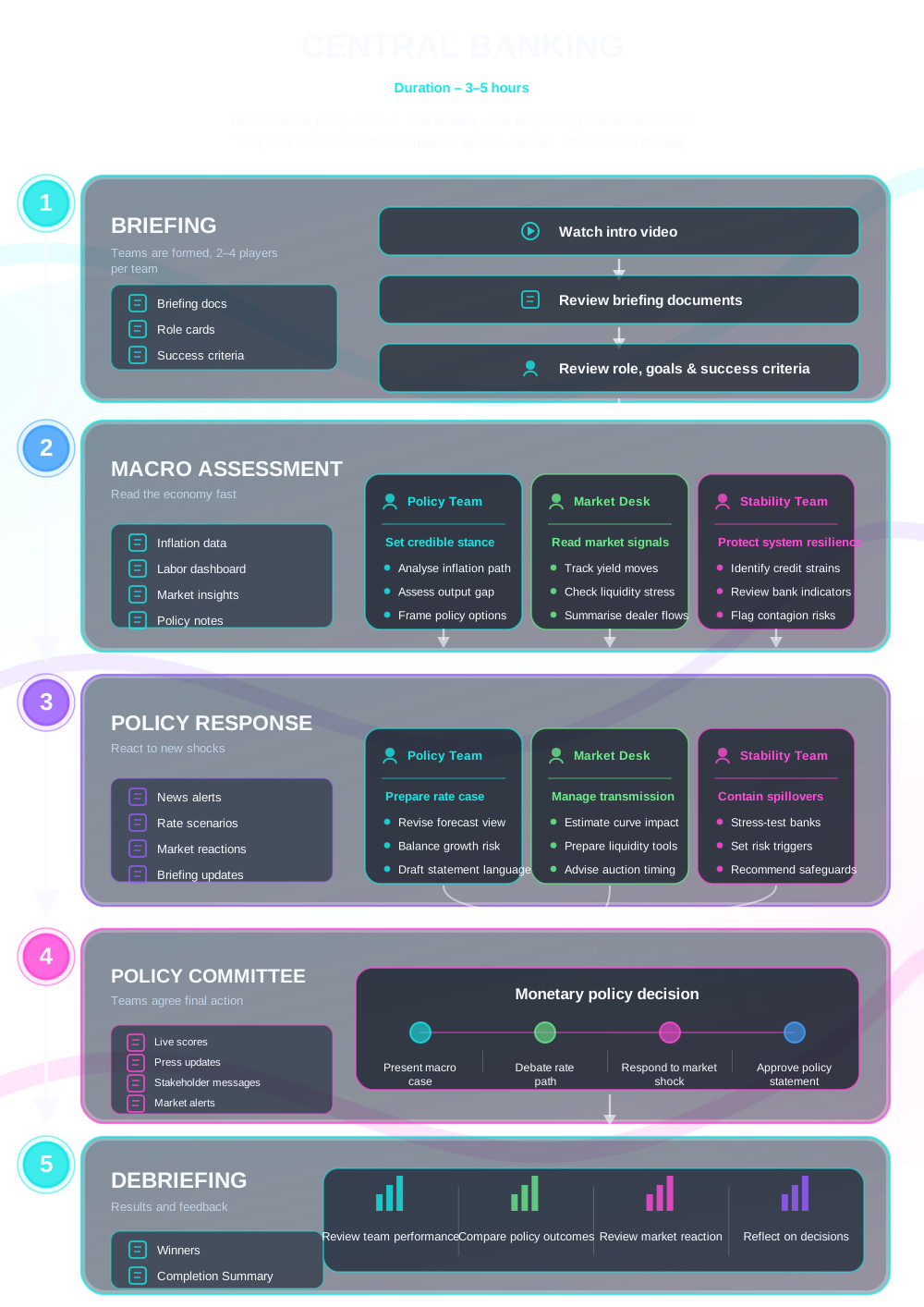

What Participants Do
In this simulation, participants act as central bankers, policymakers, or economists within a central bank team. They:
- Review macroeconomic indicators like inflation, GDP growth, employment, and currency movements
- Debate rate-setting decisions and policy statements
- Evaluate policy trade-offs under external and political pressures
- Coordinate with fiscal authorities and respond to public/media expectations
- Issue central bank press releases and minutes
- React to market, public, and international stakeholder feedback

Learning Objectives
By the end of the simulation, participants will be able to:
- Understand the role of central banks in modern economies
- Navigate real-time policy trade-offs between growth, inflation, and currency stability
- Apply monetary tools to changing economic scenarios
- Recognize how communication impacts expectations and credibility
- Distinguish between short-term response and long-term stability goals
- Manage coordination (or conflict) between central and fiscal policy
- Explore the political economy of central banking
- Handle crisis situations with limited tools and public scrutiny
- Translate macroeconomic data into action
- Reflect on decision impact and iterate across policy cycles
The simulation’s flexible structure ensures that these objectives can be calibrated to match the depth, duration, and focus areas of each program, whether in higher education or corporate learning.
How the Central Banking Simulation Works
This simulation can be run in teams or individually, and is adaptable for academic programs, public policy workshops, or corporate training. Each cycle of the game builds pressure and realism.
1. Receive a Macro Brief: Each round starts with an economic update, including GDP forecasts, inflation trends, employment stats, and geopolitical developments. Participants review this macro context and set goals.
2. Analyse and Debate: Participants examine economic indicators and weigh different priorities—growth vs. inflation, market stability vs. employment. They explore trade-offs and formulate a proposed monetary response.
3. Make Policy Decisions: Participants decide on interest rates, quantitative tools, currency interventions, and the language of policy statements. Decisions are submitted through a central interface.
4. Communicate Strategy: Participants craft and release central bank statements or press briefings to influence expectations and build institutional trust—this affects stakeholder responses in subsequent rounds.
5. Respond to Feedback: Market reactions, political pressure, and international commentary shift based on participant decisions. Teams must reflect, adapt, and revise strategy accordingly.
6. Repeat Over Rounds: New data and unexpected shocks are introduced each round. Participants iterate, learn from outcomes, and aim for stability, credibility, and long-term growth.
Frequently Asked Questions
Assessment
Assessment can be tailored to focus on macroeconomic thinking, communication, and strategic alignment. Participants may be evaluated on:
- Effectiveness of monetary policy decisions
- Inflation and currency management
- Quality of policy communication and credibility
- Adaptability across economic cycles
- Peer collaboration and stakeholder awareness
- Clarity in press briefings or debrief memos
You can also include memo writing and debrief presentations as part of the assessment structure. Additionally, you can also add a built-in peer and self-assessment tool to see how participants rate themselves. This flexibility allows the simulation to be easily integrated by professors as graded courses at universities and by HR at assessment centres at companies.