This simulation provides practical, hands-on experience in managing a business's cash flow, a critical skill for entrepreneurs, small business owners, and consultants that is often overlooked in traditional accounting courses.

Cash Basis Accounting Simulation
While accrual accounting is the standard for large corporations, Cash Basis Accounting is the lifeblood of millions of small businesses, startups, and solo practitioners.

Cash Basis Accounting Simulation Overview
This simulation provides an immersive, hands-on experience in managing the finances of a small service-based business using the cash basis method. Participants will step into the role of a business owner, making critical decisions about pricing, expenses, and investments based entirely on real-time cash inflows and outflows.
Experience firsthand the direct impact of their financial decisions on company solvency, tax liabilities, and growth potential, bridging the gap between theoretical accounting principles and the dynamic reality of running a business.
Although ideal for undergraduate and graduate finance courses, executive training, and corporate finance skill workshops, the simulation is modular and scalable, allowing instructors to vary complexity.

Cash Basis Accounting Simulation Concepts
Participants work through realistic scenarios, which can be customized to emphasize or exclude specific topics depending on the learning goals. This modular structure allows the simulation to be tailored to any type of session. Key concepts include:
- Cash vs. Accrual Accounting
- Cash Flow Management
- Accounts Receivable and Payable
- Financial Decision-Making
- Tax Implications
- Profit vs. Cash Flow
- Financial Statements

Gameflow
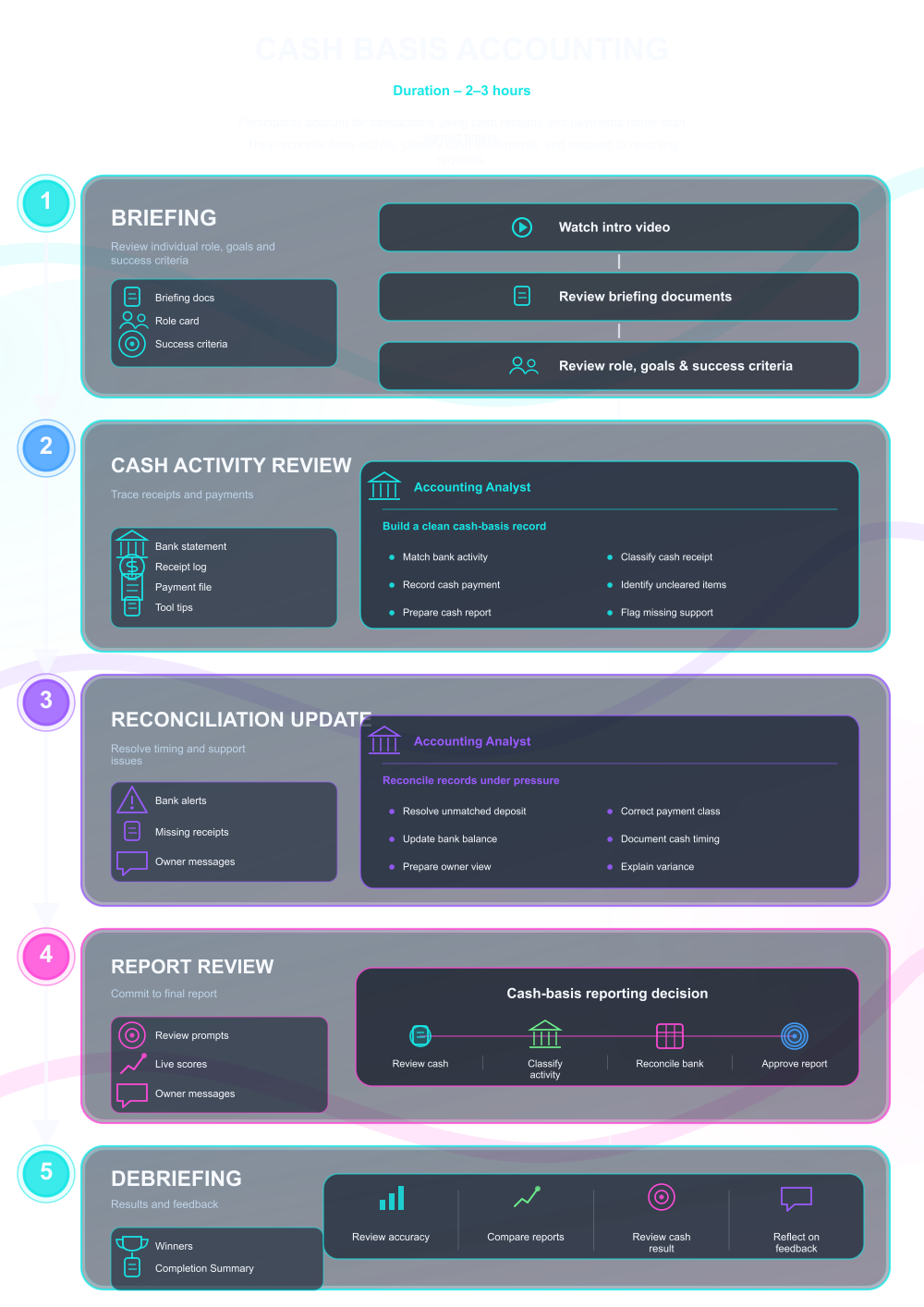

What Participants Do
In the simulation, participants will:
- Record financial transactions for a simulated business using the cash basis method.
- Create and analyze cash-based income statements and cash flow statements.
- Manage customer invoicing and collections, experiencing the lag between service delivery and cash receipt.
- Prioritize vendor and bill payments based on available cash and payment terms.
- Make strategic decisions on purchasing equipment, hiring staff, or launching marketing campaigns with immediate cash outlays.
- Navigate a "cash crunch" scenario, requiring tough prioritization to maintain operations.
- Forecast short-term cash needs and prepare for tax payments.
- Analyze their company's performance at the end of the simulation cycle.

Learning Objectives
By the end of the simulation, participants will be able to:
- Define the core principles of cash basis accounting and contrast them with accrual accounting.
- Record business transactions accurately using the cash basis method.
- Construct key financial documents, including a cash-based income statement and a statement of cash flows.
- Analyze a company's financial health by interpreting its cash flow patterns.
- Evaluate the cash flow impact of operational and strategic business decisions.
- Develop a short-term cash flow forecast to anticipate surpluses and shortfalls.
- Appreciate the critical importance of cash flow management for small business survival and growth.
How the Cash Basis Accounting Simulation Works
This simulation can be run individually or in teams in academic or corporate contexts. Each cycle represents a stage of getting through a pressing financial situation.
1. Setup Participants are given the starting cash balance and a set of existing clients and recurring expenses.
2. Process Transactions Record new sales (only when cash is received), pay bills (only when cash is sent), and handle other cash events.
3. Make Strategic Choices Decide whether to pay for a new advertising campaign, buy a new piece of equipment, or hire a part-time therapist—all with immediate cash consequences.
4. Manage Collections Send reminders to "slow-paying" clients to accelerate cash inflows.
5. Feedback and Analysis After each round, the simulation generates updated financial statements. Participants see the direct result of their decisions on their cash balance and can compare their performance to key metrics.
6. Scenario Injection Unexpected events, such as a key client delaying payment or an emergency repair, test participants' ability to adapt.
7. Final Review At the end of the multi-period simulation, a comprehensive dashboard provides a final score based on cash growth, profitability, and effective cash flow management.
Frequently Asked Questions
Assessment
Assessment of participant performance can be tailored according to the host institution’s objectives (business school, corporate training, assessment centre). Typical assessment criteria include:
- The final cash position, reflecting overall cash accumulation throughout the simulation.
- Measures the net cash generated from the core business activities, indicating operational health.
- The net income calculated on a cash basis, showing the ability to generate surplus after all cash expenses.
- Assessed by the ability to avoid cash shortfalls and emergency financing.
- Qualitative evaluation of the choices made regarding investments and expenses relative to cash availability