Absolutely not. While DCF is a core component, the simulation forces you to triangulate value using multiple methods. You will gain practical experience with comparable company analysis, precedent transactions, and synthesis techniques.

Business Valuation Simulation
Become a top-tier valuation advisor. In this simulation, you will navigate valuations a real-world company under conditions of uncertainty, market volatility, and strategic crossroads.

Business Valuation Simulation Overview
The Business Valuation Simulation welcomes participants into a dynamic, week-long case study of a publicly-traded company facing a pivotal event: a potential acquisition, a major restructuring, or a new capital raise. Participants work in competing advisory teams to build a comprehensive valuation model from the ground up.
Integrate financial statement analysis, industry research, and strategic assessment to choose and apply the most appropriate valuation methodologies. The simulation introduces real-time market shocks, new competitor data, and management surprises, forcing teams to adjust their models and assumptions on the fly.
The culmination is a high-stakes boardroom presentation where teams must justify their valuation range and negotiate based on their analysis. Go beyond textbook formulas to defend your assumptions, negotiate with stakeholders, and deliver a credible valuation that withstands scrutiny.

Business Valuation Simulation Concepts
Participants work through realistic scenarios, which can be customized to emphasize or exclude specific topics depending on the learning goals. This modular structure allows the simulation to be tailored to any type of session. Key concepts include:
- Intrinsic vs. Relative Value
- Discounted Cash Flow Analysis
- Market Multiples Analysis
- Terminal Value Calculation
- Cost of Capital
- Scenario and Sensitivity Analysis
- Premium and Discount Analysis
- Valuation Synthesis and Football Field Analysis

Gameflow
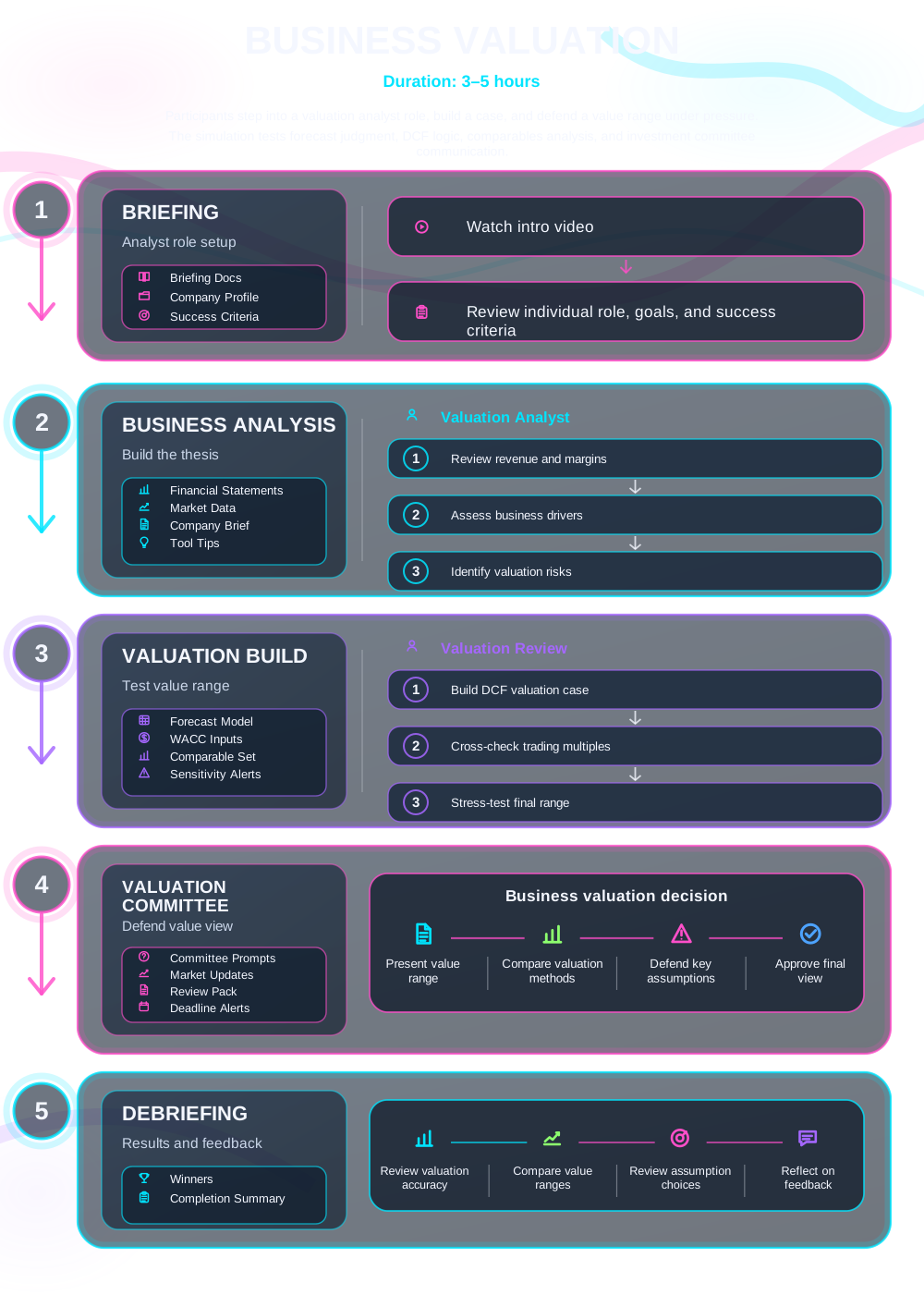

What Participants Do
In the simulation, participants will:
- Analyze detailed financial statements, management projections, and industry reports.
- Build a dynamic, integrated financial model in Excel to forecast company performance.
- Calculate value using minimum three distinct methodologies.
- Defend critical assumptions in peer debates.
- Respond to market-moving news flashes that impact their valuation model inputs.
- Create a professional "Valuation Opinion" report and a concise executive summary.
- Present and negotiate their valuation findings to a simulated Board of Directors or client.
- Critique the valuation models and assumptions of competing teams.

Learning Objectives
By the end of the simulation, participants will be able to:
- Construct a comprehensive, three-statement financial model for valuation purposes.
- Apply core valuation methodologies correctly and understand the rationale behind each.
- Develop a defensible weighted average cost of capital estimate.
- Synthesize multiple valuation outputs into a coherent "football field" to determine a final value range.
- Perform sensitivity and scenario analysis to stress-test valuation assumptions.
- Communicate complex valuation conclusions effectively to a non-technical audience.
- Negotiate value based on analytical work, not just intuition.
- Understand how market events and new information immediately impact a company's valuation.
How the Business Valuation Simulation Works
This simulation can be run individually or in teams in academic or corporate contexts. Each cycle represents a stage of getting through a pressing financial situation.
1. Team Formation and Case Launch Participants are divided into competing valuation advisory firms. Each team receives the core case materials—company financials, industry overview, and the strategic dilemma.
2. Research and Model Building Teams analyze data, make strategic and financial assumptions, and build their valuation models in Excel. Instructors act as management, providing additional data upon request.
3. Market Shocks and Updates Simulation Directors release news flashes. Teams must assess the impact and adjust their models accordingly.
4. Report Preparation and Submission Teams finalize their valuation report, including a summary of key assumptions, valuation outputs, and a final recommended range.
5. Final Boardroom Presentation and Negotiation Each team presents their valuation to a simulated board. Teams must defend their work under questioning and may be asked to negotiate a transaction price based on their analysis.
6. Debrief and Awards A comprehensive instructor-led debrief links simulation experiences to core finance theory. The winning team is announced based on model robustness, presentation quality, and negotiation logic.
Frequently Asked Questions
Assessment
Assessment of participant performance can be tailored according to the host institution’s objectives (business school, corporate training, assessment centre). Typical assessment criteria include:
- Correct application of formulas, model integrity, and appropriate methodology use.
- Quality and defensibility of key inputs (growth, WACC, multiples selection).
- Clarity, structure, and completeness of the final valuation report.
- Ability to explain complex topics succinctly.
- Handling of Q&A and critique from the board.
- Ability to use valuation analysis to support a negotiating position.
- Feedback from teammates on collaboration and contribution.
- Engagement during sessions and quality of interactions during research phases.