Not at all. While finance helps, the simulation is designed to be accessible to anyone learning business strategy and leadership.

Business Turnaround Strategy Simulation
In this hands-on simulation, participants act as turnaround leaders, analysing data, negotiating with stakeholders, and making tough decisions to revive a struggling company under real-world pressure.

Business Turnaround Strategy Simulation Overview
The simulation places participants in charge of a distressed mid-sized business facing declining revenues, operational bottlenecks, employee dissatisfaction, and rising debt. The company has a core product line with potential, but survival depends on difficult decisions - cutting costs, restructuring teams, renegotiating supplier terms, and making bets on new growth.
Each round, participants receive updated financials, news feeds, internal memos, and stakeholder feedback. They must think critically and act quickly to preserve cash flow, reorient strategy, and rebuild trust.
The simulation is perfect for use in MBA classrooms, executive education, corporate training, or consulting bootcamps. It mirrors real-world turnaround complexity with just the right level of pressure and realism.

Business Turnaround Strategy Simulation Concepts
Participants work through realistic scenarios, which can be customized to emphasize or exclude specific topics depending on the learning goals. This modular structure allows the simulation to be tailored to any type of session. Key concepts include:
- Strategic cost reduction
- Crisis communication and stakeholder trust
- Leadership during business distress
- Restructuring operational inefficiencies
- Cash flow management under duress
- Vendor and creditor negotiations
- Employee morale and change management
- Short-term vs long-term trade-offs
- Rebuilding strategic focus
- Financial performance turnaround indicators

Gameflow
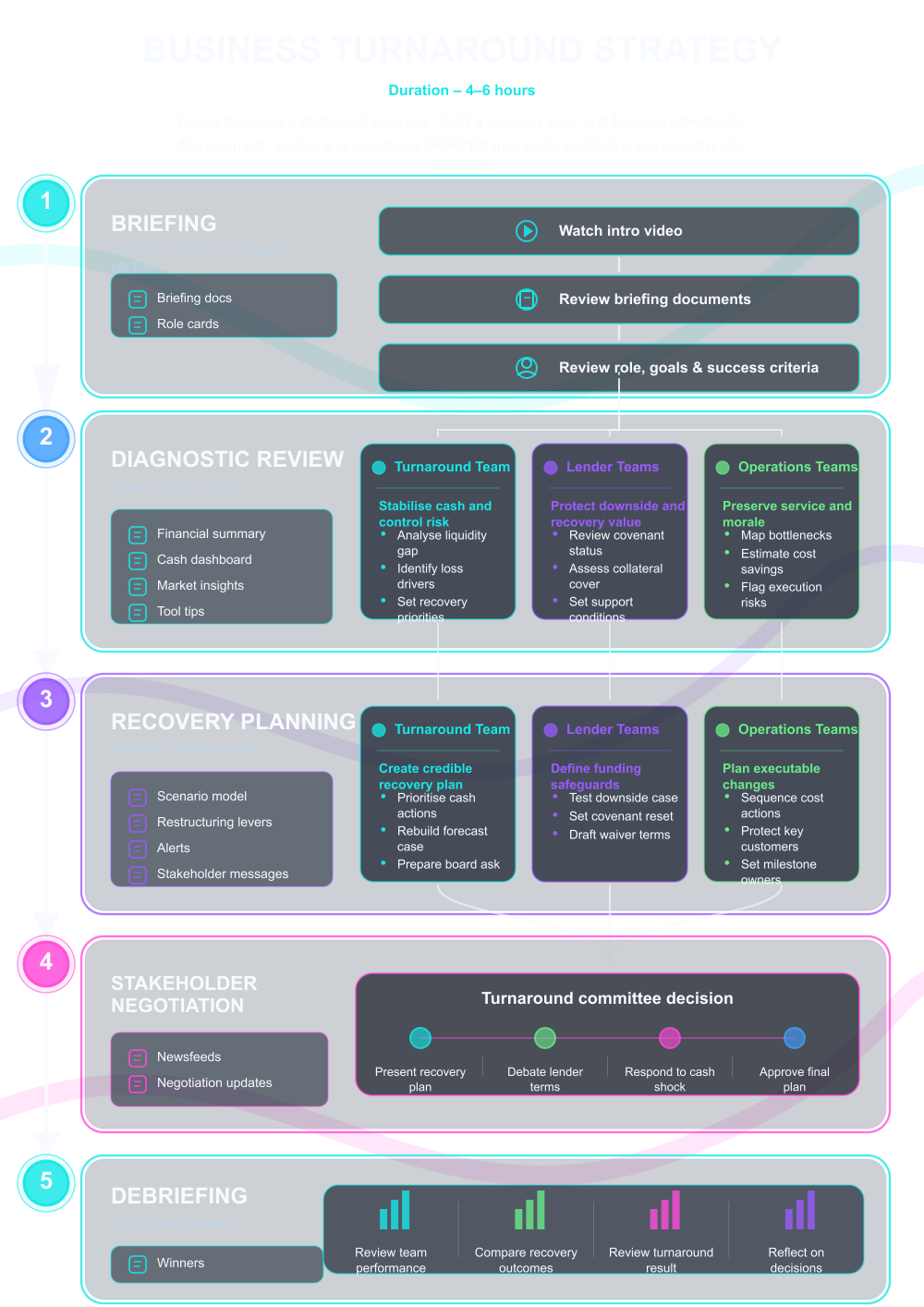

What Participants Do
Participants act as turnaround leaders in a distressed company. They are responsible for:
- Reviewing internal financials, market positioning, and team performance
- Making decisions about layoffs, cost-cuts, investment reallocations, and vendor contracts
- Prioritising cash flow while keeping long-term viability in mind
- Crafting messaging to employees, board members, and the media
- Navigating stakeholder negotiations with banks, suppliers, and teams
- Responding to unexpected developments like employee exits or policy changes

Learning Objectives
By the end of the simulation, participants will be able to:
- Assess a company’s turnaround potential using financial and operational indicators
- Identify the key drivers of business decline and possible intervention points
- Design cost containment strategies without destroying future growth
- Communicate tough decisions clearly and credibly
- Manage conflicting priorities from stakeholders under pressure
- Make fast, data-informed decisions with incomplete information
- Navigate leadership challenges during crisis and transformation
- Apply restructuring tools to real-world business challenges
- Reposition the business with a new, strategic focus
- Build resilience and adaptive decision-making skills
The simulation’s flexible structure ensures that these objectives can be calibrated to match the depth, duration, and focus areas of each program, whether in higher education or corporate learning.
How the Business Turnaround Strategy Simulation Works
This simulation works well across business schools, consulting firms, and corporate L&D. It's modular and can be adapted for solo play or team collaboration. A typical run includes:
1. Receive a Scenario or Brief: Each round starts with a new update - board concerns, financial red flags, market disruptions. Participants are briefed on key issues and objectives.
2. Analyse the Situation: Participants explore performance reports, customer data, staff feedback, and industry insights. They weigh what’s fixable, what’s critical, and where to start.
3. Make Turnaround Decisions: From cost-cutting and cash prioritisation to strategy shifts and morale boosts - participants input decisions in the simulation dashboard with immediate financial and operational impact.
4. Work Solo or in Teams: Depending on setup, participants collaborate or go head-to-head, negotiating with internal stakeholders or aligning cross-functional priorities.
5. Review Results and Reflect: Outcomes are shared post-round: P&L shifts, stakeholder trust scores, team feedback, and more. Reflection is key to build better instincts.
6. Iterate and Learn: New rounds build on the past. Participants see the consequences of earlier decisions, adjust their strategies, and track turnaround trajectory over time.
Frequently Asked Questions
Assessment
Assessment can be tailored to focus on leadership, analytical decision-making, communication, or strategic agility. Participants may be evaluated on:
- Improvement in financial performance across rounds
- Strategic alignment of cost-cuts and investments
- Communication clarity in crisis contexts
- Ethical decision-making and stakeholder sensitivity
- Learning agility and responsiveness to feedback
- Peer and self-assessments to capture collaboration and iteration
You can also include memo writing and debrief presentations as part of the assessment structure. Additionally, you can also add a built-in peer and self-assessment tool to see how participants rate themselves. This flexibility allows the simulation to be easily integrated by professors as graded courses at universities and by HR at assessment centres at companies.