No. The simulation introduces valuation and funding basics in an accessible way.

Bootstrapping vs VC Funding Simulation
In this Bootstrapping vs VC Funding Simulation, participants act as entrepreneurs deciding between self-funding and venture capital - balancing control, growth, equity dilution, and risk while navigating investor negotiations and market pressures.

Bootstrapping vs VC Funding Simulation Overview
Participants step into the shoes of founders faced with one of the most critical startup decisions: grow slowly through bootstrapping or pursue rapid scale with VC backing. Each round introduces financial challenges, investor offers, market shocks, or resource trade-offs.
They must manage cash flow, ownership stakes, team morale, and investor expectations - experiencing the practical consequences of funding decisions on growth trajectory, company culture, and long-term sustainability.
This simulation is ideal for entrepreneurship, venture capital, and strategy courses, as well as startup accelerators and corporate innovation programs. It helps participants understand the real trade-offs behind financing choices.

Bootstrapping vs VC Funding Simulation Concepts
Participants work through realistic scenarios, which can be customized to emphasize or exclude specific topics depending on learning goals. This modular structure allows the simulation to be tailored to any type of session. Key concepts include:
- Bootstrapping strategies and growth trade-offs
- Venture capital funding dynamics and negotiations
- Equity dilution and ownership structures
- Valuation challenges for early-stage startups
- Cash flow and resource constraints
- Strategic control vs investor influence
- Scaling pace and market timing
- Team culture and founder motivation
- Risk management under funding pressure
- Exit strategy implications of funding choice

Gameflow
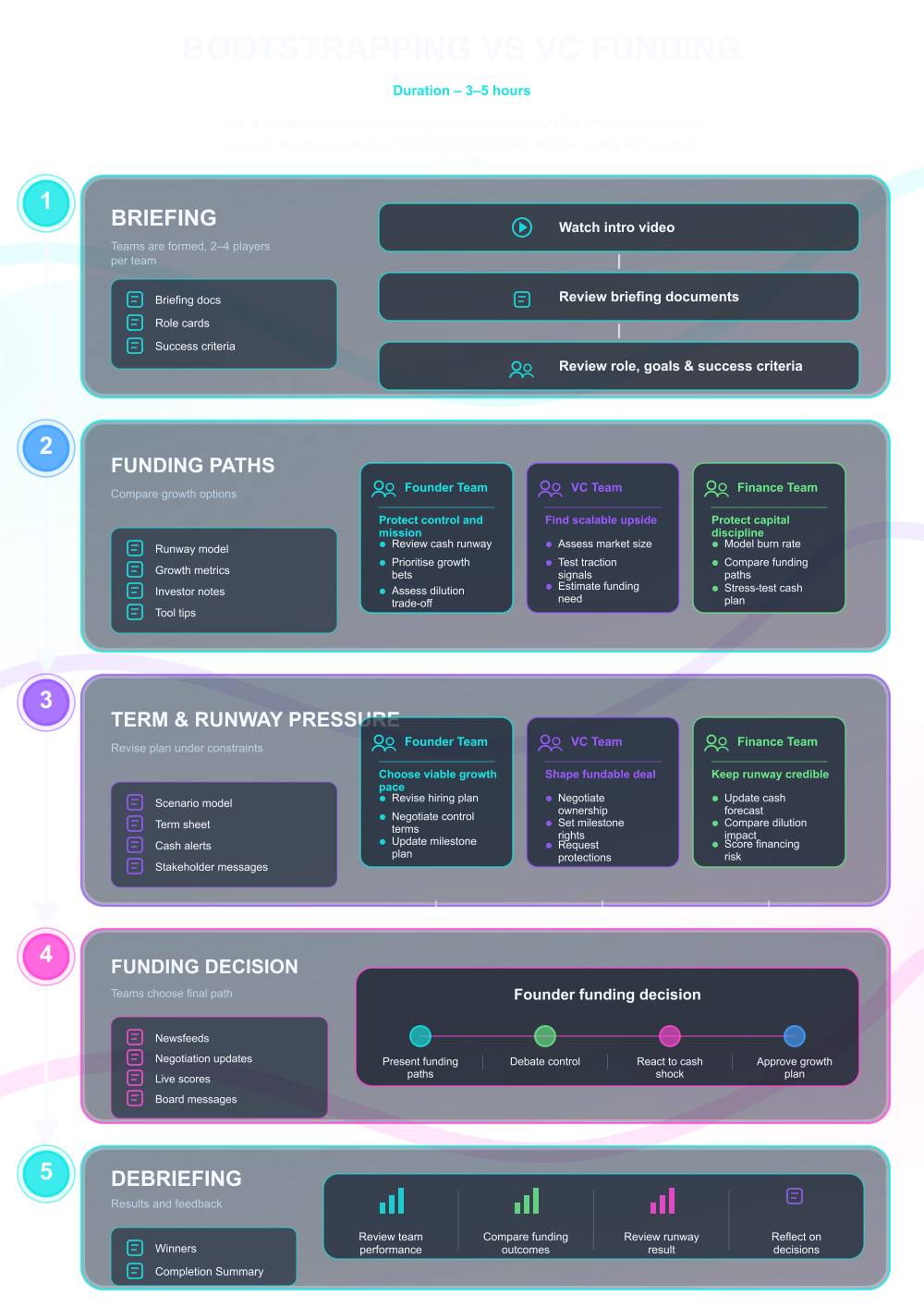

What Participants Do
In this simulation, participants act as startup founders making funding decisions. They:
- Evaluate bootstrapping strategies vs VC proposals
- Negotiate valuation, equity, and term sheets with investors
- Balance cash flow with scaling opportunities
- Manage cultural and operational impacts of funding choices
- Respond to external shocks like competition or market downturns
- Present funding strategies to boards, mentors, or investors

Learning Objectives
By the end of the simulation, participants will be able to:
- Compare trade-offs between bootstrapping and VC funding
- Assess valuation, dilution, and equity structures
- Manage cash flow under funding constraints
- Understand investor expectations and negotiation tactics
- Balance founder control with growth ambitions
- Recognize cultural impacts of funding decisions
- Respond strategically to market and funding shocks
- Communicate funding strategies effectively to stakeholders
- Develop long-term perspectives on financing and exit routes
- Build confidence in navigating real-world entrepreneurial finance choices
The simulation’s flexible structure ensures that these objectives can be calibrated to match the depth, duration, and focus areas of each program, whether in higher education or corporate learning.
How the Bootstrapping vs VC Funding Simulation Works
This simulation can run individually or in teams, across classrooms or entrepreneurship workshops. Each cycle mirrors funding decision-making.
1. Receive a Scenario or Brief: Participants are introduced to a startup with growth challenges and funding needs.
2. Analyse the Situation: They review financials, growth opportunities, and investor interest.
3. Make Strategic Decisions: Participants choose bootstrapping strategies or negotiate VC deals under time pressure.
4. Collaborate Across Roles: Teams role-play as founders, investors, or advisors debating strategies.
5. Communicate Outcomes: Participants present funding rationales through pitches, memos, or board updates.
6. Review and Reflect: Feedback highlights growth outcomes, equity impact, and cultural consequences. Participants adapt strategies across rounds.
Frequently Asked Questions
Assessment
Assessment can be tailored to focus on finance, strategy, or communication. Participants may be evaluated on:
- Quality of funding decisions and strategies
- Accuracy in valuation and equity calculations
- Effectiveness in negotiations with investors
- Responsiveness to shocks and market pressures
- Clarity in communicating rationale to stakeholders
You can also include memo writing and debrief presentations as part of the assessment structure. Additionally, you can also add a built-in peer and self-assessment tool to see how participants rate themselves. This flexibility allows the simulation to be easily integrated by professors as graded courses at universities and by HR at assessment centres at companies.