This simulation is ideal for participants interested in fixed-income markets, bond trading, portfolio management, treasury operations, or anyone seeking to understand how interest rates impact investment decisions.

Bond Yield Simulation
In this Bond Yield Simulation, participants act as fixed-income portfolio managers - navigating interest rate changes, assessing credit risk, and building portfolios to maximize risk-adjusted returns in dynamic bond markets.

Bond Yield Simulation Overview
Participants step into the role of fixed-income portfolio managers tasked with navigating complex debt markets. Each simulation round presents new challenges, shifting monetary policy, inflationary pressures, credit rating changes, and evolving economic indicators that impact bond prices and yields.
They must analyze yield curves, assess duration and convexity risks, evaluate credit spreads, and construct diversified bond portfolios. The simulation emphasizes the practical application of fixed-income concepts, showing how macroeconomic factors, issuer fundamentals, and market sentiment interact to determine bond performance.
This simulation is ideal for university finance programs, executive training in asset management, and corporate workshops. It brings bond market dynamics to life, demonstrating how portfolio decisions impact returns under various interest rate and credit environments.

Bond Yield Simulation Concepts
Participants work through realistic scenarios, which can be customized to emphasize or exclude specific topics depending on the learning goals. This modular structure allows the simulation to be tailored to any type of session. Key concepts include:
- Bond valuation and pricing mechanics
- Yield curve dynamics and term structure theories
- Duration and convexity as risk measures
- Credit analysis and spread determinants
- Interest rate risk management strategies
- Impact of macroeconomic indicators on bond markets
- Portfolio construction and immunization techniques
- Inflation-linked bonds and other fixed-income instruments
- Liquidity considerations in bond markets
- Performance measurement for fixed-income portfolios

Gameflow
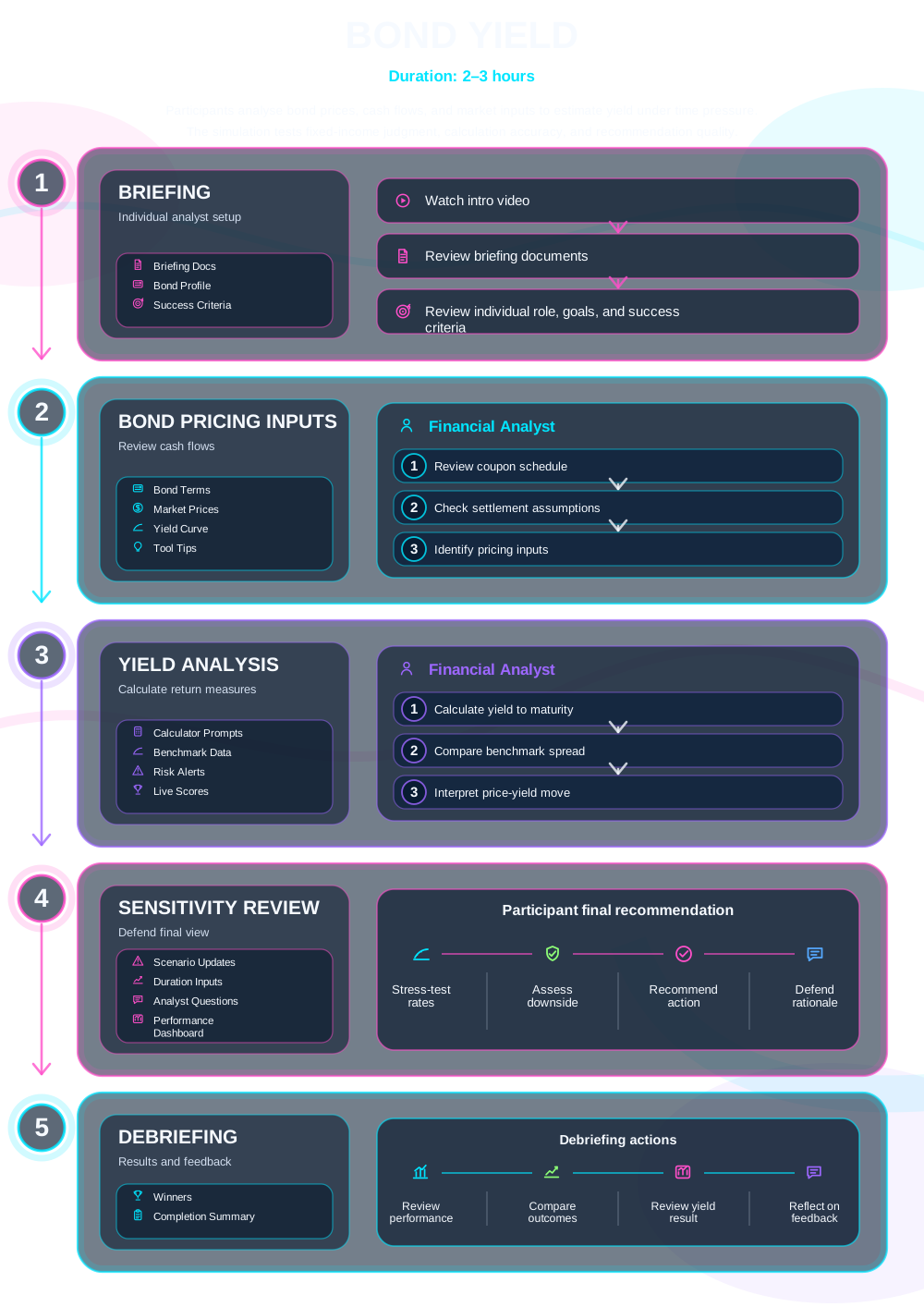

What Participants Do
In the simulation, participants will:
- Analyze economic data and interest rate forecasts
- Construct and rebalance bond portfolios across maturities and credit qualities
- Manage interest rate risk through duration targeting and hedging
- Evaluate credit risk and make buy/sell decisions on corporate bonds
- Respond to market shocks like central bank announcements or rating agency actions
- Present portfolio strategy and performance to institutional clients
- Reflect on the effectiveness of their investment approach across market cycles

Learning Objectives
By the end of the simulation, participants will be able to:
- Understand bond pricing, yield measures, and their inverse relationship
- Interpret yield curve movements and their economic implications
- Apply duration and convexity concepts to manage interest rate risk
- Evaluate credit risk and incorporate credit spreads into investment decisions
- Construct diversified bond portfolios aligned with specific investment objectives
- Respond effectively to changing macroeconomic conditions and market shocks
- Communicate bond investment strategies and performance to stakeholders
- Recognize the role of fixed-income securities in broader financial markets
- Develop judgment under conditions of interest rate uncertainty
- Build confidence in fixed-income portfolio management decision-making
How the Bond Yield Simulation Works
This simulation can be run individually or in teams in academic or corporate contexts. Each cycle represents a stage of getting through a pressing financial situation.
1. Receive Market Briefing Participants receive economic data, interest rate forecasts, and client investment guidelines.
** 2. Analyze the Environment** They assess yield curve shapes, credit spread trends, and macroeconomic indicators.
3. Make Portfolio Decisions Participants allocate across government bonds, corporate bonds, and other fixed-income instruments while managing duration exposure.
4. Collaborate Across Roles Teams may act as portfolio managers, credit analysts, or client relationship managers negotiating strategy.
5. Communicate Outcomes Participants deliver client reports, investment committee presentations, or market commentary.
6. Review and Reflect Feedback highlights total returns, risk metrics, and benchmark comparisons. Strategies evolve across multiple rounds as market conditions change.
Frequently Asked Questions
Assessment
Assessment of participant performance can be tailored according to the host institution’s objectives (business school, corporate training, assessment centre). Typical assessment criteria include:
- Portfolio performance versus benchmarks and peers
- Effective application of duration management and hedging techniques
- Quality of credit analysis and bond selection decisions
- Responsiveness to interest rate changes and economic developments
- Clarity and persuasiveness in client communications and strategy presentations
- Collaboration and adaptability in team-based settings