This simulation is ideal for finance students, MBA candidates, and professionals in corporate treasury, banking, or asset management who need to understand and apply fixed income valuation principles.

Bond Pricing Simulation
Participants step into the role of bond traders or portfolio managers, responding to live market data, interest rate shifts, and economic news to make real-time pricing decisions and optimize returns.

Bond Pricing Simulation Overview
This simulation plunges participants into the high-stakes world of fixed income markets. Acting as bond traders or portfolio managers, they must navigate a dynamic environment where bond prices fluctuate with changes in interest rates, credit spreads, inflation expectations, and macroeconomic events.
Each decision round introduces new market data: central bank announcements, economic indicator releases, or credit rating changes. Participants analyze this information to assess value, execute trades, and manage portfolio risk. The simulation emphasizes the concrete application of time value of money concepts, highlighting the inverse relationship between bond yields and prices, and the critical impact of duration and convexity.
Ideal for university finance courses, MBA programs, and corporate training in treasury or asset management, this hands-on experience transforms abstract bond theory into tangible, practical skill. Participants leave with a profound understanding of what drives bond valuation and how to act on it.

Bond Pricing Simulation Concepts
Participants work through realistic scenarios, which can be customized to emphasize or exclude specific topics depending on the learning goals. This modular structure allows the simulation to be tailored to any type of session. Key concepts include:
- Time Value of Money and Present Value Discounting
- The Inverse Relationship between Bond Prices and Market Yields
- Yield to Maturity, Current Yield, and Spot Rates
- Term Structure of Interest Rates and Yield Curve Analysis
- Macaulay Duration and Modified Duration for Interest Rate Risk
- Convexity and its Role in Price Volatility
- Credit Spreads and the Impact of Credit Risk on Pricing
- The Pricing of Zero-Coupon Bonds vs. Coupon-Paying Bonds
- Trading Strategies in Bull and Bear Interest Rate Environments
- Portfolio Immunization Strategies Using Duration Matching

Gameflow
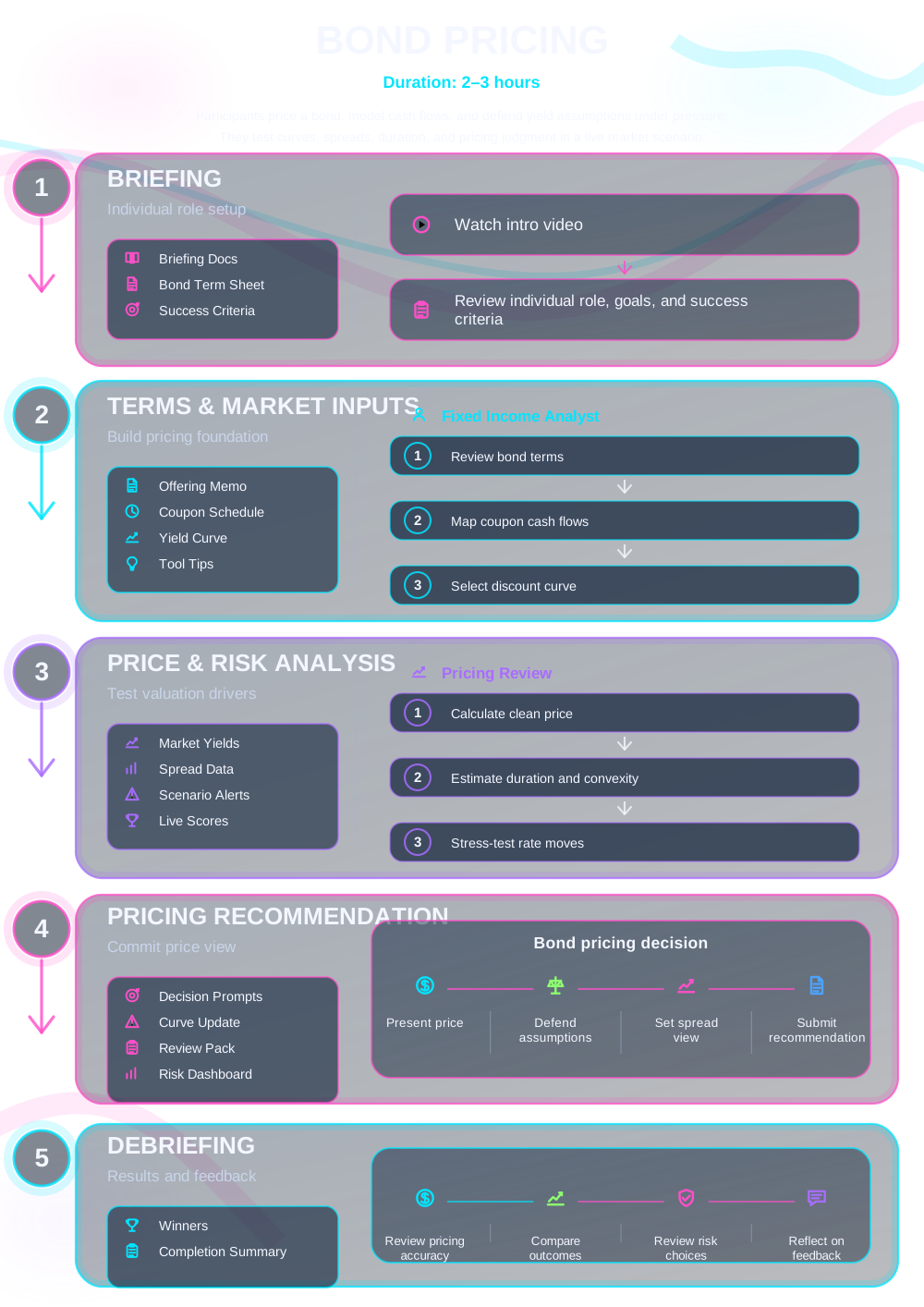

What Participants Do
In the simulation, participants will:
- Analyze live economic data feeds and central bank communications.
- Calculate the theoretical fair value of various bond instruments.
- Execute buy/sell orders based on their pricing assessment and market outlook.
- Actively manage portfolio duration to hedge against interest rate risk.
- Adjust portfolio holdings in response to credit rating announcements.
- Compete or collaborate with other participants in a live market environment.
- Present a summary of their trading strategy and portfolio performance.

Learning Objectives
By the end of the simulation, participants will be able to:
- Calculate the price of a bond using discounted cash flow analysis.
- Explain and quantify how interest rate changes affect bond prices using duration and convexity.
- Interpret the shape of the yield curve and its implications for bond pricing.
- Evaluate the impact of credit risk events on bond yields and spreads.
- Construct a basic bond portfolio aligned with a specific interest rate outlook or risk objective.
- Apply immunization strategies to protect a portfolio's value.
- Make confident, data-driven trading decisions under time pressure.
- Communicate bond valuation rationale and portfolio performance effectively.
How the Bond Pricing Simulation Works
This simulation can be run individually or in teams in academic or corporate contexts. Each cycle represents a stage of getting through a pressing financial situation.
1. Market Briefing Participants receive an initial portfolio and a market overview detailing the current yield curve and economic outlook.
** 2. Analysis and Valuation** Each round, new data is released. Teams analyze its impact on interest rates and credit.
3. Trading and Execution Teams decide to buy, hold, or sell bonds in their portfolio, entering orders into a live market that reflects aggregate supply and demand.
4. Portfolio Rebalancing Teams assess their updated portfolio risk metrics (duration, yield) and adjust their strategy for the next round.
5. Negotiation and Communication Teams may negotiate block trades with others and must justify their decisions to a "head of desk" or client.
6. Review and Debrief After the final round, the simulator provides detailed performance analytics (total return, Sharpe ratio, duration exposure) sparking a rich debrief on strategy effectiveness.
Frequently Asked Questions
Assessment
Assessment of participant performance can be tailored according to the host institution’s objectives (business school, corporate training, assessment centre). Typical assessment criteria include:
- Portfolio total return, risk-adjusted returns (Sharpe ratio), and accuracy of initial pricing calculations.
- Effectiveness in managing portfolio duration and responsiveness to interest rate shocks.
- Consistency and rationale of trading decisions based on evolving market data.
- Clarity and persuasiveness in explaining valuation decisions and portfolio strategy, either through written memos or live presentations.