No. The simulation is accessible for all levels, with context provided for each role.

Boardroom Negotiation Simulation
In this hands-on Boardroom Negotiation Simulation, participants act as executives and stakeholders negotiating high-stakes boardroom issues - balancing strategy, governance, ethics, and influence to achieve alignment under pressure.

Boardroom Negotiation Simulation Overview
Participants step into the shoes of senior executives, board members, or investors navigating the complexities of boardroom decision-making. Each round introduces high-stakes issues such as CEO succession, M&A decisions, strategic pivots, or governance reforms.
They must balance their own objectives with those of other stakeholders, negotiate positions, and align the board around key decisions. Participants experience how power dynamics, trust, and influence affect outcomes.
The simulation is designed for MBA programs, leadership development, and corporate governance workshops. It can be tailored to focus on corporate strategy, negotiation, ethics, or governance depending on audience needs.

Boardroom Negotiation Simulation Concepts
Participants work through realistic scenarios, which can be customized to emphasize or exclude specific topics depending on the learning goals. This modular structure allows the simulation to be tailored to any type of session. Key concepts include:
- Power dynamics and influence in boardrooms
- Strategic negotiation and compromise
- Stakeholder alignment and conflict resolution
- Ethics and governance in corporate decisions
- Communication and persuasion skills
- CEO succession and executive accountability
- M&A, divestiture, and strategic pivot decisions
- Role of independent directors and investors
- Short-term vs long-term shareholder interests
- Reputation and trust in leadership

Gameflow
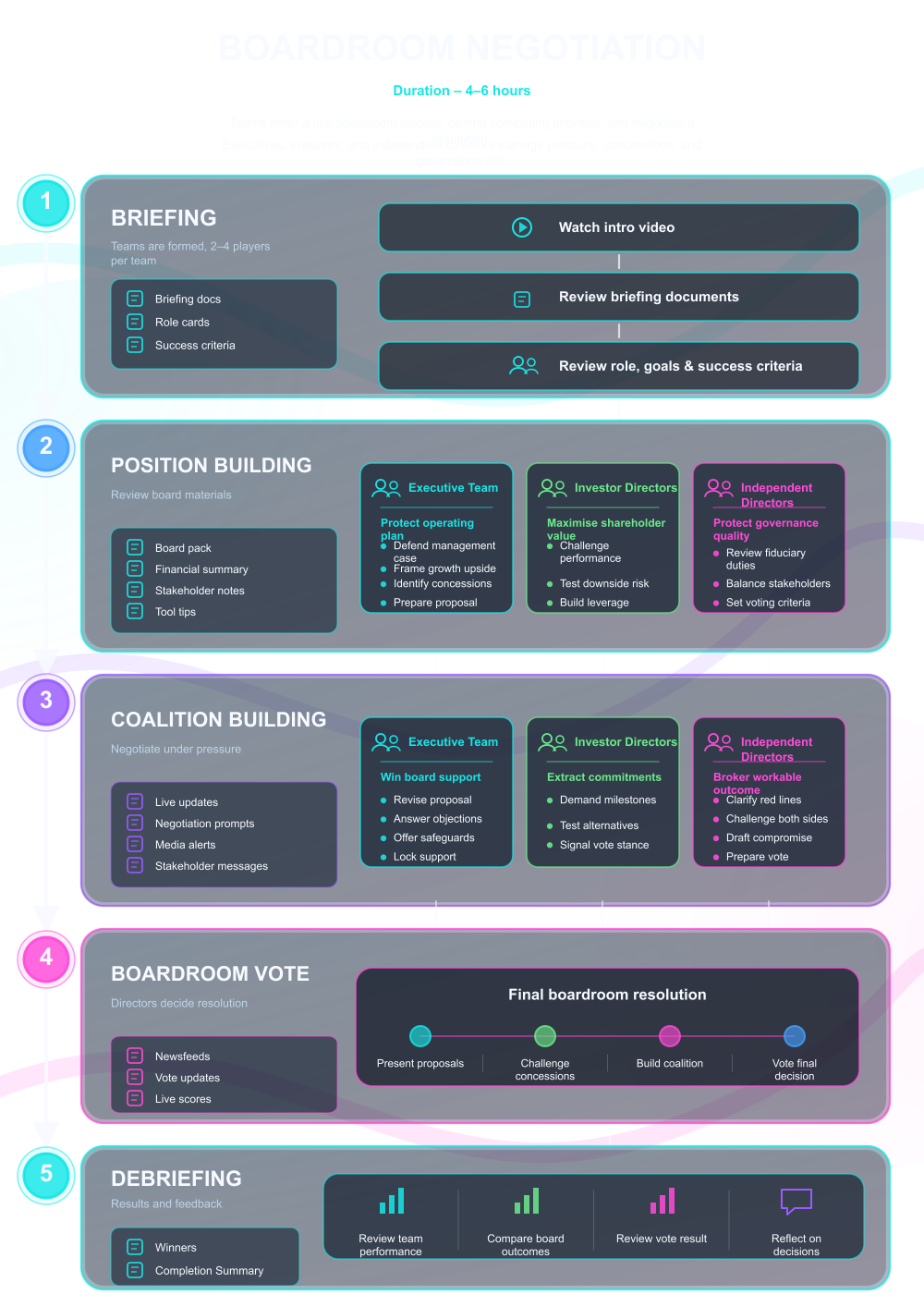

What Participants Do
In this simulation, participants:
- Take on roles as executives, directors, or investors with distinct agendas
- Negotiate high-stakes strategic issues in boardroom settings
- Balance governance, ethics, and shareholder priorities
- Draft board memos, resolutions, or press statements
- Respond to crises like activist campaigns or reputational damage
- Build alliances or challenge opposing positions to influence outcomes

Learning Objectives
By the end of the simulation, participants will be able to:
- Apply negotiation frameworks to board-level decisions
- Manage conflicting priorities across diverse stakeholders
- Demonstrate ethical leadership in high-stakes contexts
- Communicate persuasively in boardroom environments
- Balance governance, strategy, and shareholder expectations
- Recognize the impact of trust and influence on decisions
- Lead alignment around complex or contentious issues
- Adapt strategy in response to new developments
- Strengthen collaboration under pressure
- Reflect on personal negotiation style and effectiveness
The simulation’s flexible structure ensures that these objectives can be calibrated to match the depth, duration, and focus areas of each program, whether in higher education or corporate learning.
How the Boardroom Negotiation Simulation Works
This simulation can run individually or in teams and is suited to universities, executive programs, or corporate leadership workshops. Each round mirrors a phase of boardroom decision-making.
1. Receive a Scenario or Brief: Participants receive a board-level challenge, such as an acquisition proposal, CEO transition, or governance crisis, with clear objectives and roles.
2. Analyse the Situation: They review financials, stakeholder briefs, and governance implications, assessing risks and opportunities.
3. Negotiate in the Boardroom: Participants present positions, debate trade-offs, and negotiate toward resolutions—balancing influence, compromise, and persuasion.
4. Collaborate or Compete: Depending on role, participants may form alliances, challenge peers, or advocate for particular stakeholder interests.
5. Communicate Decisions: Teams draft resolutions, board statements, or external communications reflecting the negotiated outcome.
6. Review and Iterate: Feedback reveals impacts on strategy, governance score, and stakeholder trust. Subsequent rounds introduce new crises or shifts requiring adaptation.
Frequently Asked Questions
Assessment
Assessment can be tailored to focus on negotiation skill, governance awareness, or communication. Participants may be evaluated on:
- Effectiveness in negotiation and alignment
- Ethical reasoning and governance insight
- Communication clarity and persuasion under pressure
- Responsiveness to evolving dynamics
- Peer/self-assessments on collaboration and influence
You can also include memo writing and debrief presentations as part of the assessment structure. This flexibility allows the simulation to be easily integrated by professors as graded courses at universities and by HR at assessment centres at companies.