No. The simulation focuses on strategy, leadership, and decision-making around blockchain.

Blockchain Simulation
In this simulation, participants act as innovators, regulators, and investors navigating blockchain adoption - balancing decentralization, regulation & scalability while exploring real-world applications in finance, supply chains, and digital assets.

Blockchain Simulation Overview
Participants explore the disruptive potential of blockchain technology by stepping into the roles of corporate leaders, policymakers, and market participants. Each round introduces real-world challenges such as regulatory shifts, scalability bottlenecks, cybersecurity risks, or new blockchain applications.
They must weigh competing priorities: innovation vs compliance, efficiency vs transparency, and short-term gains vs long-term adoption. The simulation highlights blockchain’s impact on industries from financial services to logistics and healthcare.
This simulation is ideal for finance, technology, and strategy courses, as well as executive education programs. It blends technical concepts with leadership and strategy, making blockchain accessible and practical for learners.

Blockchain Simulation Concepts
Participants work through realistic scenarios, which can be customized to emphasize or exclude specific topics depending on the learning goals. This modular structure allows the simulation to be tailored to any type of session. Key concepts include:
- Blockchain fundamentals (distributed ledgers, smart contracts, consensus)
- Cryptocurrency and digital asset markets
- Tokenization of assets and liquidity innovation
- Blockchain in supply chains and operations
- Scalability and interoperability challenges
- Cybersecurity and data integrity risks
- Regulatory frameworks and compliance trade-offs
- Governance models in decentralized systems
- ESG and energy implications of blockchain adoption
- Strategic opportunities for blockchain in traditional industries

Gameflow
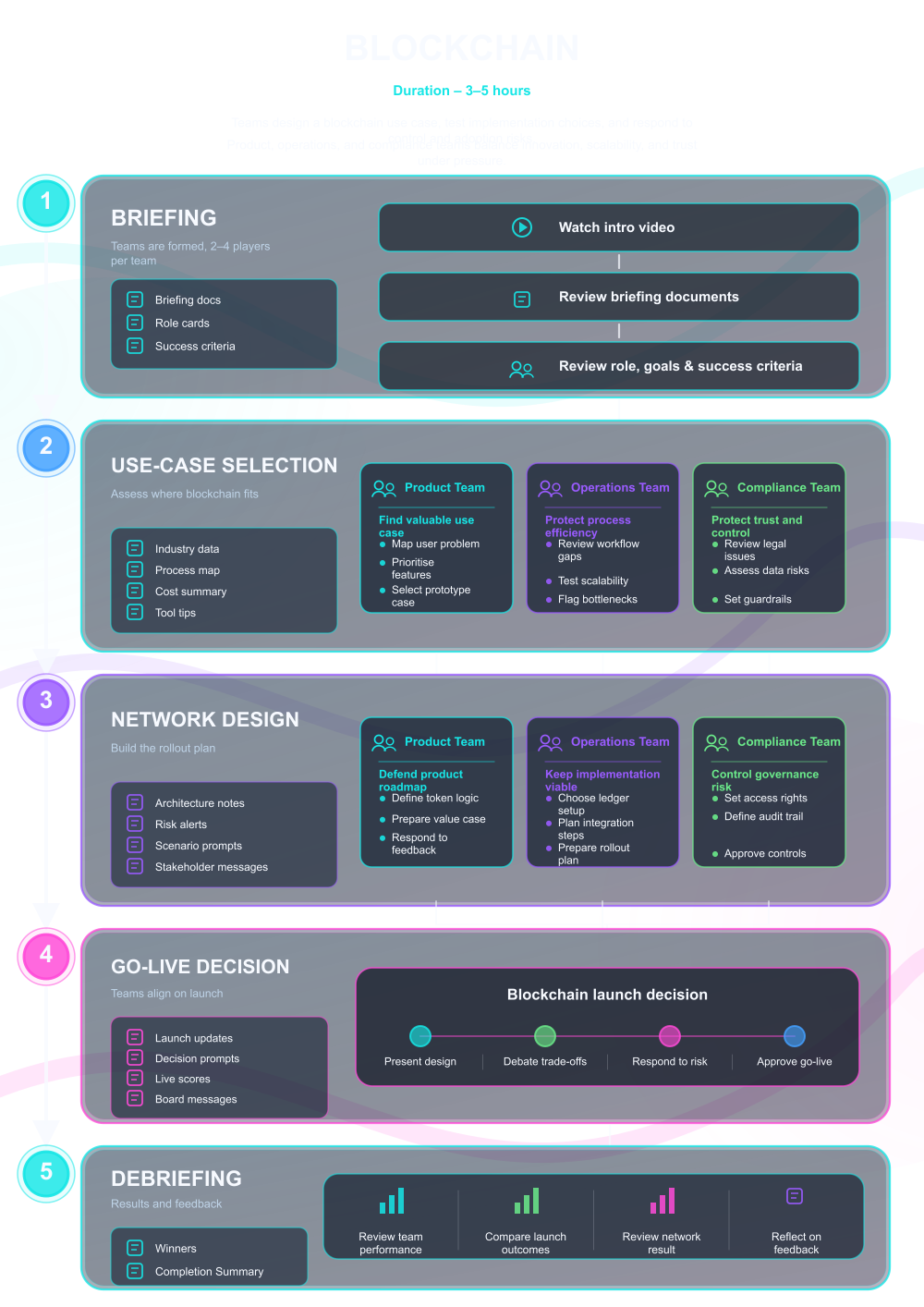

What Participants Do
In the simulation, participants act as blockchain decision-makers across different roles. They:
- Evaluate blockchain solutions for finance, operations, or supply chains
- Weigh trade-offs between decentralization, scalability, and control
- Navigate regulatory uncertainty and compliance pressures
- Respond to external shocks like cyberattacks or market volatility
- Pitch blockchain strategies to boards, investors, or regulators
- Reflect on long-term adoption and innovation risks

Learning Objectives
By the end of the simulation, participants will be able to:
- Understand core blockchain concepts and their applications
- Evaluate blockchain solutions for different industries
- Balance innovation with compliance and risk management
- Recognize scalability, energy, and governance challenges
- Apply blockchain to real-world business problems
- Navigate uncertainty and volatility in blockchain markets
- Communicate blockchain strategies persuasively to stakeholders
- Collaborate across technical and leadership roles
- Anticipate long-term implications of blockchain adoption
- Build confidence in applying blockchain to strategic decision-making
The simulation’s flexible structure ensures that these objectives can be calibrated to match the depth, duration, and focus areas of each program, whether in higher education or corporate learning.
How the Blockchain Simulation Works
The simulation can be run individually or in teams, in classrooms or professional training programs. Each cycle represents a stage in blockchain adoption.
1. Receive a Scenario or Brief: Participants are introduced to a business or policy challenge involving blockchain adoption.
2. Analyse the Situation: They review market data, technical options, and regulatory updates to identify risks and opportunities.
3. Make Strategic Decisions: Participants decide whether to adopt, delay, or pivot blockchain strategies.
4. Collaborate Across Roles: Teams represent companies, regulators, or investors, negotiating strategies under different priorities.
5. Communicate Outcomes: Participants deliver strategy memos, board updates, or policy briefs.
6. Review and Reflect: Feedback highlights adoption success, risks mitigated, and stakeholder trust. Participants adapt strategies in later rounds.
Frequently Asked Questions
Assessment
Assessment can be tailored to focus on technical understanding, strategic reasoning, or communication. Participants may be evaluated on:
- Quality of blockchain strategy and adoption decisions
- Responsiveness to new technologies and regulatory pressures
- Creativity in applying blockchain to industry problems
- Clarity and persuasiveness in communication
- Collaboration and leadership under uncertainty
You can also include memo writing and debrief presentations as part of the assessment structure. Additionally, you can also add a built-in peer and self-assessment tool to see how participants rate themselves. This flexibility allows the simulation to be easily integrated by professors as graded courses at universities and by HR at assessment centres at companies.