It is designed for MBA and Master’s in Finance students, executive education cohorts, and corporate training programs for banks, consulting firms, and financial regulators.

Bank Stress Test Simulation
Prepare for the unexpected. Equip your team with the skills to evaluate financial resilience under extreme economic conditions.

Bank Stress Test Simulation Overview
Our Bank Stress Test Simulation plunges participants into the high-stakes role of bank risk managers and regulators. In a dynamic, scenario-driven environment, teams must assess their institution's capital adequacy, liquidity, and overall stability against a series of severe but plausible economic downturns.
Participants will analyze deteriorating portfolios, model credit losses under stress scenarios, make strategic capital management decisions, and communicate findings to a simulated board. This hands-on exercise bridges the gap between theoretical risk frameworks and the pressurized decision-making required to safeguard financial institutions in a crisis.
Although ideal for undergraduate and graduate finance courses, executive training, and corporate finance skill workshops, the simulation is modular and scalable, allowing instructors to vary complexity.

Bank Stress Test Simulation Concepts
Participants work through realistic scenarios, which can be customized to emphasize or exclude specific topics depending on the learning goals. This modular structure allows the simulation to be tailored to any type of session. Key concepts include:
- Capital Adequacy
- Adverse and Severely Adverse Macroeconomic Scenarios
- Credit Risk Modeling and Loss Projections
- Liquidity Coverage Ratio and Net Stable Funding Ratio
- Provisioning and Loan Loss Reserves
- Strategic Capital Actions (Dividend cuts, Asset sales, Equity issuance)
- Regulatory Reporting and Disclosure
- Model Risk and Scenario Uncertainty

Gameflow
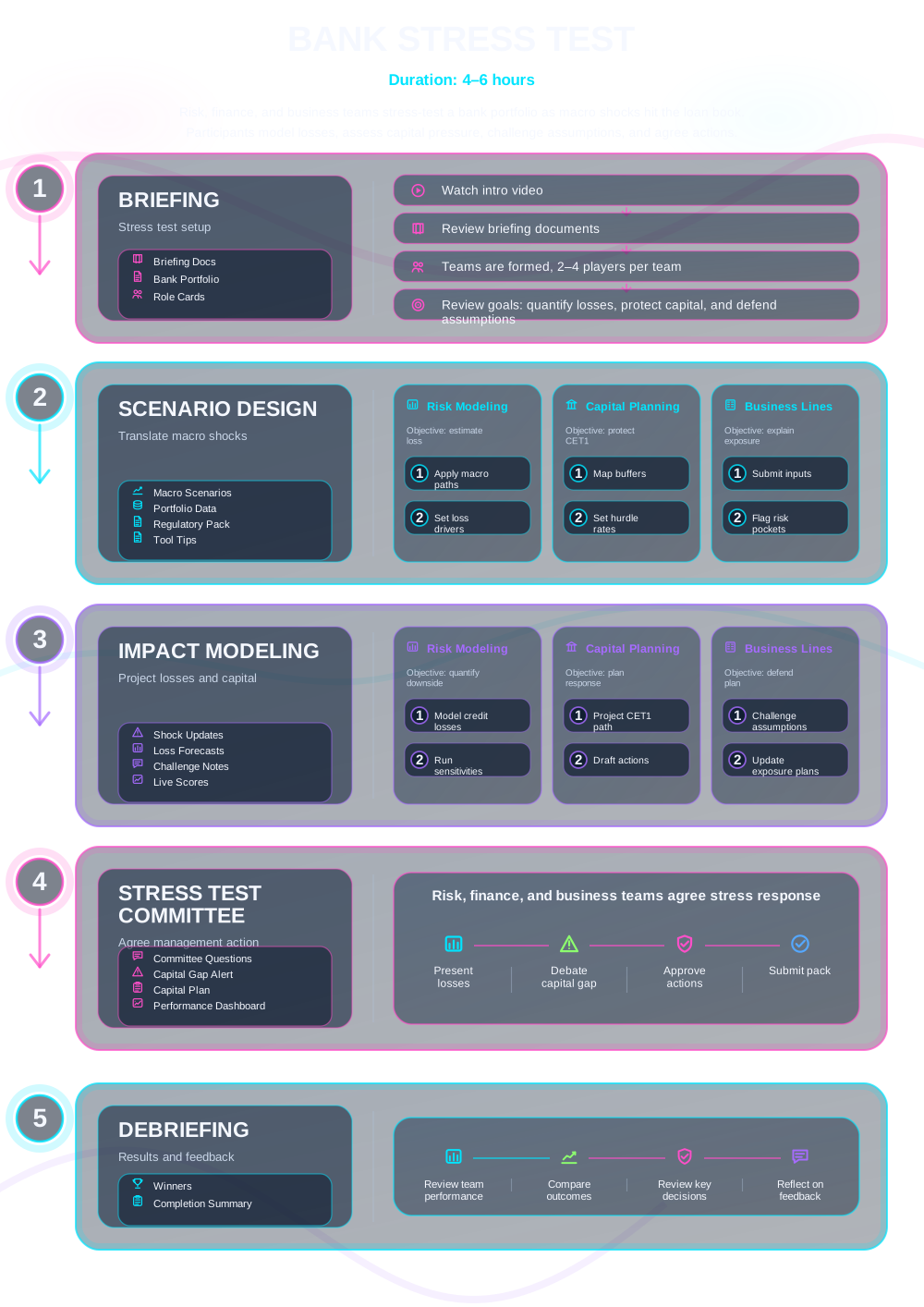

What Participants Do
In the simulation, participants will:
- Analyze a simulated bank's baseline financial position.
- Apply provided adverse macroeconomic scenarios to loan portfolios and trading books.
- Project key capital and liquidity ratios under stress.
- Develop and Propose management actions to maintain regulatory compliance and market confidence.
- Prepare and Deliver a concise stress test summary to stakeholders.
- Compete on the dual objectives of safety and profitability.

Learning Objectives
By the end of the simulation, participants will be able to:
- Understand the components, purpose, and regulatory framework of bank stress testing.
- Develop the ability to translate macroeconomic shocks into bottom-line financial impacts.
- Practice making critical capital and liquidity decisions under pressure.
- Enhance skills in communicating complex risk assessments to a non-technical audience.
- Foster a holistic view of risk management that integrates credit, market, and operational risks.
How the Bank Stress Test Simulation Works
This simulation can be run individually or in teams in academic or corporate contexts. Each cycle represents a stage of getting through a pressing financial situation.
1. Initial Analysis and Briefing Participants, organized into competing bank management teams, first log into the simulation dashboard. They receive their bank's confidential portfolio, including detailed breakdowns of loan books, trading assets, and current capital/liquidity positions. A central "Regulatory Brief" is released, outlining the official adverse and severely adverse macroeconomic scenarios (deep recession, housing crash, market volatility) that must be applied.
** 2. Modeling and The First Shock** Teams use integrated analytical tools within the platform to apply the initial wave of scenario variables to their portfolio. The simulation engine calculates the projected impact on credit losses, asset values, and earnings. Teams see their capital and liquidity ratios begin to deteriorate in real-time on their dashboards. This phase focuses on understanding the direct mechanical impact of the stress.
3. Strategic Decision-Making Faced with declining buffers, teams must now make a series of critical management decisions. The platform presents a menu of strategic options: Should they suspend dividend payments? Issue contingent capital? Sell certain assets? Each choice has quantified trade-offs affecting capital, profitability, and market confidence. Teams submit their strategic action plan for the round.
4. The Second Wave and Crisis Communication Just as teams stabilize their position, a second, unexpected "tail-risk" shock is deployed via the platform (a counterparty failure, operational loss event). Teams must reassess, adjust their strategy, and crucially, prepare a concise, persuasive management summary or board report using a built-in document tool, justifying their actions to skeptical stakeholders.
5. Live Debrief & Scoring The session culminates in a live, facilitated debrief. The instructor reveals a leaderboard, ranking teams on key outcomes like final CET1 ratio, pre-provision net revenue, and the quality of their communication. The debrief dissects why some strategies succeeded where others failed, transforming competitive results into powerful lessons on integrated risk management, strategic foresight, and clear communication under pressure.
Frequently Asked Questions
Assessment
Assessment of participant performance can be tailored according to the host institution’s objectives (business school, corporate training, assessment centre). Typical assessment criteria include:
- Depth and logic of scenario analysis
- Clarity, coherence, and persuasiveness of the valuation memo and presentation
- Ability to adapt and revise valuations in light of news shocks or changes
- Collaboration, division of work, integration of roles, and final coherence
- Rating by peers and self-reflection on approach and decisions