It's ideal for students and professionals in commercial banking, corporate finance, private credit, accounting, and anyone seeking to understand secured lending and credit analysis.

Asset Based Lending Simulation
In this Asset Based Lending Simulation, participants step into the high-stakes world of secured corporate finance, acting as either lenders or borrowers to structure, negotiate, and manage loans backed by assets like inventory, receivables, and equipment.

Asset Based Lending Simulation Overview
This simulation plunges participants into the critical and nuanced field of asset-based lending, a vital financing tool for companies requiring working capital or undergoing turnarounds. Acting as either a lending officer at a financial institution or a CFO/treasurer at a borrowing company, teams engage in a dynamic, multi-round negotiation to structure a viable and secure ABL facility.
Each round introduces new challenges: shifts in the borrower's financial performance, fluctuations in the quality and value of the underlying collateral, changes in market liquidity, and competitive pressure from other lenders. Participants must analyze financial statements and asset appraisals, calculate key covenants and borrowing bases, balance risk and return, and make strategic decisions to either secure the loan on favorable terms or protect their institution's capital.
This simulation is ideal for university finance programs, commercial banking training, and corporate workshops, making the complex mechanics of secured lending tangible and engaging.

Asset Based Lending Simulation Concepts
Participants work through realistic scenarios, which can be customized to emphasize or exclude specific topics depending on the learning goals. This modular structure allows the simulation to be tailored to any type of session. Key concepts include:
- Fundamentals of Asset-Based Lending vs. Cash Flow Lending
- Collateral due diligence and appraisal
- Borrowing Base Certificate calculation and monitoring
- Loan-to-Value and Advance Rate determination
- Structuring loan covenants, interest rates, and fees
- Working capital cycle and cash flow analysis for borrowers
- Lender risk mitigation strategies and workout scenarios
- Legal and documentation considerations in secured lending
- Relationship management between lender and borrower
- Impact of economic cycles on collateral values and credit risk

Gameflow
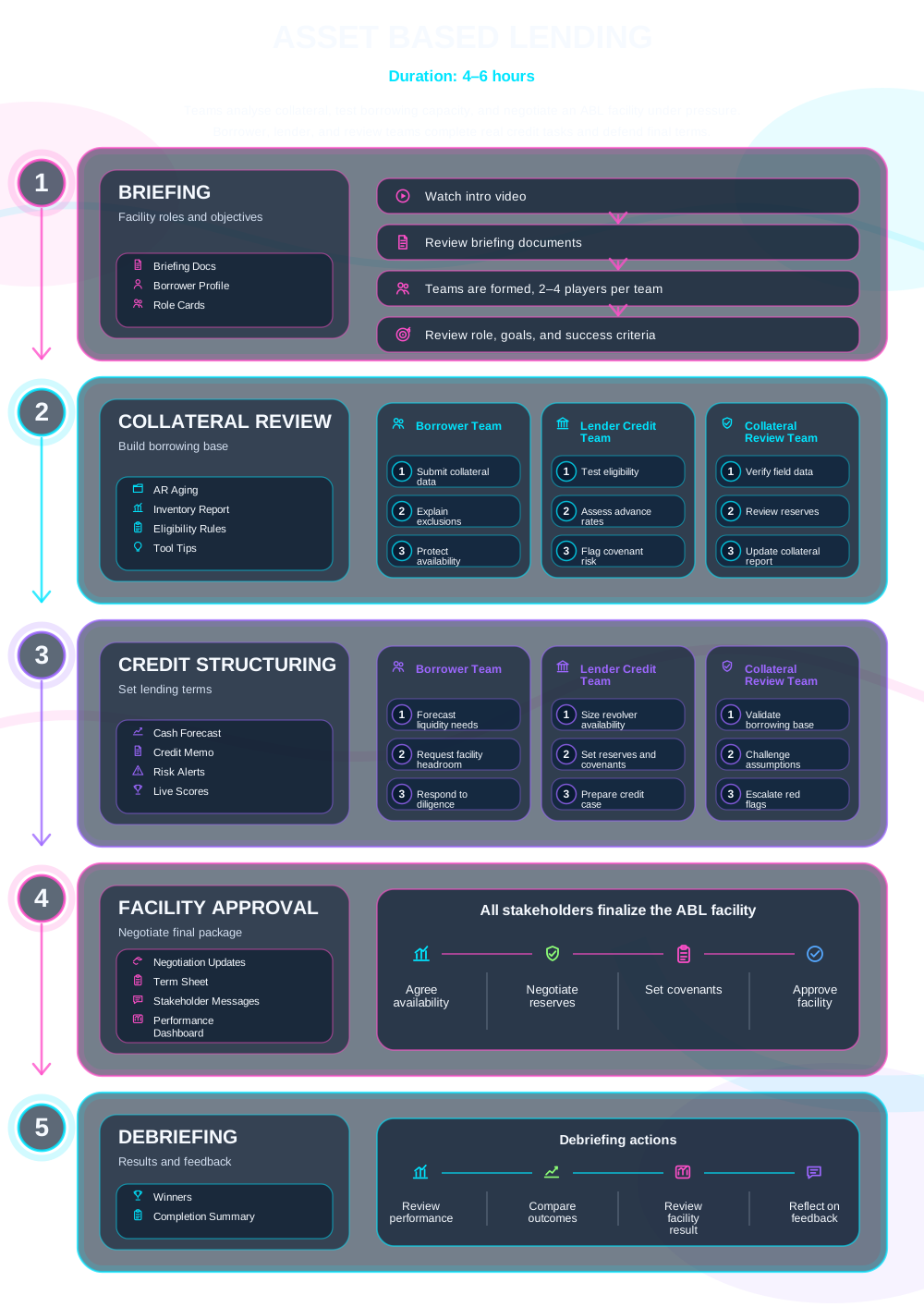

What Participants Do
In the simulation, participants will:
- Analyze a potential borrower's financial health and quality of assets.
- Perform due diligence on collateral.
- Calculate and negotiate the borrowing base and advance rates.
- Structure term sheets with pricing, covenants, and reporting requirements.
- Respond to dynamic changes in collateral values or company performance.
- Negotiate terms directly with the opposing party.
- Make strategic decisions to approve, decline, or amend the credit facility.
- Present and defend their final deal structure.

Learning Objectives
By the end of the simulation, participants will be able to:
- Understand the role, structure, and typical clients for ABL facilities.
- Evaluate the quality and liquidity of different types of loan collateral.
- Calculate a borrowing base and understand key covenants.
- Structure a balanced ABL term sheet that mitigates lender risk while meeting borrower needs.
- Negotiate effectively from the perspective of both a lender and a borrower.
- Recognize early warning signs of collateral deterioration or borrower distress.
- Appreciate the legal and monitoring framework of secured lending.
- Develop confidence in making credit decisions based on asset coverage.
- Communicate credit rationale clearly and persuasively.
How the Asset Based Lending Simulation Works
This simulation can be run individually or in teams in academic or corporate contexts. Each cycle represents a stage of getting through a pressing financial situation.
1. Receive the Scenario Teams are assigned as either a Lending Syndicate or a Borrowing Company and given confidential briefs, financials, and asset reports.
** 2. Initial Analysis** Teams conduct independent analysis—lenders assess risk and calculate a preliminary borrowing base; borrowers evaluate their funding needs and acceptable terms.
3. Term Sheet Proposal Lenders draft and submit an initial term sheet. Borrowers review multiple offers.
4. Live Negotiation Rounds Teams engage in structured negotiation rounds, discussing advance rates, pricing, covenants, and reporting requirements.
5. Dynamic Inputs At key stages, new information is revealed, forcing teams to adapt their strategy.
6. Deal Closure and Presentation Teams finalize their agreement. A concluding session involves presenting the final deal structure and rationale to a "credit committee" or class.
7. Review and Debrief Instructors lead a feedback session, reviewing outcomes, key learning points, and how decisions impacted the deal's success or failure.
Frequently Asked Questions
Assessment
Assessment of participant performance can be tailored according to the host institution’s objectives (business school, corporate training, assessment centre). Typical assessment criteria include:
- Accuracy and depth of the borrowing base and collateral analysis.
- Quality and completeness of the proposed term sheet (pricing, covenants, structure).
- Effectiveness in negotiation and adaptation to new information.
- Final agreement's balance between risk mitigation and meeting client needs.
- Clarity and persuasiveness of the credit or funding rationale presentation.