No prior experience is necessary. The simulation includes instructional content to help all participants understand angel investing principles.

Angel Investing Simulation
The Angel Investing Simulation immerses participants in the role of early-stage investors, guiding them through the processes of sourcing, evaluating, funding, and supporting startups.

Angel Investing Simulation Overview
This simulation introduces participants to the world of angel investing where they assess startup pitches, conduct due diligence, negotiate terms, and manage portfolios of early-stage companies.
Participants encounter real-world challenges such as balancing risk and reward, assessing market potential, and understanding startup lifecycle stages. The simulation includes interactive scenarios that highlight investor-founder relationships, term sheet negotiations, follow-on funding decisions, and exit strategies.
Designed for aspiring investors, entrepreneurs, and finance professionals, the simulation cultivates the entrepreneurial mindset and investment acumen crucial for successful early-stage investing.

Angel Investing Simulation Concepts
Participants work through realistic scenarios, which can be customized to emphasize or exclude specific topics depending on the learning goals. This modular structure allows the simulation to be tailored to any type of session. Key concepts include:
- Early-stage investment process
- Due diligence and startup evaluation
- Deal structuring and term sheet essentials
- Portfolio diversification and risk management
- Startup lifecycle and growth phases
- Valuation techniques for startups
- Investor-founder negotiation dynamics
- Follow-on investment and exit planning
- Impact of market and economic conditions on startups
- Legal and regulatory considerations in angel investing

Gameflow
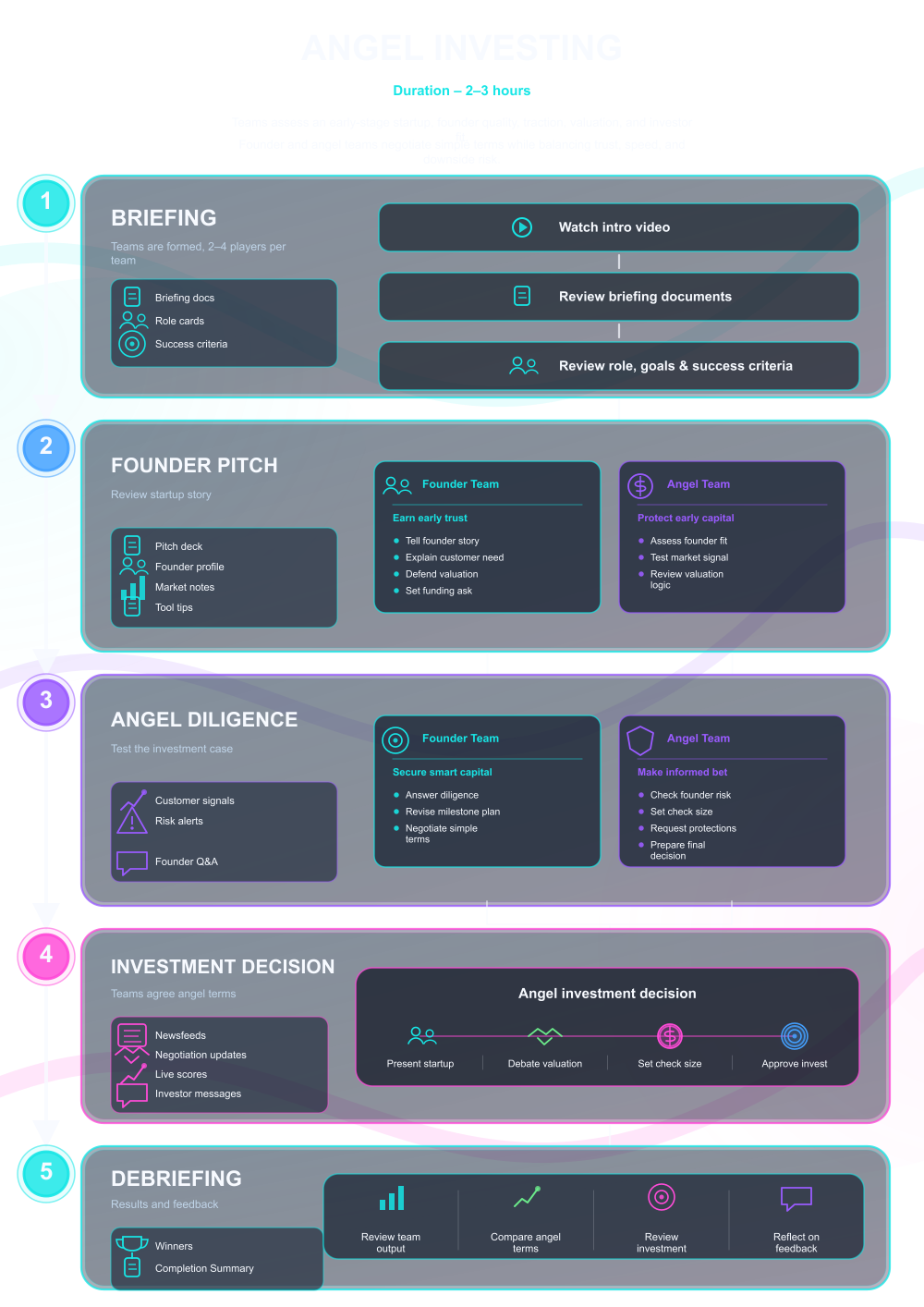

What Participants Do
In the simulation, participants will:
- Receive startup investment scenarios or pitches
- Analyze business models, market potential, and financial projections
- Perform due diligence to validate startup claims
- Negotiate investment terms and structure deals
- Allocate capital across startup portfolios balancing risk and return
- Monitor portfolio companies’ progress and decide on follow-on funding
- Respond to company updates, pivots, or market shocks
- Prepare and present investor updates or recommendations
- Collaborate with peers acting as investors or founders

Learning Objectives
By the end of the simulation, participants will be able to:
- Understand the angel investing lifecycle and best practices
- Apply due diligence frameworks to evaluate startup opportunities
- Structure investment deals including term sheets and equity stakes
- Manage early-stage investment portfolios for risk diversification
- Develop negotiation skills with startup founders
- Assess the impact of market conditions on startup viability
- Communicate investment rationales and performance to stakeholders
- Appreciate legal, financial, and ethical considerations in angel investing
- Gain confidence in decision-making under uncertainty and volatility
- Explore the broader role of angel investors in entrepreneurial ecosystems
How the Angel Investing Simulation Works
This simulation can be run individually or in teams in academic or corporate contexts. Each cycle represents a stage of getting through a pressing financial situation.
1. Analyze Startups Conduct due diligence reviewing financials, market potential, team capabilities, and risks.
**2. Make Investment Decisions Decide which startups to fund, negotiate terms, and allocate capital to build a balanced portfolio.
**3. Collaborate or Compete Work individually or in teams acting as angel investors negotiating co-investment terms or competing for deals.
4. Manage Portfolio Monitor startup progress, adapt strategies, and decide on follow-on investments or exits.
5. Communicate Investment Rationale Prepare and deliver investor memos, pitch decks, or performance updates to stakeholders.
6. Respond to Market Dynamics React to simulated market events, startup milestones, or challenges impacting investment outcomes.
7. Reflect and Debrief Analyze investment results, discuss lessons learned, and refine investment strategies based on feedback.
Frequently Asked Questions
Assessment
Assessment of participant performance can be tailored according to the host institution’s objectives (business school, corporate training, assessment centre). Typical assessment criteria include:
- Quality of investment decisions and due diligence rigor
- Risk-adjusted portfolio management and diversification
- Negotiation skills and deal structuring accuracy
- Responsiveness to market and startup changes
- Clarity and persuasiveness in investor communication
- Collaboration and adaptability within team settings