Basic proficiency in Excel is sufficient. The simulation is designed to build your advanced Excel and financial modeling skills through guided practice.

Amortization Simulation
Go beyond theory by building dynamic amortization schedules, analyzing the impact of different loan terms, and making strategic decisions that affect a company's cash flow and financial health.

Amortization Simulation Overview
The Amortization Simulation immerses participants in the critical task of structuring and managing debt.Amortization is the heartbeat of debt financing. Understanding how principal and interest payments are calculated over the life of a loan is a fundamental skill for any finance professional.
The simulation provides a hands-on, risk-free environment where participants act as financial analysts for a company seeking financing. They are tasked with evaluating different loan offers, structuring the debt to optimize cash flow, and building a comprehensive amortization schedule from the ground up.
Participants will confront real-world variables like different interest rate types, payment frequencies, and the strategic use of extra principal payments, bridging the gap between textbook formulas and the practical financial modeling required in banking, corporate finance, and investment management.

Amortization Simulation Concepts
Participants work through realistic scenarios, which can be customized to emphasize or exclude specific topics depending on the learning goals. This modular structure allows the simulation to be tailored to any type of session. Key concepts include:
- Loan amortization and amortization schedules
- Principal and interest breakdown in payments
- Calculation of monthly payments and outstanding loan balance
- Loan term versus amortization schedule
- Managing intangible asset amortization
- Impact of interest rates and loan duration on repayments
- Financial decision-making under various loan conditions
- Effects of early payments and refinancing options

Gameflow
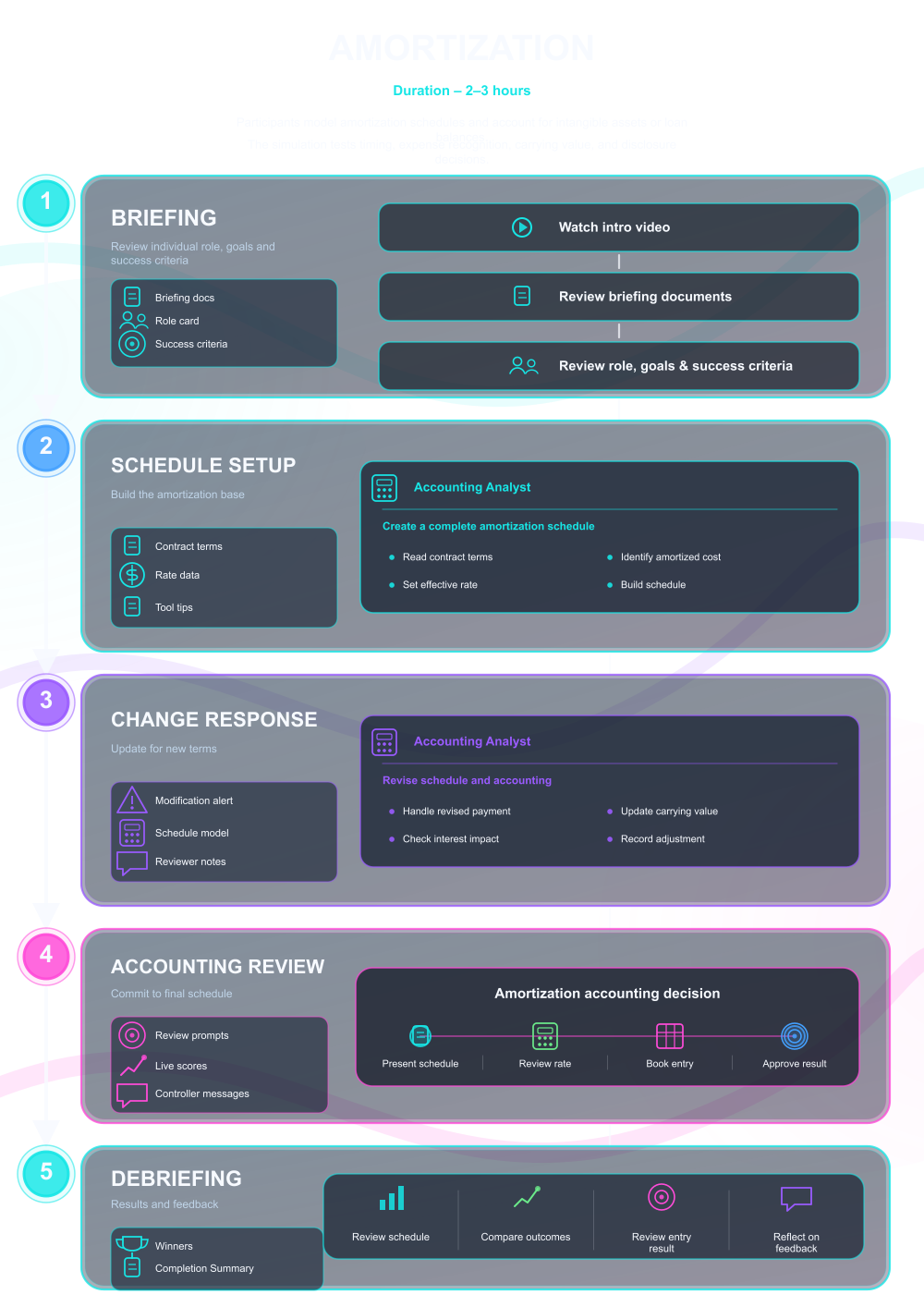

What Participants Do
In the simulation, participants will:
- Analyze loan or asset data and inputs (loan amount, interest rate, term)
- Calculate amortization schedules and payment breakdowns
- Adjust payment timing and amounts to observe effects
- Manage varying loan scenarios including fixed and variable rates
- Evaluate impacts on cash flow and outstanding balances
- Review and interpret amortization charts and reports
- Make strategic decisions on loans or asset amortization plans
- Prepare reports and presentations explaining amortization outcomes

Learning Objectives
By the end of the simulation, participants will be able to:
- Understand how loan amortization schedules function and are calculated
- Develop practical skills in managing loan repayments over time
- Analyze the impact of interest and principal components in payments
- Calculate monthly payment amounts using amortization formulas
- Differentiate between loan term and amortization schedule implications
- Assess how amortization affects financial planning and asset cost allocation
- Apply decision-making to optimize loan or asset amortization strategies
- Communicate amortization results clearly to stakeholders or clients
How the Amortization Simulation Works
This simulation can be run individually or in teams in academic or corporate contexts. Each cycle represents a stage of getting through a pressing financial situation.
1. Introduction and Case Launch Participants are introduced to a company that requires capital for expansion. They receive the company's financial summary and specific financing needs.
2. Loan Proposal Analysis Participants receive several term sheets from different lenders, each with varying amounts, interest rates (fixed and floating), and terms.
3. Hands-On Modeling Using a provided template, participants build their own amortization schedules. They must correctly use financial formulas to calculate payments, interest, principal, and ending balances for each period.
4. Scenario Testing Once the base model is built, participants are given new challenges: "What if the company makes a $50,000 prepayment in Year 2?" or "What if we switch to monthly payments instead of quarterly?"
5. Decision and Reporting Based on their quantitative analysis, participants must choose the best loan option and prepare a brief summary justifying their decision based on cash flow, total interest cost, and alignment with the company's goals.
6. Debrief An instructor-led session reviews the correct financial models, discusses the strategic implications of the choices made, and solidifies the learning outcomes.
Frequently Asked Questions
Assessment
Assessment of participant performance can be tailored according to the host institution’s objectives (business school, corporate training, assessment centre). Typical assessment criteria include:
- Correct use of formulas, accurate calculation of principal/interest components, and a correctly declining ending balance.
- Accurate modeling of the "what-if" scenarios, such as prepayments or changes in terms.
- A clear, concise, and quantitatively-supported rationale for their chosen loan option.